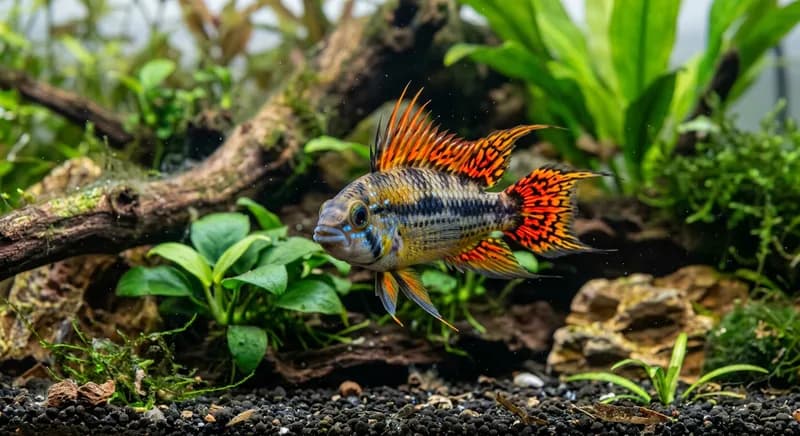
Apistogramma
Apistogramma spp.
Overview
Apistogrammas are dwarf cichlids that pack a punch in a tiny package. These little fish display incredible coloration, especially males, and their complex breeding behavior makes them endlessly fascinating. They are not as hardy as some community fish, but for aquarists willing to meet their specific water requirements, they are incredibly rewarding. They need soft, acidic water, which can be a challenge for some keepers. If you can give them what they need, you will be rewarded with one of the most beautiful small cichlids in the hobby.
Tank Setup
A 20-gallon tank is the minimum for a pair of Apistogrammas, but 30 gallons is better, especially if keeping multiple fish. They are bottom dwellers that need plenty of hiding spots. Provide caves, PVC pipes, coconut shells, and dense planting. They prefer a substrate of sand or fine gravel. Live plants help with water quality and provide cover. Lighting should be moderate. They can be kept in community tanks if there are plenty of hiding spots and tankmates are not too aggressive.
Water Parameters
This is where Apistogrammas are picky. They need soft, acidic water with a pH between 5.0 and 7.0. In harder water, they are prone to health issues and will not display their best colors. Temperature should be between 72-84°F, with 78 being ideal. Using peat in your filter or adding driftwood can help soften and acidify water. Weekly water changes of 20-25% are important for maintaining water quality. They are sensitive to ammonia and nitrite, so test your water regularly.
Diet & Feeding
Apistogrammas are omnivores that prefer meaty foods. Quality small cichlid pellets or flakes should be the staple. Supplement with frozen bloodworms, brine shrimp, daphnia, and microworms. They are not picky and will accept most foods. Feed small amounts 2-3 times daily. They are slow eaters in community tanks, so make sure they are getting enough food. Some keepers target-feed them using a pipette to ensure they eat.
Behavior & Temperament
Apistogrammas are territorial, especially when breeding. They are generally peaceful but will defend their territory aggressively. Males are more colorful but can be aggressive toward females and other fish. They are best kept as a male-female pair. They are intelligent and interactive, often recognizing their owners. They spend most of their time near the bottom of the tank, exploring and defending their territory. Providing multiple hiding spots helps reduce aggression.
Compatible Tankmates
Apistogrammas can work in community tanks with careful selection. Good tankmates include small, peaceful fish that stay in the middle or top of the tank: small tetras, rasboras, danios, and otocinclus. Corydoras can work but may compete for bottom territory. Avoid large or aggressive fish that might harass them. Avoid keeping them with angelfish, which may see them as food or competition. Shrimp may be eaten.
Common Health Issues
Apistogrammas are sensitive to water conditions, especially in harder water. In unsuitable water, they are prone to bacterial infections, fungal issues, and general decline. Ich can affect them, appearing as white spots. The best treatment is improving water quality. They can also be prone to parasites if stressed. Quarantine new fish and maintain excellent water conditions to prevent issues. Use medications with caution, as they are sensitive to some treatments.
Breeding
Apistogrammas are cave breeders and relatively easy to breed in the right conditions. A pair will select a cave or hiding spot and the female will lay 50-200 eggs on the ceiling. She guards the eggs while the male defends the territory. The eggs hatch in 2-4 days, depending on temperature. Both parents may care for the fry. Fry can be raised on infusoria initially, graduating to baby brine shrimp. The parents may eat the fry if stressed.
Frequently Asked Questions
Quick Stats
What You Need for Apistogramma
Gear that works well for this species, based on what experienced keepers actually use.
Helps maintain acidic water parameters. Promotes healthy root growth for plants.
Small pellets packed with protein. Ideal for dwarf cichlids with color-enhancing ingredients.
Establishes beneficial bacteria without fish. Critical for sensitive species like Apistogrammas.
Tests for general hardness and carbonate hardness. Essential for monitoring soft water parameters.