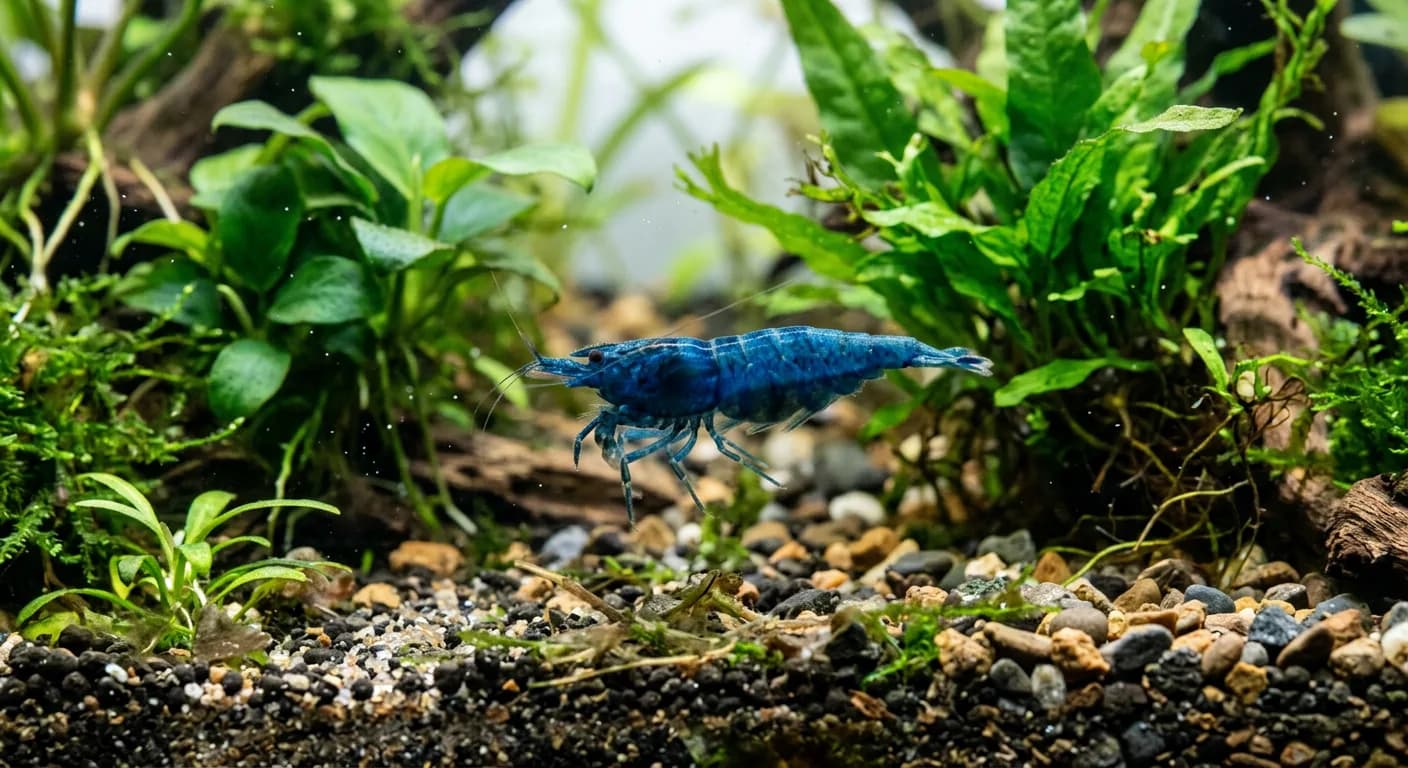
Blue Velvet Shrimp
Neocaridina davidi var. blue velvet
Overview
Blue velvet shrimp are a striking color morph of the common cherry shrimp, bred for their deep, solid blue coloration. The best specimens have an opaque blue body with no clear patches or red tinges, earning the 'velvet' name from their rich, uniform appearance. Like all Neocaridina varieties, they are incredibly hardy and breed readily in aquarium conditions. A 5-gallon tank can support a small colony of 10-15 shrimp, though 10 gallons gives more room for population growth. These shrimp are excellent algae cleaners and biofilm grazers, constantly picking over surfaces for food. They work particularly well in planted nano tanks where their blue color provides a stunning contrast against green plants. Blue velvets are not as intensely colored as some other blue shrimp varieties, but they are much hardier and more forgiving of water parameter fluctuations. The trade-off between color intensity and ease of care makes them perfect for beginners who want colorful shrimp without the challenges of more delicate species.
Tank Setup
Blue velvet shrimp thrive in planted tanks with plenty of surfaces for grazing. A 5-gallon tank works for a starter colony, but 10-20 gallons provides better stability and room for breeding. Use a gentle sponge filter or small hang-on-back filter with an intake guard to prevent shrimplets from being sucked in. Strong water flow stresses them and can prevent successful breeding. Live plants are not required but highly beneficial. Java moss, marimo balls, java fern, and anubias all provide grazing surfaces and hiding spots for molting shrimp. Substrate should be inert. Fluval Stratum or similar active substrates can work but may lower pH more than Neocaridina prefer. Sand or fine gravel works well and does not affect water chemistry. Provide hiding spots like driftwood, caves, or dense plant growth. Shrimp are vulnerable when molting and need secure places to hide during this process. Dim to moderate lighting works best. Bright lights can stress them and promote excessive algae growth.
Water Parameters
Blue velvet shrimp are very tolerant of water parameter ranges, which is part of their appeal for beginners. pH between 6.5 and 7.5 works well, with 7.0 being ideal. They handle both soft and moderately hard water without issues. Temperature should stay between 68 and 74 degrees. Higher temperatures speed up their metabolism and breeding but shorten their lifespan. Lower temperatures slow growth but extend their life. Room temperature (70-72F) often works without a heater in heated homes. Ammonia and nitrite must be zero, but they tolerate higher nitrates than fish. Keep nitrates under 40 ppm, though 20 ppm or less is better for breeding. They are sensitive to copper, which is toxic to all invertebrates. Check any medications, fertilizers, or tap water conditioners for copper content. Avoid using aquarium salt long-term as it can stress freshwater shrimp.
Diet & Feeding
Blue velvet shrimp are excellent algae eaters and biofilm grazers but need supplemental feeding in most tanks. They constantly forage on surfaces, eating algae, dead plant matter, leftover fish food, and biofilm. Supplement with specialized shrimp foods 2-3 times per week. Blanched vegetables like zucchini, spinach, or peas provide essential nutrients and fiber. Remove uneaten vegetables after 24 hours to prevent fouling. Commercial shrimp foods like Hikari Shrimp Cuisine or Fluval Shrimp Granules provide balanced nutrition. Calcium is important for proper molting. Crushed coral, cuttlebone, or specialized shrimp supplements help maintain adequate calcium levels. Feed sparingly. Overfeeding leads to poor water quality, which can kill entire shrimp colonies. A small pinch of food 2-3 times per week is usually sufficient for a colony of 20-30 shrimp. Watch for white bacterial blooms or excessive algae growth, both signs of overfeeding.
Behavior & Temperament
Blue velvet shrimp are peaceful, active grazers that spend most of their time foraging on surfaces. They use their fan-like appendages to filter particles from the water and scrape algae from plants and decorations. Healthy shrimp are constantly moving and feeding. Shrimp that sit motionless or hide all day may be stressed or sick. They are most active during dawn and dusk but remain somewhat active throughout the day. Molting is a normal process that occurs every 3-4 weeks as they grow. Molting shrimp hide and may appear lethargic for a day before shedding their shell. The old shell is often eaten by other shrimp for its calcium content. Newly molted shrimp are soft and vulnerable for 2-3 days until their new shell hardens. They communicate through chemical signals and subtle body movements. Large groups often feed together in loose aggregations.
Compatible Tankmates
Blue velvet shrimp work best with very small, peaceful fish that will not eat them or their babies. Tiny tetras like neons, embers, and celestial pearl danios are usually safe, though they may eat some shrimplets. Otocinclus catfish make excellent companions as they have similar algae-eating habits and peaceful temperament. Other dwarf shrimp species can coexist, though they may interbreed if they are the same species (Neocaridina). Snails like nerites and mysteries are perfect tankmates. Avoid any fish large enough to eat adult shrimp. This includes most gouramis, bettas, angelfish, and bottom-dwellers like corydoras. Even peaceful fish like mollies or platies will eat shrimplets. For a shrimp-only tank, multiple Neocaridina color varieties can create a rainbow effect, though purebred lines will eventually cross if kept together.
Common Health Issues
Blue velvet shrimp are generally very hardy with few health problems when kept in proper conditions. Failed molts are the most common issue, usually caused by calcium deficiency or poor water quality. Shrimp stuck in their old shell or with incomplete molts often die. Maintain adequate calcium levels and stable water parameters to prevent molting problems. White bacterial infections can occur with poor water quality or overfeeding. Affected shrimp develop white, fuzzy patches and usually die quickly. Improve water quality and reduce feeding if this occurs. Sudden population crashes are typically caused by copper poisoning, drastic water parameter changes, or overfeeding leading to ammonia spikes. Always acclimate new shrimp slowly over several hours. Use drip acclimation for best results. They are sensitive to sudden temperature changes or chemical additions. Remove any shrimp that die immediately to prevent water quality issues.
Breeding
Blue velvet shrimp breed readily in aquarium conditions with no special requirements. Mature females develop a yellow saddle of eggs visible behind their head. After mating, the eggs move under the female's tail where she carries them for 25-30 days, constantly fanning them with her swimmerets. Berried females should not be disturbed or stressed. The baby shrimp are tiny but fully formed miniatures of the adults. They require no special care and immediately begin grazing on biofilm and algae. Shrimplets are vulnerable to predation, so breeding tanks should be shrimp-only or contain only very small, peaceful fish. A stable, mature tank with good biofilm growth supports higher shrimplet survival. Population growth can be rapid under ideal conditions, with females producing 20-30 babies every month or two. Separate breeding colonies by color if you want to maintain pure blue velvet lines, as different Neocaridina varieties will interbreed and produce mixed offspring.
Frequently Asked Questions
Quick Stats
What You Need for Blue Velvet Shrimp
Gear that works well for this species, based on what experienced keepers actually use.
Gentle sponge filtration that provides biological cleaning without creating strong currents that stress shrimp. The sponge provides additional surface area for biofilm growth that shrimp love to graze on.
Precise temperature control for the 68-74F range blue velvet shrimp prefer. Lower temperatures extend lifespan while higher temperatures speed breeding - adjustable heater allows you to optimize for your goals.
Specialized shrimp food formulated with the minerals and nutrients freshwater shrimp need for proper molting and breeding. Sinks slowly and doesn't cloud water when used correctly.
Provides surface area for beneficial bacteria and slight pH buffering that many shrimp appreciate. The porous structure supports plant growth which creates additional grazing surfaces for the shrimp.