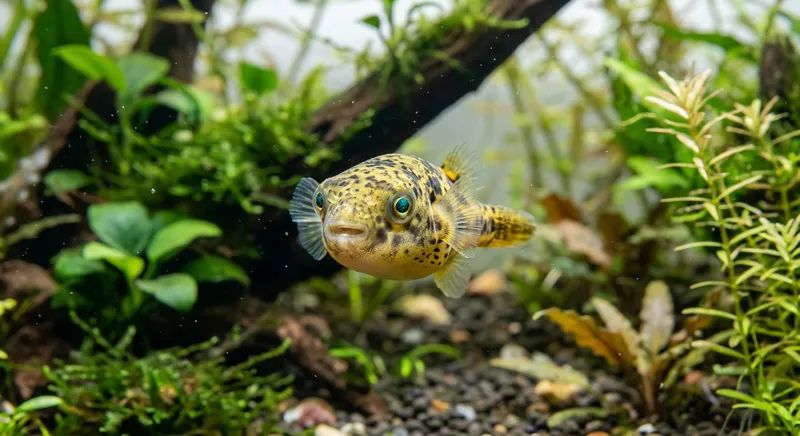
Dwarf Puffer
Carinotetraodon travancoricus
Overview
Dwarf Puffers are small but full of personality. These tiny fish have huge attitudes and are endlessly entertaining to watch. They are one of the few freshwater puffers that stay small, making them suitable for tanks as small as 20 gallons. But do not let their size fool you. These are aggressive little fish that will tear apart tankmates. They are best kept alone or in species-only tanks. If you want a challenging but rewarding fish, Dwarf Puffers deliver. Watching them hunt and eat snails is genuinely one of the most satisfying things in the hobby.
Tank Setup
A 20-gallon tank is the minimum for one Dwarf Puffer, but 30 gallons is better if you want to keep more than one. These puffers need excellent water quality, so a good filter is essential. A hang-on-back filter works well, but make sure the intake is covered with a sponge to prevent injury. Provide plenty of plants and décor for hiding spots. These are curious fish that like to explore. Avoid sharp décor that could puncture their delicate bodies.
Water Parameters
Dwarf Puffers are sensitive to water quality. Temperature should be between 74-82°F, with 78 being ideal. pH should stay between 7.0 and 8.0. Weekly water changes of 25-30% are mandatory. They are sensitive to ammonia and nitrite, so test your water frequently. Some keepers add a small amount of aquarium salt, as they come from slightly brackish waters in the wild.
Diet & Feeding
Dwarf Puffers are strict carnivores. Their diet must include snails, which are essential for wearing down their constantly growing teeth. Provide pond snails, ramshorn snails, or Malaysian trumpet snails regularly. They also eat frozen bloodworms, frozen brine shrimp, and daphnia. Some will accept high-quality frozen foods. If your puffer is not eating snails, try sinking the snail-filled decor into the tank. Their teeth grow continuously, and without hard foods to wear them down, they will need trimming.
Behavior & Temperament
Dwarf Puffers have huge personalities in tiny bodies. They are curious, intelligent, and will recognize their owners. They can be trained to take food from tweezers. But they are also aggressive, especially toward their own kind and any tankmates. They will nip the fins of slow-moving fish and will eat shrimp and snails. They are best kept alone or in a carefully planned species-only tank. Some keepers have success keeping a group in a larger tank with plenty of hiding spots, but aggression can flare without warning.
Compatible Tankmates
Tankmate selection is extremely limited. Dwarf Puffers will eat shrimp and snails, making them incompatible with most invertebrates. They will nip fins of slow-moving fish and will attack small fish. The safest option is to keep them alone. If you must have tankmates, they need to be fast, aggressive enough to defend themselves, and large enough to not be seen as food. Some keepers have success with fast-moving danios, but this is risky.
Common Health Issues
Dwarf Puffers are prone to ich, especially when stressed or in poor water conditions. White spots will appear on the body and fins. Treat with ich medication, raising temperature to 80°F. They are also prone to bacterial infections, often from poor water quality. Fin nipping from aggression can lead to infections. The most unique health issue is overgrown teeth, which happens if they do not have enough hard foods. Overgrown teeth can be trimmed by a vet or experienced keeper.
Breeding
Breeding Dwarf Puffers is possible in species-only tanks. Males are more colorful and have wrinkles around their eyes. Females appear rounder when full of eggs. Spawning involves the male chasing the female, and she lays eggs on plants or décor. The male guards the eggs until they hatch in about a week. Raising the fry is difficult because they need tiny foods like infusoria, baby brine shrimp, and plenty of snails.
Frequently Asked Questions
Quick Stats
What You Need for Dwarf Puffer
Gear that works well for this species, based on what experienced keepers actually use.
Start your own snail colony to provide constant food source. Essential for Dwarf Puffer dental health.
High-protein frozen food that Dwarf Puffers love. Easy to store and feed.
Good variety for puffers. Provides roughage and natural nutrients.
Provides natural hiding spots and tannins that help with water conditions.