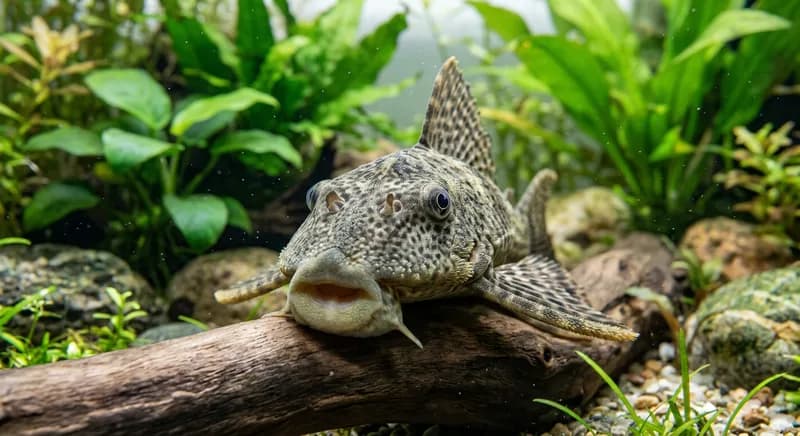
Rubber Lip Pleco
Chaetostoma milesi
Overview
Rubber Lip Plecos are the unsung heroes of the aquarium hobby. They stay small (unlike the common pleco that can hit 2 feet), they are peaceful, and they do a decent job eating algae. If you want a pleco but do not have room for a massive tank, this is the fish for you. They max out around 5-7 inches, which is tiny compared to common plecos. They are also one of the more peaceful pleco species and get along with most community fish. They are hardy and forgiving of beginner mistakes, making them a great starter pleco.
Tank Setup
A 25-gallon tank is the minimum for one Rubber Lip Pleco, but 40 gallons is ideal. They are bottom dwellers that appreciate having territories to claim. Provide driftwood, which they graze on for fiber. Rocks and caves give them hiding spots. A substrate of sand or fine gravel works well. Lighting should be moderate, and these plecos do better in tanks with some plant cover that creates shaded areas. A hang-on-back filter rated for your tank size is sufficient.
Water Parameters
Rubber Lip Plecos are adaptable. They do well in temperatures between 72-82°F, with 77 being ideal. pH should be between 6.5 and 7.5, which covers most aquariums. They are not as sensitive as some other species, but good water quality still matters. Weekly water changes of 20-25% will keep them healthy. They are sensitive to copper, so be careful with medications.
Diet & Feeding
Despite being sold as algae eaters, Rubber Lip Plecos need a varied diet. Algae wafers should be the staple, supplemented with blanched vegetables like zucchini, cucumber, and squash. They also eat some algae in the tank, but not enough to survive on algae alone. They will graze on driftwood, which provides fiber. Quality sinking pellets help round out their diet. Feed them after lights go out, when they are most active.
Behavior & Temperament
Rubber Lip Plecos are peaceful bottom dwellers. They are mostly nocturnal, becoming more active at dusk and night. During the day, they hide in caves or under décor. They are not aggressive and will not bother tankmates. They may compete with other bottom dwellers for food, so make sure everyone gets enough to eat. They are solitary fish and do not need companions of their own kind.
Compatible Tankmates
Rubber Lip Plecos work well in community tanks. They can be kept with most peaceful fish: tetras, rasboras, corydoras, gouramis, and livebearers. They are safe with bettas and other non-aggressive fish. Avoid keeping them with large, aggressive fish that might harass or eat them. They can be kept with other plecos, but watch for aggression over territory.
Common Health Issues
Rubber Lip Plecos are generally hardy. The most common issues stem from poor water quality. Watch for signs of fungal infections, which appear as white cottony patches. Ich can affect them, showing as white spots. They are sensitive to some medications, especially those containing copper. When treating, use half the normal dose and monitor closely. The biggest health risk is actually starvation, so make sure they are getting enough food.
Breeding
Breeding Rubber Lip Plecos in home aquariums is rare but possible. They are cave spawners, so provide PVC pipes or caves for them to lay eggs. The male guards the eggs until they hatch, which takes about a week. Raising the fry is challenging because they need very small foods like infusoria or baby brine shrimp. Most繁殖 is done by commercial breeders.
Frequently Asked Questions
Quick Stats
What You Need for Rubber Lip Pleco
Gear that works well for this species, based on what experienced keepers actually use.
Natural driftwood provides grazing surface and hiding spots. Rubber Lip Plecos need wood in their diet for proper digestion.
Balanced nutrition with algae and vegetables. These sinking wafers are ideal for bottom feeders.
Formulated for bottom-dwelling fish with natural ingredients. Supports healthy growth and vibrant coloration.
Provides secure hiding spots that reduce stress. Rubber Lip Plecos prefer to hide during daylight hours.