Serpae Tetra
Hyphessobrycon eques
Overview
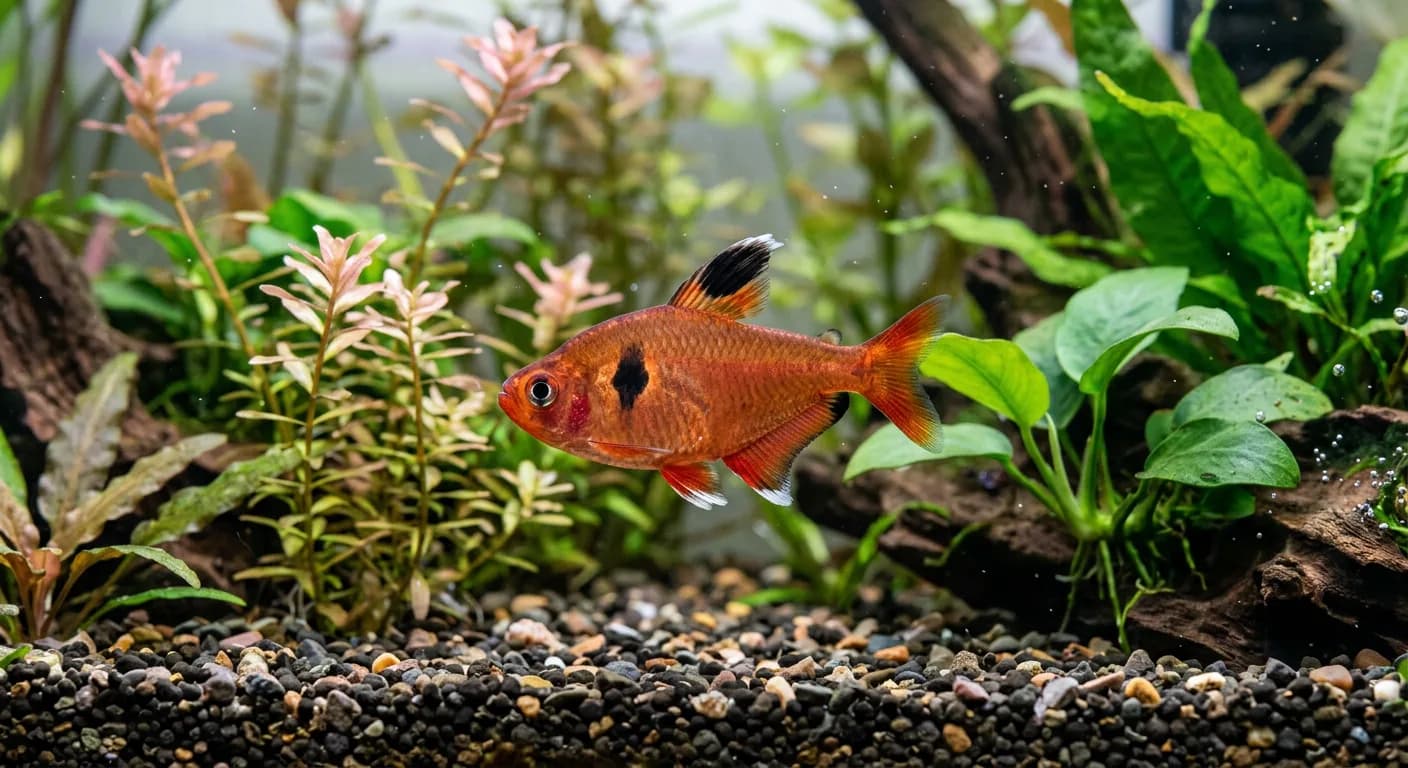
Serpae Tetras are the red gems of the tetra world. They have a deep red-orange body with a distinctive black spot near their gill plate and a black dorsal fin. The fins often show a reddish tint that fades into clear tips. These are active little fish that zoom around the middle of the tank in a coordinated group. Males can be slightly more colorful than females, but the difference is subtle. The name 'Serpae' comes from their historical classification, and you will still see them sold as Hyphessobrycon serpae in some stores. They are widely tank-bred, which makes them adaptable and hardy for most community setups. The downside is their reputation for fin nipping. They are not as bad as tiger barbs, but a bored or underschooled group will pick on slow-moving tankmates. Keep them in a proper school of at least 6, and provide enough tank space and dither fish to keep them occupied. A 20-gallon is the bare minimum, but a 30-gallon gives them room to stretch their fins without bothering others.
Tank Setup
A 20-gallon works for a group of 6, but 30 gallons is much better. Serpae Tetras come from the Paraguay River basin in South America, where the water is warm, soft, and slightly acidic. They do well in planted tanks with subdued lighting, which helps their colors pop. Java fern, anubias, and cryptocoryne all work well in the parameters they prefer. Use dark substrate like inert black sand or aquasoil to bring out their red coloration. Bright white gravel washes them out. Filtration does not need to be aggressive. A hang-on-back filter rated for the tank size works fine. Add some current from the filter output, since they come from river environments. Avoid heavy driftwood if you want to keep pH on the higher end, as it softens and acidifies water. They do fine in community parameters, so no special adjustments are needed for most municipal water supplies.
Water Parameters
Serpae Tetras are forgiving of water parameters, which makes them a good choice for beginners. pH between 5.5 and 7.5 covers their range. They prefer softer water but tolerate moderately hard water without issues. Temperature should stay between 72 and 82 degrees, with 76 being a safe middle ground. They are not as sensitive to water quality as some other tetras, but standard good practices still apply. Ammonia and nitrite must be zero at all times. Keep nitrates under 25 ppm with weekly water changes of 20-25 percent. They can handle a wider temperature range than many tropical fish, which makes them versatile for community tanks in different room temperatures. Tank-bred specimens are more adaptable than wild-caught fish, and most fish store stock is tank-bred.
Diet & Feeding
Serpae Tetras are not picky eaters. A quality flake or small pellet forms the base of their diet. They are mid-water feeders that will grab food as it drifts down. Fluval Bug Bites, Omega One, and New Life Spectrum all work well as daily staples. Supplement with frozen bloodworms, brine shrimp, or daphnia 2-3 times per week. They will also nibble on algae wafers and vegetables like blanched zucchini. Feed twice daily, only what they finish in 2-3 minutes. These fish have big appetites and will eat more than they need if given the chance. Monitor their body condition and adjust feeding accordingly. Overfeeding leads to poor water quality and health problems. Color-enhancing foods with natural astaxanthin help maintain their deep red-orange coloration. Skip generic bulk flakes, as the difference in color and health is noticeable.
Behavior & Temperament
Serpae Tetras have a reputation that precedes them. They are semi-aggressive, which in practical terms means they can be fin nippers. The severity depends on group size, tank size, and tankmates. A properly schooled group of 6+ in a 30-gallon with active tankmates is generally well-behaved. Problems arise when they are kept in small groups, small tanks, or with slow-moving long-finned fish. They establish a hierarchy within the school, with dominant individuals chasing others occasionally. This is normal behavior and rarely results in injury. They are active swimmers that use the entire middle of the tank. Provide plenty of horizontal swimming space. They do well with other active community fish that can hold their own. Avoid pairing them with bettas, angelfish, or anything slow with long fins. A busy tank with lots of dither fish is the best way to keep Serpae behavior in check.
Compatible Tankmates
Serpae Tetras do best with other active community fish that are not too slow and do not have elaborate fins. Cherry barbs, harlequin rasboras, and other barbs make good companions. Bottom-dwellers like corydoras and kuhli loaches are safe choices and occupy different tank levels. Plecos and otocinclus handle algae cleanup. Livebearers like platies, mollies, and swordtails share similar water preferences and activity levels. Honey gouramis and dwarf gouramis work, though watch for initial aggression during territory establishment. Avoid any fish with long flowing fins, as Serpaes will nip. This includes bettas, angelfish, and discus. Large cichlids like oscars will eat them. Dwarf puffers are too aggressive and will harass the tetras. Goldfish need cooler water and are not compatible. Clown loaches grow too large and are too slow for these active tetras.
Common Health Issues
Serpae Tetras are hardy fish with few specific health problems. Ich is the most common issue, especially when temperature fluctuates during water changes or when new fish are introduced. Standard heat treatment at 86 degrees for 2 weeks eliminates ich. They can also get fungal infections, which typically appear as white cottony growths. Improve water quality first, then treat with antifungal medication if needed. Fin rot can occur if water quality is poor or if their fins are damaged by nipping. Clean water and good nutrition usually prevent it. Internal parasites occasionally affect imported fish, showing as bloating or weight loss despite normal appetite. Quarantine new arrivals for 2 weeks before adding them to the main tank. The best prevention is maintaining excellent water quality and feeding a varied diet. Tank-bred fish are generally more disease-resistant than wild-caught specimens.
Breeding
Breeding Serpae Tetras is achievable in a home aquarium, though it requires a separate setup. Use a 10-20 gallon breeding tank with soft, acidic water (pH 5.5-6.5) and temperature around 80 degrees. Spawning mops or fine-leaved plants like java moss give them places to deposit eggs. Condition the pair with live and frozen foods for 1-2 weeks before attempting spawn. Males will display to females, chasing them around the tank. Females scatter their eggs among the plants, and parents will eat the eggs if given the chance. Remove adults immediately after spawning. Eggs hatch in 24-36 hours, and fry become free-swimming a few days later. Fry are tiny and need infusoria or liquid fry food initially, then graduate to baby brine shrimp. Growth is relatively fast, and fry reach adult size within 6-8 months. Separating fry by size helps prevent cannibalism.
Frequently Asked Questions
Quick Stats
What You Need for Serpae Tetra
Gear that works well for this species, based on what experienced keepers actually use.
Rated for tanks up to 20 gallons with excellent biological filtration. The multi-stage design handles the bioload of a Serpae Tetra school well. Adjustable flow rate lets you dial in the current these active fish prefer. Long-lasting filter media reduces maintenance frequency.
50W heater suitable for 10-20 gallon tanks. Adjustable temperature dial lets you set the exact 72-82F range these tetras need. Compact design fits easily in smaller tanks. Automatic shut-off prevents overheating.
Complete test kit measures pH, ammonia, nitrite, and nitrate. Essential for monitoring water quality in smaller tanks where parameters swing faster. Liquid test kits are more accurate than strip tests. Good value per test.
Insect-based formula with black soldier fly larvae as the first ingredient. High protein content supports health and coloration in tetras. The flake format is easy to portion and floats well for mid-water feeding. Natural color enhancers bring out the red in Serpae Tetras.