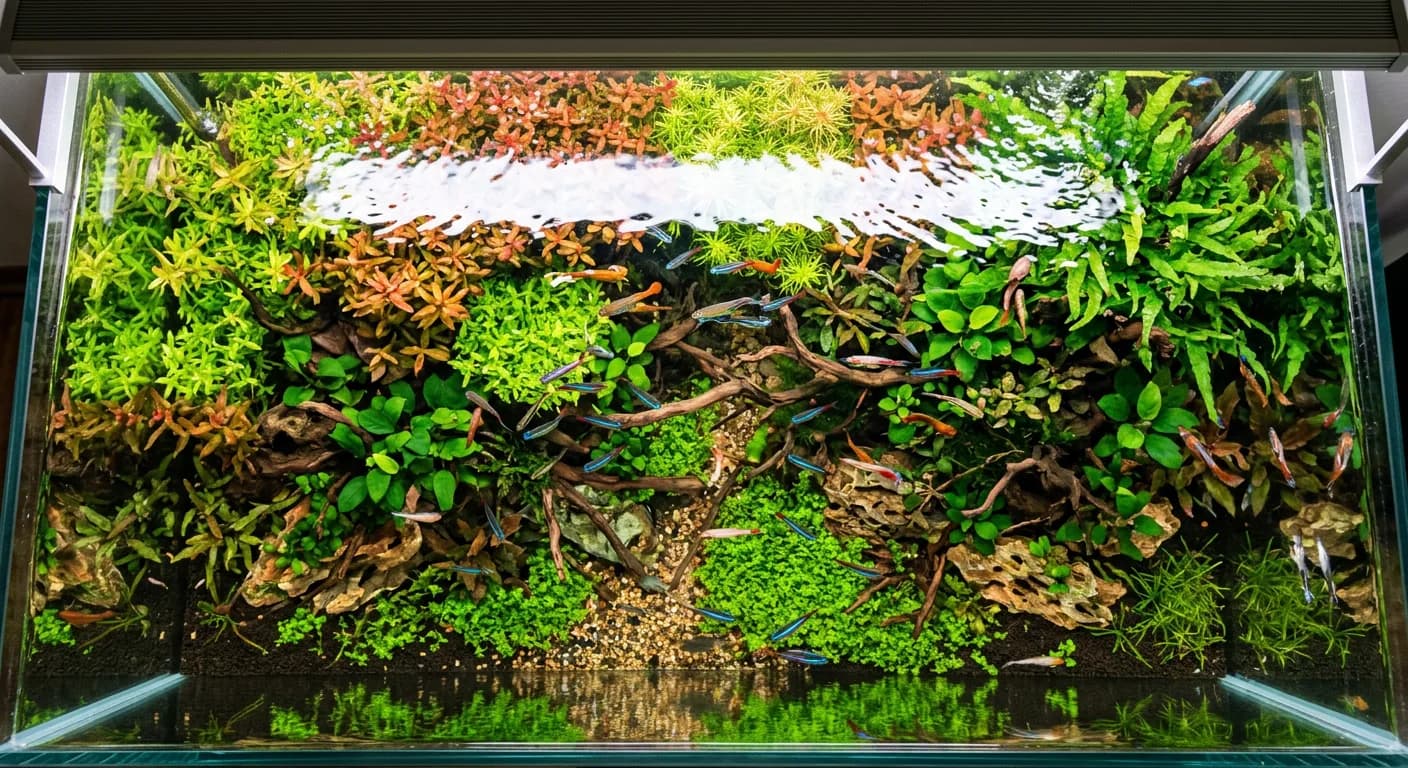
Best Aquarium Light for Freshwater Tanks
Bad lighting is the fastest way to grow algae instead of plants. Most stock lights that come with aquarium kits put out barely enough light to see your fish, let alone grow anything. A decent LED fixes that, gives you a proper day/night cycle on a timer, and actually makes your tank look good. If you're running a planted tank or just tired of your fish looking washed out under a dim hood light, upgrading here makes a real difference.
Our Picks
Hygger Auto On Off LED Aquarium Light
Best OverallThe built-in timer with sunrise/sunset mode is the main selling point. You set it once and forget it. The light output is strong enough to grow low and medium light plants in tanks up to 20 gallons, and the gradual ramp-up doesn't spook your fish every morning.
Pros
- • Built-in timer with sunrise, daylight, and sunset phases, so no outlet timer needed
- • Good PAR output for low to medium light plants at typical tank depths
- • Extendable brackets fit a range of tank sizes without looking janky
- • White and RGB LEDs let you adjust color temperature
Cons
- • Not strong enough for high-light demanding plants like carpet species in deeper tanks
- • Controls are on the light itself, not a remote, so you're reaching over the tank to adjust
- • Timer resets if you unplug it, which is annoying during water changes
NICREW ClassicLED Aquarium Light
Budget PickIt's cheap, it works, and it's been the go-to budget light in the hobby for years. The ClassicLED won't grow demanding plants, but it puts out enough light for java fern, anubias, and other low-light species. For a fish-only tank, it makes your fish look great without the algae problems that come from overpowered lights.
Pros
- • Under $20 for most sizes, hard to beat on price
- • Clean white and blue LED combo looks good on most tanks
- • Lightweight and runs cool, won't heat up your water
- • Adjustable brackets fit standard tank rims
Cons
- • No built-in timer, so you'll need a separate outlet timer ($5-8)
- • Not enough output for medium or high light plants
- • Build quality is basic; the brackets feel flimsy but hold up fine
How to Pick an Aquarium Light That Won't Give You Algae Problems
PAR matters more than lumens. Lumens measure how bright a light looks to your eyes. PAR (Photosynthetically Active Radiation) measures how much usable light reaches your plants. A light can look blindingly bright and still have terrible PAR at substrate level. For low-light plants, you want 30-50 PAR at the substrate. Medium light plants need 50-100. If you're not growing plants, PAR doesn't matter much and you can pick based on how your fish look under it.
Set a photoperiod and stick to it. Run your light 6-8 hours per day, no more. Beginners almost always leave lights on too long, and that's the number one cause of algae outbreaks in new tanks. A timer (built-in or a $5 outlet timer) takes the guesswork out of it. Your plants don't need 12 hours of light. Neither do your fish.
Match the light to what you're growing. If you're keeping a fish-only tank or just growing java fern and anubias, a basic LED is all you need. Spending $80 on a high-PAR light for a tank with no live plants is a waste, and the extra light output just feeds algae. If you want to grow stem plants or anything that needs medium light, the cheapest LED on Amazon probably won't cut it.
Watch out for garbage no-name lights. There are hundreds of aquarium LEDs on Amazon from brands that didn't exist last month. Many of them have inflated specs, inconsistent color temperature, and LEDs that burn out in a few months. Stick with brands that have been around in the hobby for a while. Hygger and NICREW both have track records. A $12 light that dies in 3 months isn't a deal.