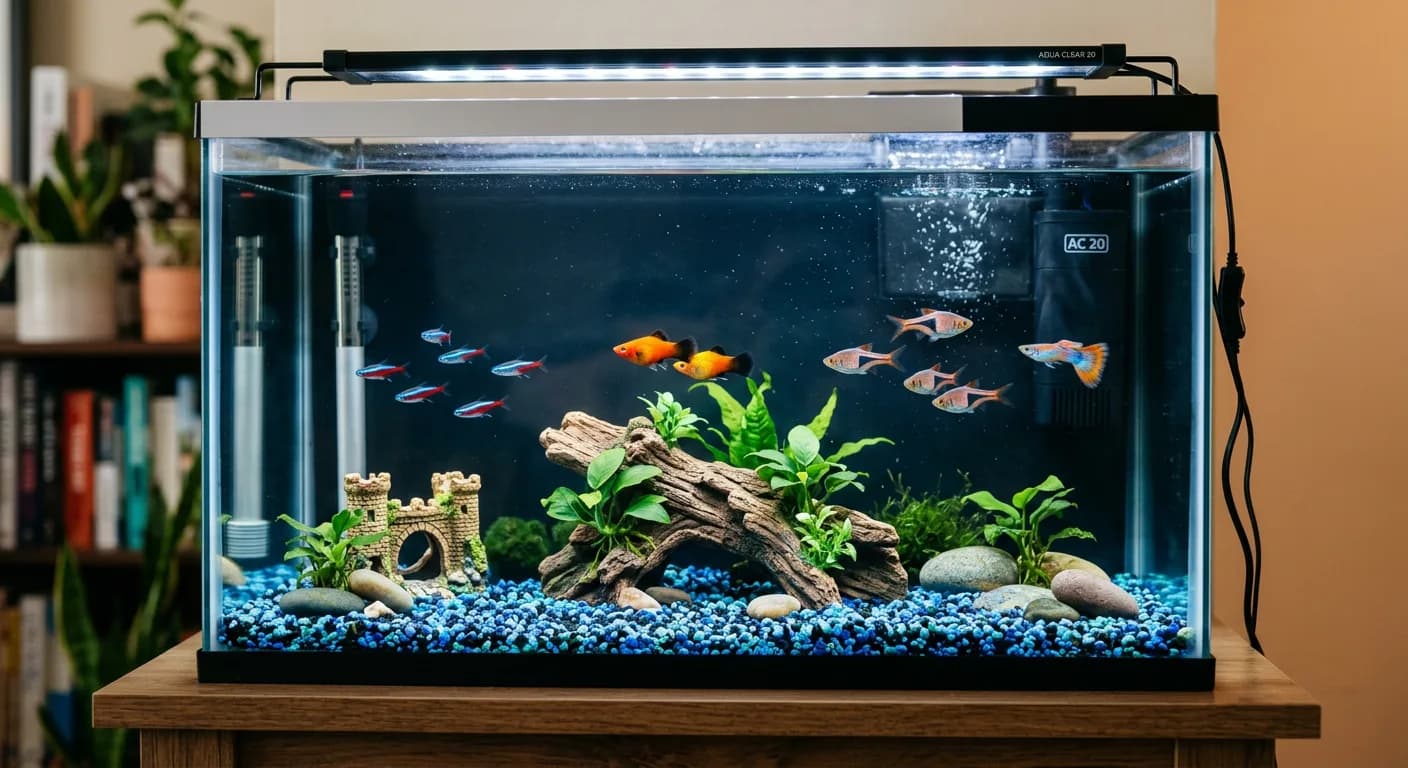
Best Beginner Fish Tank & Starter Kit
Starting a fish tank is straightforward if you start with the right size and don't skip the cycling step. A starter kit bundles the tank, filter, light, and heater together so you're not piecing everything together from scratch. That said, no kit includes everything you actually need, and too many beginners buy a 3-gallon desk tank that turns into a maintenance nightmare within a month. Start with a 10-gallon minimum and you'll have a much easier time keeping fish alive.
Our Picks
Aqueon 10 Gallon LED Aquarium Starter Kit
Best OverallThe 10-gallon size is the sweet spot for beginners. It's big enough to be stable (small tanks swing in temperature and water chemistry fast) but small enough to fit on a desk or dresser without needing a dedicated stand. The Aqueon kit comes with a filter, heater, and LED light, which gets you most of the way there for under $70.
Pros
- • 10-gallon size hits the right balance of stability and stocking options
- • Includes QuietFlow filter, preset heater, and LED light
- • Standard dimensions mean tons of aftermarket accessories fit
- • Affordable entry point, under $70 at most retailers
Cons
- • The included filter uses disposable cartridges (add extra bio media or upgrade later)
- • The heater is preset to 78°F with no adjustable dial
- • Does not include water conditioner, test kit, substrate, or decorations (budget another $30-50)
Aqueon 20 Gallon LED Aquarium Starter Kit
Best for More FishIf you have the space, a 20-gallon is worth the step up. You can keep more fish, a wider variety of species, and the extra water volume makes the tank more forgiving when you're still learning. The Aqueon 20-gallon kit comes with the same heater, filter, and light setup as the 10, just sized up. The price difference is usually $20-30 more and you get double the stocking options.
Pros
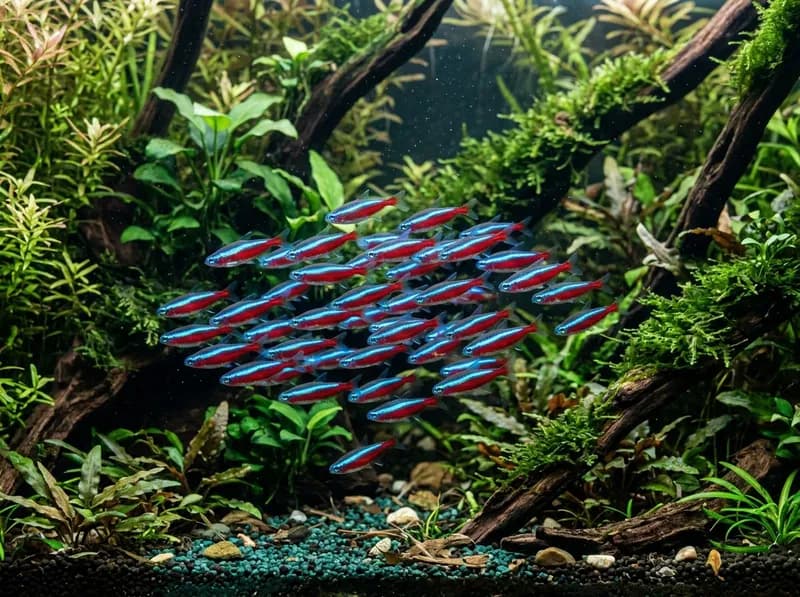
- • Room for schools of tetras, corydoras, or a centerpiece fish
- • More water volume means more stable parameters, making it harder to crash
- • Same bundled components as the 10-gallon, scaled up
- • Still fits on most furniture without a dedicated aquarium stand
Cons
- • Heavier when filled, so check that your furniture can handle roughly 200 pounds
- • Takes up more counter or shelf space
- • Still comes with disposable cartridge filter, same upgrade advice applies
What to Know Before Buying Your First Fish Tank
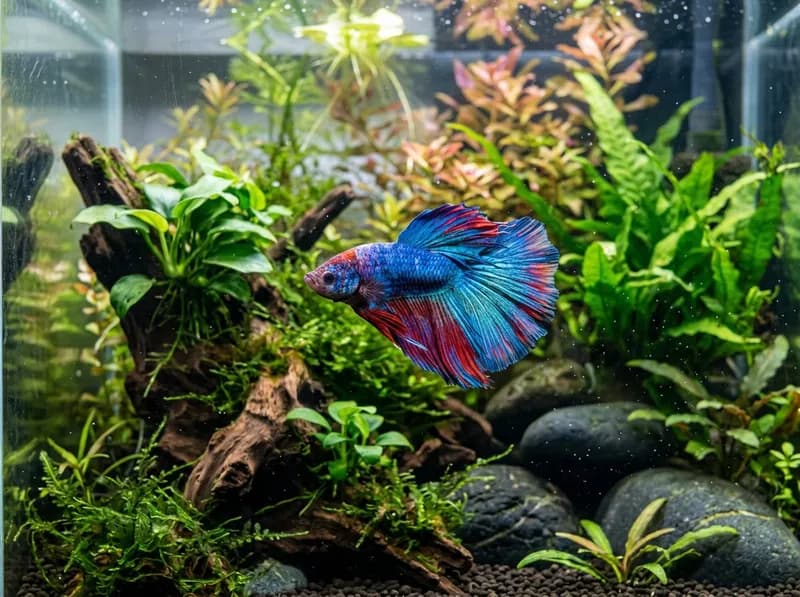
Start at 10 gallons. Those 3-gallon and 5-gallon nano tanks look cute on a shelf, but they're harder to keep stable than a bigger tank. In a small volume of water, temperature swings happen fast, ammonia spikes hit harder, and your stocking options are basically a single betta. A 10-gallon gives you room for a small community of fish and enough water volume that a minor mistake won't kill everything overnight. If you have space for a 20, even better.
Know what the kit includes and what it doesn't. Starter kits give you the tank, a filter, a light, and usually a heater. What you still need: water conditioner (Seachem Prime), a liquid test kit (API Master Test Kit, not strips), substrate (gravel or sand), and decorations or plants. Budget another $30-50 for those extras. The kit gets you started, but it's not truly complete.
Cycle your tank before adding fish. This is the single most important thing beginners skip. The nitrogen cycle is the process where beneficial bacteria colonize your filter and convert toxic ammonia into less harmful nitrate. This takes 2-6 weeks with no fish in the tank. You add an ammonia source, test daily, and wait until ammonia and nitrite both read zero. Look up fishless cycling and follow the steps.
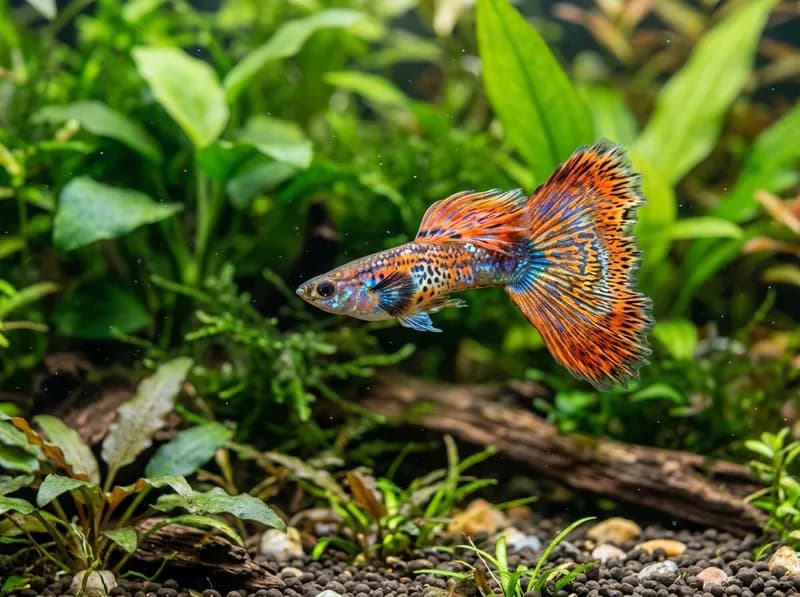
The preset heater is fine to start. The heater included in Aqueon kits is preset to about 78°F, which works for most tropical community fish: tetras, guppies, corydoras. If you eventually keep fish that need a specific temperature, upgrade to an adjustable heater later.
Plan to upgrade the filter media. Both Aqueon kits come with QuietFlow filters that use disposable cartridges. Stuff some extra sponge or ceramic bio rings into the filter alongside the cartridge. That way when you eventually swap the cartridge, your bacteria colony stays intact.