Best Aquarium Test Kit for Freshwater Tanks
You cannot see ammonia, nitrite, or nitrate. Your fish do not care about cloudiness. They care about invisible toxins that burn their gills and shut down their organs. A test kit tells you what is actually happening in your water. Without one, you are guessing. And when fish get sick, the first question anyone will ask is "what are your water parameters?"
Our Picks
API Freshwater Master Test Kit
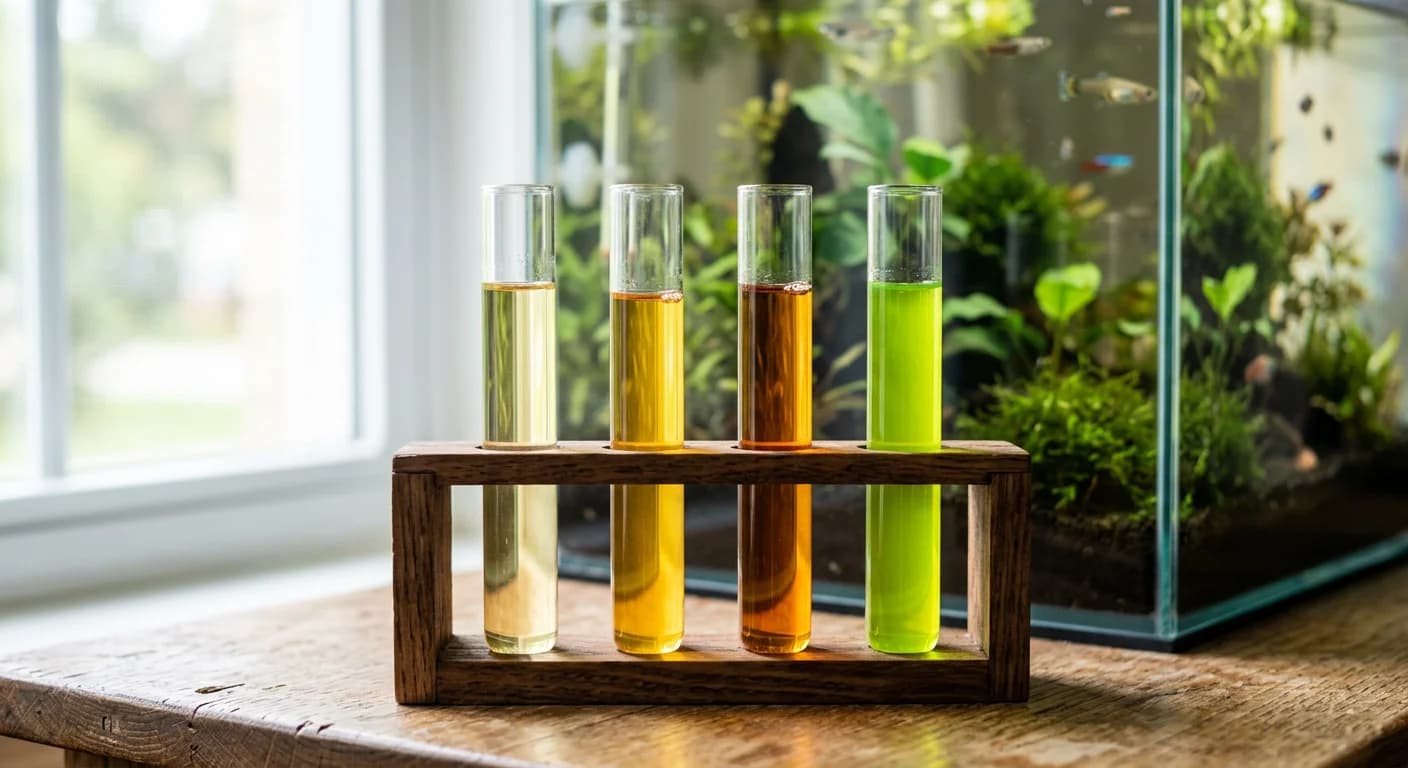
Best OverallThis is the test kit that every fishkeeping forum, subreddit, and fish store recommends. It covers ammonia, nitrite, nitrate, pH, and high-range pH with liquid reagent tests. Each test takes about five minutes and gives you a color reading you match to a chart. It is not fancy, but it is accurate, and the 800-test bottle count means a single box lasts most people over a year. If you own a freshwater tank, you should own this kit.
Pros
- • Covers the five parameters that matter most for freshwater tanks
- • Liquid tests are far more accurate than paper strips
- • 800+ tests in one box, so the cost per test is pennies
- • Color charts are straightforward to read in good lighting
Cons
- • Tests take 5 minutes each, which adds up when you test all five
- • The nitrate test requires you to shake the bottle hard for 30 seconds (people skip this and get bad readings)
- • Does not include GH or KH tests, those are sold separately
API Ammonia Test Kit
Budget PickIf you can only afford one test, make it ammonia. Ammonia is the thing that kills fish fastest, and it is the first toxin to spike in a new or overstocked tank. This single-parameter kit uses the same liquid reagent method as the Master Test Kit but only tests for ammonia. It costs a fraction of the price and still gives you the most important reading. Pair it with the full kit later when your budget allows.
Pros
- • Tests the single most dangerous parameter in your tank
- • Same accuracy as the Master Test Kit for ammonia
- • Cheap enough to buy on day one with your tank
- • Over 130 tests per box
Cons
- • Only tests ammonia, so you are blind to nitrite, nitrate, and pH
- • You will eventually want the full Master Test Kit anyway
- • Same 5-minute wait time per test
What to Test and Why It Matters
Liquid tests vs. strips. Strips are convenient. You dip them in, wait 30 seconds, and read the colors. The problem is accuracy. Strips give you a ballpark, not a precise number. They are fine for a quick check, but when your fish are sick or you are cycling a tank, you need the precision that liquid reagent tests give you. The API Master Test Kit uses liquid reagents, and the difference in accuracy is noticeable.
What each parameter means. Ammonia comes from fish waste, uneaten food, and decaying plants. Any ammonia above 0 ppm is toxic. Nitrite is the second stage of the nitrogen cycle. Also toxic at any detectable level. Nitrate is the end product and is tolerable up to about 40 ppm for most fish, though lower is better. pH measures how acidic or alkaline your water is. Most freshwater fish do fine between 6.5 and 7.8, and stability matters more than hitting a perfect number.
How often to test. During cycling, test daily. You are watching ammonia rise, nitrite rise, and then both drop to zero while nitrate climbs. That process takes 4-8 weeks. Once your tank is cycled, weekly testing is enough unless something looks off. If a fish is acting strange, lethargic, or showing disease symptoms, test immediately. The answer is usually in the water.
The nitrogen cycle in 60 seconds. Fish produce ammonia. Bacteria called Nitrosomonas convert ammonia to nitrite. Different bacteria called Nitrospira convert nitrite to nitrate. You remove nitrate through water changes. This cycle takes weeks to establish in a new tank, which is why new tanks kill fish and why testing is not optional during that period.
Tips for accurate readings. Shake the nitrate bottle #2 vigorously for at least 30 seconds. The reagent settles and gives false low readings if you skip this step. Test in natural light or under a daylight-balanced bulb. Yellow-tinted lighting makes the color charts harder to read. Rinse the test tubes with tank water between tests.