Live Aquarium Plants: What to Grow and How Not to Kill Them
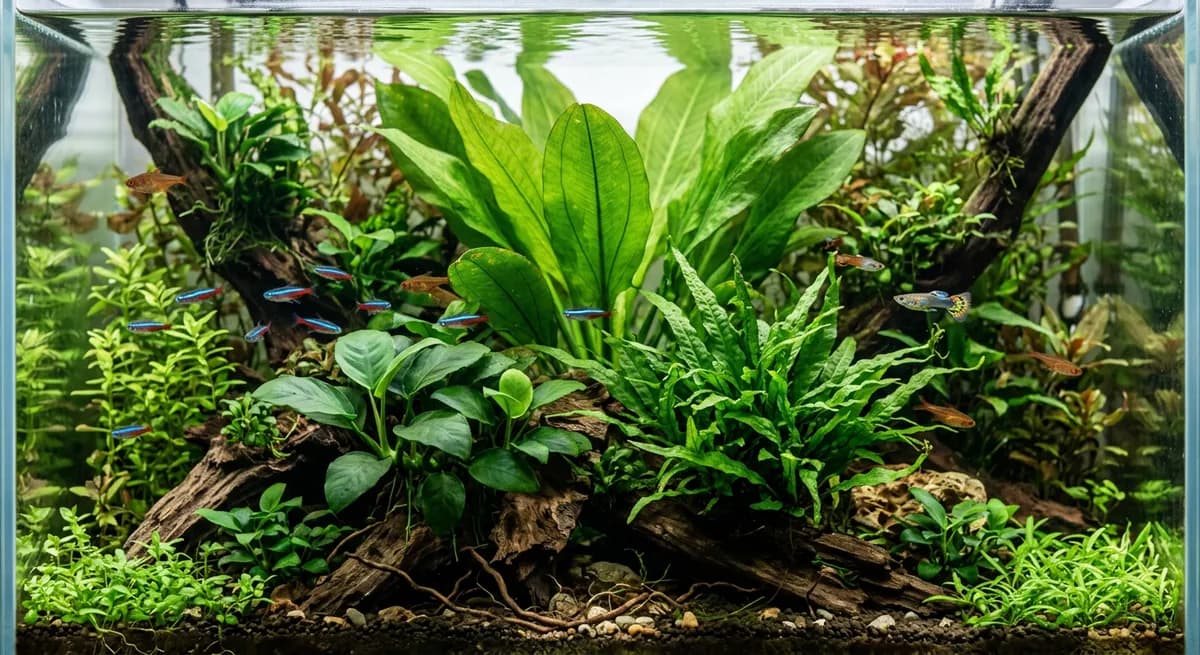
Live plants are not optional decoration. They are a functional part of your tank's ecosystem. They absorb nitrates, provide oxygen, offer hiding spots for shy fish, and honestly look way better than plastic. The good news: you do not need a high-tech planted tank to grow them. Most beginner plants are nearly impossible to kill if you get the basics right. This guide covers the plants worth starting with, what they need, and how to keep them thriving long-term.
01
Why Live Plants Are Worth It
Before diving into the plants, know why you want them. Live plants do what plastic cannot: they filter your water. They pull ammonia, nitrites, and nitrates out of the water column through their leaves and roots, which means cleaner water and fewer water changes for you.
Fish also behave more naturally in planted tanks. Tetras and rasboras school tighter. Shrimp feel safe enough to come out. Bettas sleep on broad leaves. Corydoras sift through substrate around plant roots. A planted tank is not just prettier. It is a healthier environment for your fish.
That said, do not feel obligated to go fully planted overnight. Start with 3-5 hardy plants and build from there. Java fern, anubias, and java moss are the classic starter trio for a reason.
02
Beginner Plants: Start Here
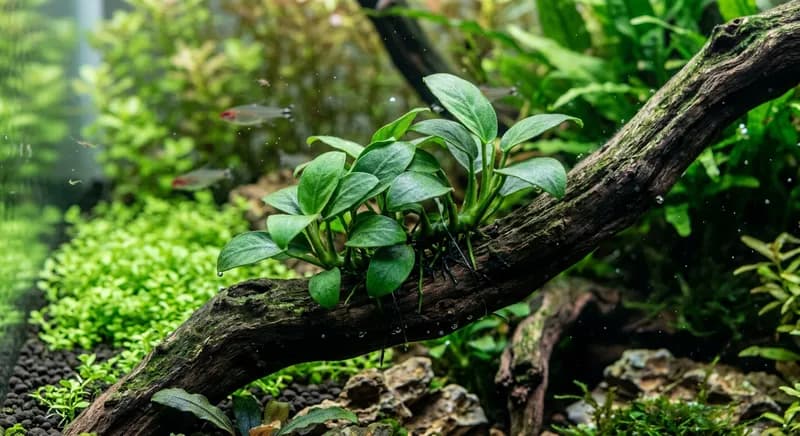
Anubias attached to driftwood - do not bury the rhizome
These plants tolerate a wide range of conditions and will survive minor mistakes. If you kill these, something is seriously wrong with your tank water.
Anubias is the tank staple. It attaches to rocks, driftwood, or decor. Do not bury the rhizome in substrate or it will rot. It grows slowly, tolerates low light, and does not need CO2. Anubias nana and Anubias barteri are the most common varieties. Great for aquascaping on hardscape.
Java Fern is similar to anubias in care. Attach it to driftwood or rocks with thread or super glue. The long, flowing leaves look great in the background or midground. Like anubias, java fern does not want its rhizome buried.
Java Moss is a versatile carpeting moss that attaches to surfaces and creates dense, fluffy coverage. Use it on driftwood, rocks, or even the back glass. It does not need high light and tolerates a wide temperature range. Shrimp love it because it becomes a baby shrimp nursery.
Hornwort is a floating plant that grows incredibly fast. It absorbs nutrients directly from the water column, making it excellent for nitrate control. Let it float or anchor the stems into substrate. It can grow several inches per week in good conditions. Warning: it drops needles when stressed, which can clog filter intakes.
Amazon Sword is a root-feeder that makes a bold statement. It needs substrate (2-3 inches deep) and benefits from root tabs. The broad leaves provide excellent cover for bettas and shy fish. It is not demanding about light but does appreciate fertilizer or nutrient-rich substrate. One Amazon Sword can fill a significant portion of a 20 gallon tank.
03
Intermediate Plants: The Next Step
Once you have the basics down, these plants add variety and challenge without requiring a high-tech setup.
Cryptocoryne comes in several varieties (wendtii, lucens, blassii) with different leaf colors: green, brown, and red. They are root feeders that do best planted in substrate with root tabs. Crypts often "melt" when first planted or when water conditions change, but they typically regrow from the roots once settled. Patience is key with crypts.
Ludwigia is a stem plant with red or green leaves depending on the variety. It grows fast, needs moderate light, and responds well to liquid fertilizer. Prune the tops to encourage bushier growth. Ludwigia natans and Ludwigia repens are common in the aquarium trade.
Dwarf Baby Tears (Hemianthus callitrichoides) is a tiny carpeting plant that creates a lush green lawn in the front of the tank. It needs higher light than the beginner plants and benefits from CO2, but it is rewarding when it carpets. Worth trying once you are comfortable with your tank's stability.
Rotala is a stem plant known for pink and red coloring under good lighting. Rotala rotundifolia is the easiest variety. It needs moderate to high light and benefits from CO2 and fertilizer. It grows fast and responds well to pruning. Cut the tops and replant them to fill in gaps.
04
Tank Requirements: What Plants Need
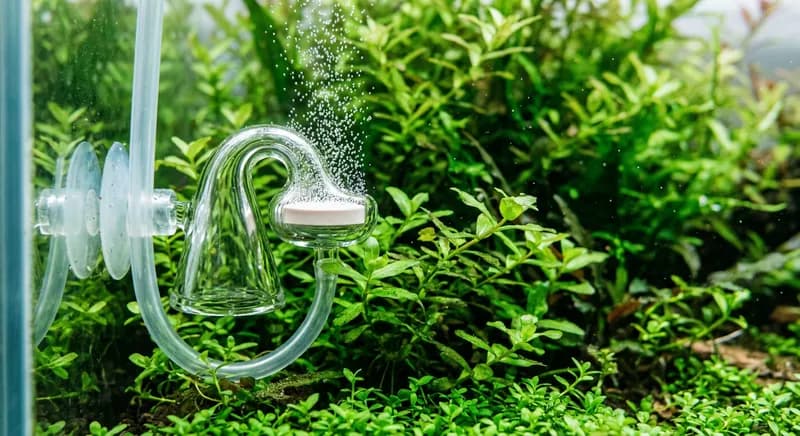
CO2 systems are optional for beginner plants
Light, substrate, and nutrients: these are the three pillars. Most beginner plants need less than you think on all three.
Lighting is the most commonly misunderstood. More light is not always better. Excessive light fuels algae growth and can burn plants. For a low-tech planted tank, aim for moderate lighting, roughly 0.5 to 1 watt per gallon of LED light, or a quality planted tank light run for 8-10 hours per day. Use a timer. Consistent photoperiod matters more than intensity for most plants.
Substrate matters for root feeders but barely matters for stem plants and epiphytes (anubias, java fern, java moss). If you want sword plants and crypts, use nutrient-rich substrate or add root tabs. Gravel works fine for anubias and java fern attached to hardscape. Aquarium soil (like Fluval Stratum or Seachem Flourite) is the premium option but costs more.
CO2 is optional for most beginner plants. Anubias, java fern, java moss, hornwort, and amazon swords all grow fine without CO2 injection. Crypts and stem plants grow faster with CO2 but will survive without it. If you want dense carpet plants or colorful stem plants, CO2 becomes more important. Do not add CO2 until you have your lighting and nutrient balance sorted. Adding CO2 to a tank with excessive light is a fast track to algae problems.
Fertilizer for root feeders: root tabs every 2-3 months. For stem plants and epiphytes: liquid fertilizer dosed weekly at half the recommended amount works well. Do not over-fertilize. Less is more, especially in a low-tech tank.
05
Planting: How to Do It Right
The biggest mistake beginners make with plants is planting them incorrectly. Different plants have different requirements.
Epiphytes (Anubias, Java Fern, Java Moss): Do not plant these in substrate. Attach them to driftwood, rocks, or decor using super glue (gel super glue is safest), cotton thread, or rubber bands. They anchor themselves within a few weeks. The rhizome (the thick stem that leaves grow from) must stay above substrate. Burying it is the fastest way to kill these plants.
Root Feeders (Amazon Sword, Cryptocoryne): Plant the roots in substrate, not the crown. The crown is where the leaves emerge, so keep it at or slightly above substrate level. Push the roots down gently and let the crown sit on top. Press substrate around the roots to anchor. Do not pack it tightly.
Stem Plants (Ludwigia, Rotala): Plant the stems individually or in small groups. Bury the bottom 1-2 inches of each stem. New roots will grow from the buried portion. Space them so leaves can get light. Stem plants look best planted in groups of 3-5 stems.
Floating Plants (Hornwort, Duckweed, Salvinia): Just drop them in. Hornwort can be anchored by burying the base in substrate if you prefer it not to float. Most floating plants need to be periodically thinned because they grow fast and can shade out plants below.
06
Trimming and Maintenance
Plants need regular trimming to stay healthy and look good. The good news: trimming is simple once you know what to cut.
Epiphytes (anubias, java fern) barely need trimming. Remove dead or yellowing leaves at the base. If anubias gets too big, you can divide it by cutting the rhizome into sections. Each section needs at least 3-4 leaves and some roots.
Stem plants respond well to pruning, which actually encourages bushier growth. Cut stems about 2-3 inches from the top, right above a leaf node. The cut section can be replanted, and it will grow new roots from the cut end. This is free plants. Leave the bottom portion in place and it will sprout new side shoots.
Cryptocoryne does not need much trimming. Remove dead leaves at the base. If the plant "melts" (all leaves turn to mush), do not panic. Leave the roots in place. It will usually regrow from the rhizome within a few weeks to a month.
Hornwort needs frequent thinning. Left unchecked, it will take over the surface and block light to everything below. Remove entire stems as needed. Composting hornwort is easy since it breaks down quickly.
Carpeting plants (java moss, dwarf baby tears) need occasional trimming to stay dense. For java moss, use scissors to trim the top layer and keep it from getting too tall and stringy.
07
Propagation: How to Get More Plants Free
The best part of keeping live plants: they reproduce. Once you know how, you will never buy java fern or anubias again.
Stem plants are the easiest to propagate. Take a cutting 4-6 inches long from a healthy stem, remove leaves from the bottom 2 inches, and plant the bare stem in substrate. Roots develop within 1-2 weeks. This is why stem plants are so affordable. They are essentially unlimited.
Anubias and Java Fern propagate through rhizome division. When the rhizome gets long (4+ inches), cut it into sections with at least 3-4 leaves each. Attach each section to driftwood or rock separately. They grow slowly but reliably.
Java Moss spreads on its own. It will attach to any surface it touches. To propagate, simply cut a portion and attach it somewhere new. Within weeks it spreads.
Cryptocoryne produces runners, horizontal stems that shoot out from the main plant and grow new baby plants. Once the babies have their own roots, you can separate them from the mother plant and replant them elsewhere. This is how you get a dense crypt cluster over time.
Hornwort is almost aggressively easy. Any 3-inch section will grow into a full plant. Just drop a stem in the tank and it roots or floats.
08
Common Problems and How to Fix Them
Plants tell you what is wrong. You just have to learn to read them.
Yellow leaves usually mean nutrient deficiency, especially iron or nitrogen. For root feeders, add root tabs. For stem plants, dose liquid fertilizer. Yellow leaves that stay on the plant are not doing anyone any good, so trim them off.
Brown leaves can mean several things. In anubias and java fern, brown crusty spots usually indicate mineral buildup from hard water, harmless but permanent. Soft brown patches can mean rot from being buried or poor water quality. In stem plants, brown transparency often means CO2 is too low or inconsistent.
Algae on plants is frustrating but solvable. Algae competes with plants for nutrients and light. The fix is usually reducing light duration (drop to 6 hours for a week), increasing plant density (more plants outcompete algae), or adding algae-eating tankmates like nerite snails, amano shrimp, or Siamese algae eaters.
Plants melting is common with crypts and sometimes stem plants. When you first plant them or change the tank significantly, they may lose all their leaves. Do not throw them out. As long as the roots and rhizome are alive, they will regrow. This can take weeks. Be patient.
Leggy, stretched growth means not enough light. The plant is reaching for more. This is called etiolation. Move the plant to brighter light or increase your tank lighting.
09
Plants and Fish: Good Combinations
Some fish and plants work better together. Here is what to pair for success.
Bettas love broad-leaved plants like anubias and amazon swords. They rest on the leaves. Java fern works too. Avoid sharp or spiky decor that can tear fins. Bettas are fine with any planted tank substrate.
Neon Tetras, Cardinal Tetras, and Rasboras are schooling fish that feel more secure in planted tanks. They school tighter and show more color when they feel safe. Anubias, java fern, and stem plants all work. Leave open swimming space in the midground.
Corydoras sift through substrate, so avoid sharp gravel. They do best with sand or smooth substrate. They love planted tanks, and java fern and anubias on driftwood provide the shady spots they prefer. See our bronze corydoras and panda corydoras guides for more.
Shrimp (cherry shrimp, amano shrimp) thrive in planted tanks. Java moss is particularly valuable because baby shrimp hide in it. Plants also help with water quality, which matters a lot for shrimp. See our cherry shrimp and amano shrimp guides.
Goldfish are not compatible with most live plants. They dig, eat, and uproot everything. If you want plants with goldfish, try hardy floating plants or accept that plants are a snack. This is why goldfish and planted tanks rarely work together.
Angelfish appreciate tall plants in the background. Amazon swords work well. Avoid small-leafed plants that angelfish might nibble. Angelfish can be territorial, so provide plants as visual barriers to reduce aggression.
10
Quick-Reference Care Summary
Here is the TL;DR for the plants covered in this guide:
Anubias: Attach to hardscape, low light, no CO2, no substrate needed. Beginner.
Java Fern: Attach to hardscape, low light, no CO2, no substrate needed. Beginner.
Java Moss: Attach to surfaces, low to moderate light, no CO2. Beginner.
Hornwort: Float or anchor, low to moderate light, no CO2. Beginner.
Amazon Sword: Plant in substrate, moderate light, no CO2, root tabs help. Beginner.
Cryptocoryne: Plant in substrate, low to moderate light, no CO2, root tabs help. Beginner to intermediate.
Ludwigia: Plant in substrate, moderate light, benefits from CO2. Intermediate.
Rotala: Plant in substrate, moderate to high light, needs CO2 for best color. Intermediate.
Start with the beginner plants. Master those. Then add complexity as you learn what works in your specific tank.