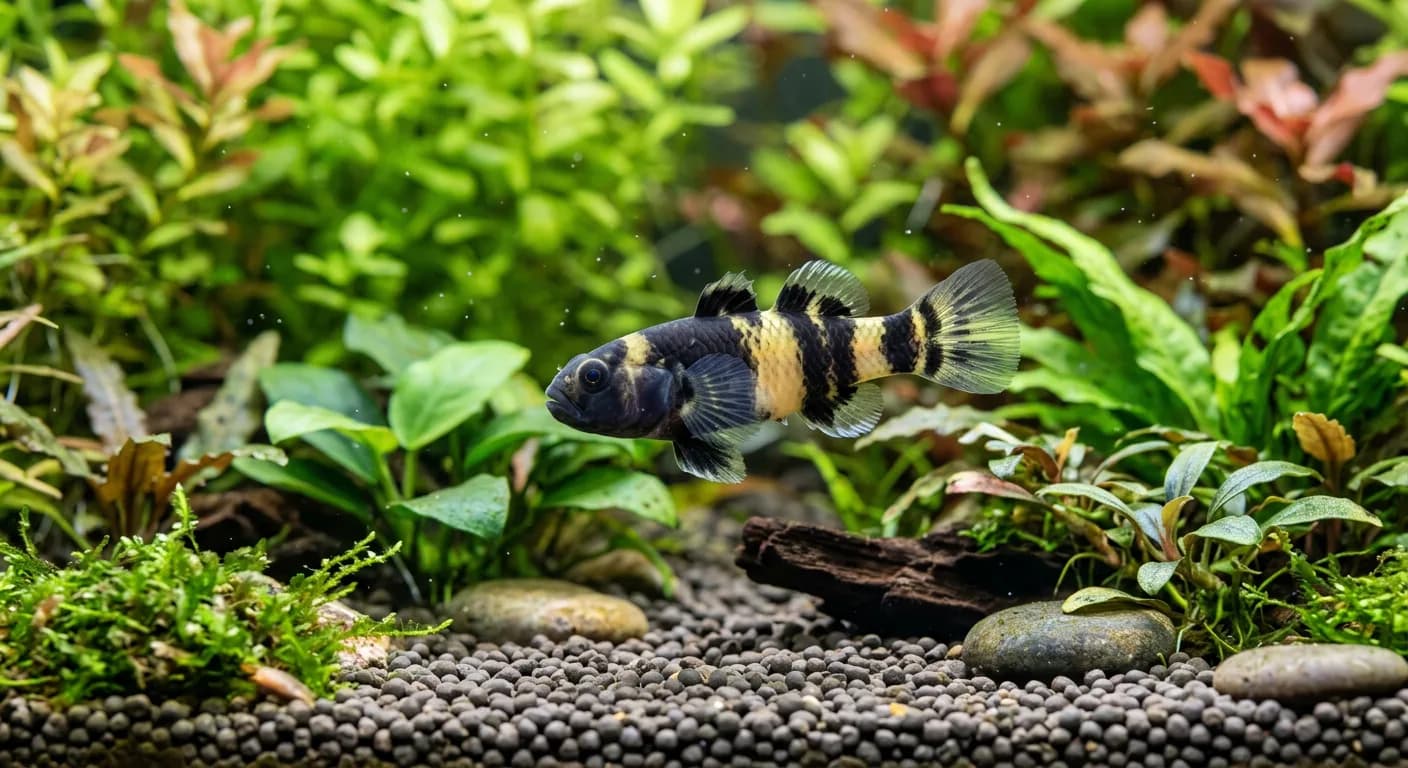
Bumblebee Goby
Brachygobius doriae
Overview
Bumblebee gobies are tiny, territorial fish with distinctive black and yellow stripes that give them their common name. Despite their small size, they have huge personalities and can be surprisingly aggressive toward their own species and similar bottom-dwellers. These are brackish water fish that need salt added to their tank to thrive long-term. While they can survive in pure freshwater temporarily, they develop health problems and shortened lifespans without proper salinity. A single bumblebee goby can live in a 10-gallon tank, but they often do better with 2-3 individuals if there are enough territories and hiding spots. Males are highly territorial and will fight, so careful observation is needed in small groups. Tank setup is more complex than typical freshwater fish due to their brackish requirements and live food preferences. They are definitely not beginner fish, requiring specialized care and equipment most community tank setups cannot provide.
Tank Setup
Bumblebee gobies need a specialized brackish water setup with a specific gravity between 1.005 and 1.010, which requires a hydrometer or refractometer to monitor. Start with dechlorinated freshwater and add marine aquarium salt (not table salt) gradually over several days until you reach the target salinity. A 10-gallon tank works for 1-2 gobies, while 15-20 gallons provides more stable salinity and room for territories. Use sand substrate as they like to burrow and sift. Provide numerous hiding spots including caves, PVC pipes, and dense plant growth. Java fern and anubias tolerate brackish conditions well. Filtration should be gentle as strong currents stress them. A sponge filter or small hang-on-back with reduced flow works well. They prefer dimmer lighting and may hide constantly under bright lights. Maintain stable salinity through evaporation top-offs with freshwater only, as salt does not evaporate. Water changes should use premixed brackish water at the same salinity as the tank.
Water Parameters
Bumblebee gobies require brackish water with specific gravity between 1.005-1.010 (roughly 8-15 ppt salinity). Pure freshwater causes stress and health problems over time, while full marine salinity is too strong. pH should be between 7.0 and 8.5, with 7.5-8.0 being ideal. Temperature needs to stay between 75-84 degrees, with 79-82 being optimal. Higher temperatures within this range often bring out better colors and activity. Ammonia and nitrite must be zero, though nitrate tolerance is slightly higher than freshwater fish - keep under 30 ppm. Weekly water changes of 20-25% help maintain stable parameters. Always premix replacement water to match tank salinity and temperature. Test salinity regularly as evaporation concentrates the salt, requiring freshwater top-offs. They are sensitive to rapid parameter changes, so acclimation must be done very slowly over several hours.
Diet & Feeding
Bumblebee gobies are obligate carnivores that strongly prefer live and frozen foods over prepared foods. Many specimens refuse flakes and pellets entirely. Frozen bloodworms, brine shrimp, and daphnia form the core diet. Live foods like blackworms, tubifex, or microworms trigger the strongest feeding response. Some individuals can be trained to accept high-quality carnivore pellets, but this often takes weeks of patient effort. Feed small amounts twice daily, only what they can consume in 2-3 minutes. They are ambush predators that wait for food to come near their territory before striking. In community setups, they may not compete well with more active feeders, requiring target feeding near their hiding spots. Variety is important for nutritional balance and to prevent them from becoming fixated on a single food type. Baby brine shrimp work well for smaller specimens or recently imported fish.
Behavior & Temperament
Bumblebee gobies are highly territorial bottom-dwellers that establish and defend small areas of the tank. Males are particularly aggressive toward other males and may fight to the death in inadequate spaces. They perch on surfaces using their pelvic fins, which are fused into a suction disc. This allows them to hold position in moderate currents or on vertical surfaces. They are ambush predators that remain motionless until prey ventures close, then strike with surprising speed. Tank-bred specimens are generally less aggressive than wild-caught fish but still need adequate territory. They communicate through body posturing and color changes, with stressed individuals losing their bright yellow stripes. Most activity occurs during dawn and dusk, with midday spent hiding in caves or under decorations. They rarely venture far from their established territory and may ignore food dropped in other areas of the tank.
Compatible Tankmates
Compatible tankmates for bumblebee gobies are extremely limited due to their brackish water requirements and territorial nature. Mollies are the most common successful tankmate as they tolerate and even prefer slightly brackish conditions. Some platies and guppies adapt to low-salinity brackish water, though this is not their natural preference. Figure eight puffers share similar brackish requirements but may be too aggressive in smaller tanks. Avoid all freshwater-only species including tetras, barbs, most corydoras, and freshwater shrimp and snails. Even among brackish-tolerant species, choose tankmates that occupy different areas of the tank. Small brackish hermit crabs or certain brackish snails might work in larger setups, but most invertebrates cannot handle the salinity levels gobies require. Species-only tanks often work best, allowing you to optimize conditions specifically for the gobies without compromising other fish.
Common Health Issues
The most common health problem is keeping bumblebee gobies in pure freshwater, which leads to stress, poor coloration, and shortened lifespan. Osmotic stress from incorrect salinity causes lethargy and increased susceptibility to diseases. Malnutrition from refusing prepared foods is another frequent issue, especially with newly imported specimens. Establish feeding on live or frozen foods immediately upon arrival. Territorial aggression can lead to injuries in overcrowded or inadequately decorated tanks. Provide multiple territories and visual barriers to reduce conflicts. They can be sensitive to medications, especially copper-based treatments and some antibiotics. Quarantine new additions carefully as they may introduce diseases from export facilities. Rapid water parameter changes cause stress that manifests as hiding, color loss, and appetite reduction. Always acclimate slowly and maintain stable brackish conditions.
Breeding
Breeding bumblebee gobies in captivity is challenging but possible with proper setup. Condition a pair or small group with frequent live food feedings for several weeks. Males develop more intense coloration and may dig territories in the sand. Provide numerous small caves, coconut shells, or PVC tubes for spawning sites. The male prepares and defends a cave, displaying to attract the female. Spawning occurs in the cave with the female depositing 50-200 eggs on the cave ceiling. The male guards and fans the eggs while the female should be removed to prevent aggression. Eggs hatch in 5-7 days depending on temperature. Fry remain in the cave for another week before becoming free-swimming. Newly hatched brine shrimp or microworms are essential first foods. Fry are extremely small and grow slowly, requiring several months to reach adult size. Maintaining stable brackish conditions throughout the breeding process is crucial for success.
Frequently Asked Questions
Quick Stats
What You Need for Bumblebee Goby
Gear that works well for this species, based on what experienced keepers actually use.
Gentle filtration suitable for brackish water setups without creating excessive current. Provides biological filtration while allowing territorial gobies to establish areas without strong water movement.
Essential for monitoring water quality in brackish setups. Regular testing ensures ammonia, nitrite, and pH stay in acceptable ranges while you manage the more complex brackish water chemistry.
Small, sinking granules that some gobies will accept as part of a varied diet. While live and frozen foods are preferred, having quality prepared foods available helps ensure nutrition when live foods are unavailable.
Fine sand substrate that allows natural burrowing and territory establishment behavior. Inert composition works well in brackish water setups without affecting water chemistry.