Chilli Rasbora
Boraras brigittae
Overview
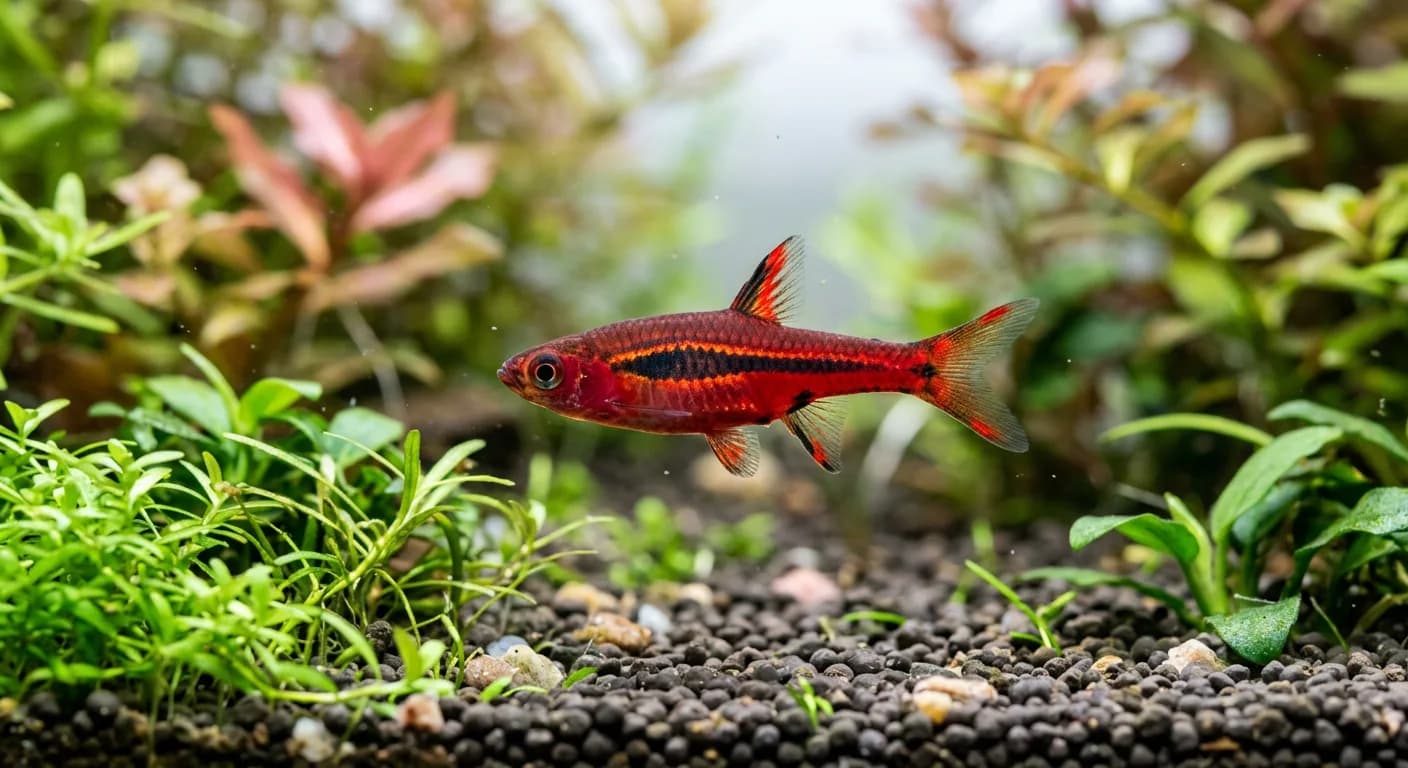
Chilli Rasboras are tiny fish with a massive personality. Despite being smaller than a thumb nail, their deep red coloration and active schooling behavior make them one of the most striking fish you can keep in a small aquarium. These fish come from the blackwater streams and peat swamps of Borneo, where the water is soft, acidic, and stained tea-brown by decaying botanicals. In the aquarium, they retain their intense red color best in similar conditions. A group of 10 or more creates a beautiful synchronized swimming display, with males occasionally showing off to each other by spreading their fins. Females are slightly larger and rounder, with less intense color but still showing a pleasant reddish hue. These fish are perfect for people who want the movement and activity of a school but do not have space for a large tank.
Tank Setup
A 5-gallon tank is the absolute minimum for a small school of Chilli Rasboras, but a 10-gallon gives them much more room to swim and allows for a more stable nitrogen cycle. These fish do best in a planted tank that mimics their natural blackwater habitat. Add dried oak leaves, alder cones, or driftwood to tint the water and release beneficial tannins. Java fern, java moss, and anubias all grow well in these conditions and provide cover for shy fish. Use a gentle sponge filter or a hang-on-back filter with the flow turned down. Chilli Rasboras come from slow-moving waters and can struggle in tanks with strong current. A small heater set to 75 degrees keeps them comfortable. They do not require bright lighting, and dimmer conditions actually help bring out their red coloration.
Water Parameters
Chilli Rasboras are adaptable for such delicate-looking fish. They tolerate a wide pH range from 4.0 to 7.0, with 5.5 to 6.5 being ideal. Soft water below 8 dGH brings out their best color, but they will adjust to moderately hard water over time. Temperature can range from 68 to 82 degrees, though 72 to 78 is the sweet spot. They are sensitive to ammonia and nitrite, so cycle your tank before adding them. Nitrates should stay below 20 ppm. Weekly water changes of 10-15 percent help maintain water quality. These fish are very small and have a low bioload, so they are forgiving of minor maintenance mistakes as long as the water stays clean.
Diet & Feeding
Chilli Rasboras are not picky eaters and will accept most foods small enough to fit in their tiny mouths. A quality micro pellet or crushed flake forms the staple of their diet. Live or frozen foods bring out their best color and conditioning. Baby brine shrimp, micro worms, and daphnia are greedily accepted. They also nibble on algae and biofilm in the tank. Feed them once or twice daily, offering only what they consume within a couple of minutes. Because they are so small, it is easy to overfeed. Be careful with portion size. Their small size means they cannot eat large pellets or flakes meant for bigger fish. Powdered fry food or crushing regular flakes into small pieces works well.
Behavior & Temperament
Chilli Rasboras are peaceful and should be kept in groups of at least 8 to 10 individuals. In a group, they display natural schooling behavior and feel secure enough to explore the tank. Males will occasionally display to rival males by flaring their fins and showing their brightest colors, but this aggression is rarely physical. They spend most of their time swimming in the middle of the tank, investigating plants and decorations. They are active but not frantic, and their small size means they can fit into aquariums where larger schooling fish would not work. They are shy when first introduced to a new tank but will become more confident once they establish their school. They get along well with other small, peaceful fish and make excellent dither fish for shy corydoras or dwarf gouramis.
Compatible Tankmates
Chilli Rasboras pair well with other small, peaceful fish that share their water parameter preferences. Ember tetras and neon tetras make excellent tankmates, as do harlequin rasboras and dwarf gouramis. Bottom-dwellers like pygmy corydoras and kuhli loaches occupy different levels of the tank without causing any issues. Cherry shrimp, amano shrimp, and other peaceful invertebrates are safe to keep with Chilli Rasboras. Avoid keeping them with any fish large enough to see them as food. Bettas may harass them, especially in small tanks. Larger cichlids, goldfish, angelfish, and oscars are all unsuitable. Any fish that prefers harder, more alkaline water may not be the best match either.
Common Health Issues
Chilli Rasboras are generally hardy when kept in properly maintained water. Ich is the most common disease and typically appears as white spots on the body and fins. Raising the temperature to 86 degrees over 48 hours and adding aquarium salt usually clears it up. They can be sensitive to sudden water parameter changes, so acclimate them slowly when adding them to a new tank. Poor water quality affects them quickly because of their small size. Watch for signs of stress like fading color, hiding constantly, or refusing food. Velvet disease appears as a dusty gold coating on the body and requires copper-based medication. Quarantining new fish for two weeks helps prevent introducing diseases to your established school.
Breeding
Breeding Chilli Rasboras is possible in the home aquarium and is a rewarding project. They are egg scatterers that do not provide any parental care. To encourage breeding, keep them in a species-only tank with plenty of fine-leaved plants or spawning mops. Java moss is ideal for this purpose. Lower the pH to around 5.5 and keep the temperature at 78 to 80 degrees. Feed them heavily with live foods to condition them for spawning. The tiny eggs adhere to plants and hatch in 24 to 48 hours. The fry are extremely small and require infusoria or liquid fry food for the first week. Baby brine shrimp can be introduced once they are large enough to accept it. Raising the fry is challenging due to their size, but it is achievable with patience and careful feeding.
Frequently Asked Questions
Quick Stats
What You Need for Chilli Rasbora
Gear that works well for this species, based on what experienced keepers actually use.
Provides gentle filtration perfect for the slow-moving waters Chilli Rasboras prefer. The sponge material traps debris while maintaining beneficial bacteria. Silent operation makes it ideal for small tanks in living spaces.
Compact heater suitable for 5 to 10 gallon tanks. Adjustable temperature dial lets you fine-tune the 68 to 82 degree range these fish need. Automatic shut-off prevents overheating.
Essential for monitoring water parameters in small tanks where fluctuations happen quickly. Tests for pH, ammonia, nitrite, and nitrate. Accurate enough to track the subtle parameter changes that affect Chilli Rasbora coloration.
Insect-based formula with small particle size suitable for tiny mouths. High protein supports health and color intensity. The tiny flakes sink slowly, allowing Chilli Rasboras time to eat them.