Glass Catfish
Kryptopterus vitreolus
Overview
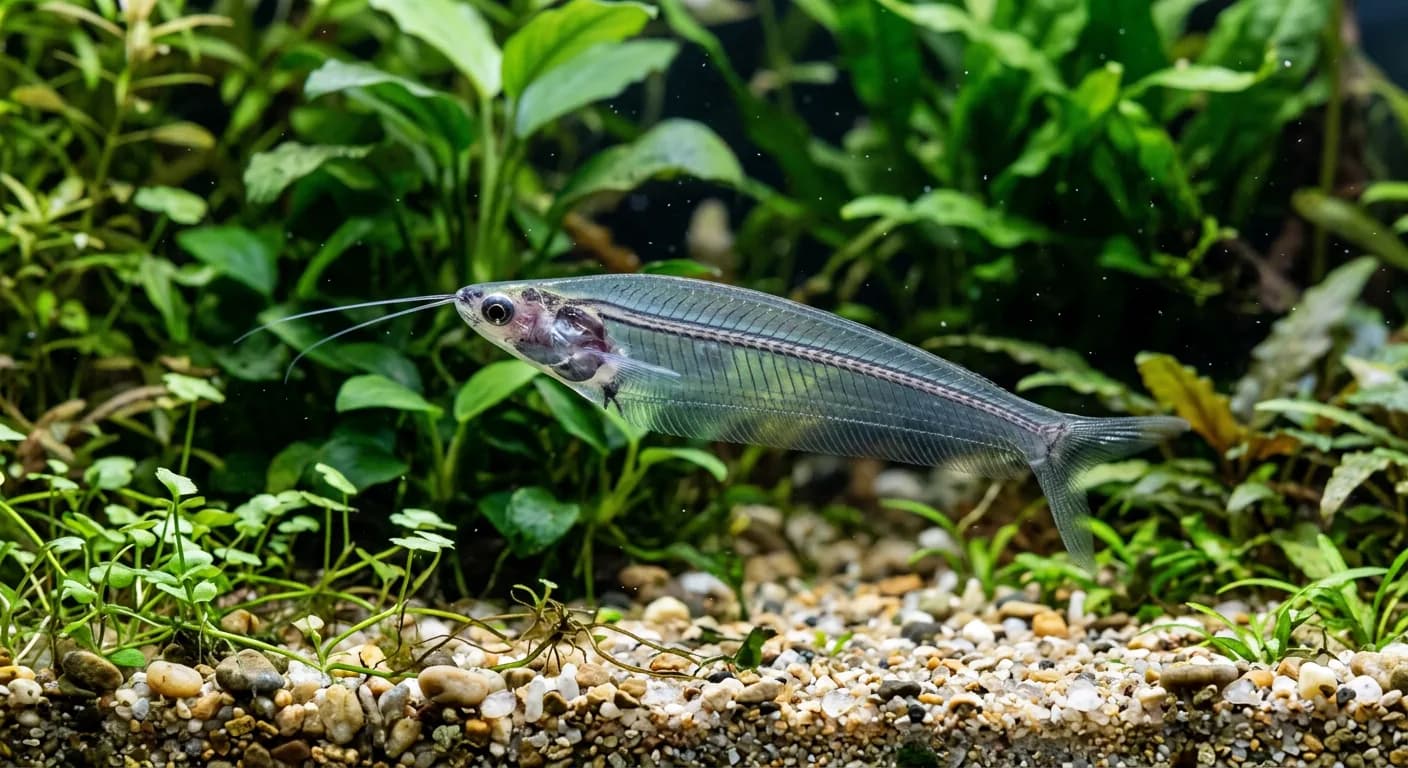
Glass Catfish are one of the most unique and fascinating freshwater species available, with nearly transparent bodies that allow you to see their internal organs and skeletal structure. These Southeast Asian natives earned their name from their remarkable transparency, though they are not completely invisible - their skeleton, swim bladder, and internal organs are clearly visible through their translucent flesh. Unlike typical catfish that hug the bottom, Glass Catfish are mid-water swimmers that school together in the open areas of the tank. They are peaceful, shy fish that require specific conditions and careful tankmate selection to thrive. When stressed or kept in poor conditions, they lose much of their transparency and may develop a milky appearance. Glass Catfish are schooling fish that must be kept in groups of at least 6 to feel secure and display natural behaviors. They are more sensitive than many community fish and are best suited for experienced aquarists who can provide stable conditions and appropriate care.
Tank Setup
Glass Catfish need at least 30 gallons for a school of 6, with 55 gallons being much better for their swimming needs and group dynamics. They prefer a well-planted tank with plenty of swimming space in the center. Choose plants like java fern, anubias, and cryptocoryne that provide shelter without blocking too much swimming area. They appreciate subdued lighting and may become stressed under bright lights - floating plants help diffuse lighting and make them feel more secure. The tank should have gentle water movement since they come from slow-moving rivers, but avoid strong currents that might stress these delicate fish. Filtration needs to be excellent since they are sensitive to water quality changes, but avoid creating too much turbulence. A canister filter with spray bar diffusion or a quality hang-on-back filter with adjustable flow works well. The tank should be peaceful and quiet - avoid high-traffic areas or tanks with aggressive, boisterous tankmates that might stress the shy Glass Catfish.
Water Parameters
Glass Catfish are sensitive to water quality and require stable, pristine conditions to maintain their health and transparency. pH should stay between 6.0 and 7.5, with 6.5-7.0 being ideal. They prefer soft to moderately soft water and are sensitive to parameter fluctuations. Temperature must remain stable between 72-79 degrees Fahrenheit, with 76 being optimal. Water quality must be excellent: ammonia and nitrite at zero, nitrates under 15 ppm through frequent water changes. They are extremely sensitive to salt and most medications, requiring special care during treatment. Any water parameter swings can cause stress, loss of transparency, and increased susceptibility to disease. Perform weekly water changes of 25-30% using aged, dechlorinated water at the same temperature as the tank. Use a quality water conditioner since they are sensitive to chlorine and chloramines. Consistent conditions are more important than specific parameters, but stability is absolutely essential for these sensitive fish.
Diet & Feeding
Glass Catfish are omnivores with somewhat finicky eating habits that require attention to feeding technique and food quality. They prefer small, sinking foods that they can catch in the mid-water column rather than feeding from the surface or bottom. High-quality micro pellets, small flake food, and frozen foods like bloodworms, daphnia, and brine shrimp work well. They are shy feeders that may not compete well with aggressive tankmates, so ensure they get adequate nutrition. Feed small amounts 2-3 times daily rather than one large feeding, distributing food throughout the water column where they swim. They prefer live or freshly thawed frozen foods over dried foods when possible. Watch carefully during feeding time to ensure all school members are eating - stressed or sick fish often stop feeding first. Their transparent bodies make it easy to see if they have food in their stomachs. They are sensitive to overfeeding and poor water quality, so remove any uneaten food promptly to prevent water quality issues.
Behavior & Temperament
Glass Catfish are peaceful, shy schooling fish that spend most of their time swimming in the middle water column in tight groups. They are much more active and confident when kept in proper schools of 6 or more - smaller groups become stressed, hide constantly, and may stop eating. Their schooling behavior is fascinating to watch as they move together in synchronized swimming patterns. They are timid fish that can be easily stressed by sudden movements, bright lights, loud noises, or aggressive tankmates. When stressed, they lose their transparency and may develop a cloudy or milky appearance. They are most active during dawn and dusk periods but remain visible throughout the day when comfortable. Unlike bottom-dwelling catfish, they rarely venture to the substrate except occasionally to pick up fallen food. Their peaceful nature and mid-water swimming make them interesting additions to quiet community tanks, but they require careful tankmate selection and stable conditions to thrive.
Compatible Tankmates
Glass Catfish work best with other peaceful, quiet fish that will not stress or outcompete them for food. Ideal companions include small tetras like neons and cardinals, peaceful barbs like cherry barbs, and gentle livebearers like guppies and endlers. Corydoras catfish make excellent bottom-dwelling companions since they occupy different water levels. Small, peaceful dwarf cichlids like German blue rams can work in larger tanks with careful observation. Avoid any aggressive, boisterous, or fast-moving fish that might stress the shy Glass Catfish. Tiger barbs, most cichlids, and active fish like danios may cause constant stress. Large fish that might see them as food should also be avoided. Other peaceful schooling fish that share their preference for quiet environments work well. The tank should be designed around their peaceful, sensitive nature rather than trying to accommodate them in an active community setup. Choose tankmates that create a calm, stable environment where Glass Catfish can feel secure.
Common Health Issues
Glass Catfish are sensitive fish prone to stress-related illnesses and require careful attention to water quality and environmental conditions. Their most common problem is stress-induced loss of transparency, appearing cloudy or milky when conditions are poor. Ich can be problematic since they are extremely sensitive to most medications - use half-strength treatments or salt/heat therapy with extreme caution. Bacterial infections may occur following stress or injury, often appearing as white patches or red streaks on their transparent bodies. Parasites can be an issue with newly imported fish, and their transparency makes internal parasites easily visible. Fin rot may develop in poor water conditions but is easily spotted on their clear fins. They are particularly sensitive to ammonia, nitrite, and sudden parameter changes that would not affect hardier species. Prevention through excellent water quality, stable conditions, and appropriate tankmates is much more important than treatment. Quarantine new fish for 3-4 weeks before introduction, and maintain pristine water conditions at all times. Stress is their biggest enemy - any signs of clouding or abnormal behavior indicate environmental problems that need immediate attention.
Breeding
Breeding Glass Catfish in home aquariums is extremely difficult and rarely achieved by hobbyists. Most successful breeding occurs in large commercial operations using specialized techniques and environmental controls. They are seasonal spawners that require specific water chemistry changes, temperature cycles, and often hormonal treatments to trigger reproduction. Sex determination is nearly impossible since their transparency makes traditional visual cues unreliable. Breeding behavior, if it occurs, involves egg scattering in flowing water with no parental care. The eggs are small and transparent, making them difficult to spot and collect. Fry would be extremely tiny and challenging to feed, requiring live foods like infusoria and rotifers before graduating to baby brine shrimp. Most Glass Catfish in the trade are wild-caught or produced in specialized breeding facilities rather than bred by hobbyists. Their sensitivity to environmental changes makes breeding attempts likely to stress or harm the fish without proper expertise and equipment. Focus on providing excellent care for adult fish and enjoying their unique transparent appearance rather than attempting breeding projects.
Frequently Asked Questions
Quick Stats
What You Need for Glass Catfish
Gear that works well for this species, based on what experienced keepers actually use.
Gentle sponge filtration that provides excellent biological filtration without creating strong currents that can stress sensitive Glass Catfish. Perfect for maintaining high water quality in peaceful community tanks.
Maintains stable 72-79°F temperatures that Glass Catfish require. Temperature stability is critical for these sensitive fish to maintain their transparency and health.
Small granules perfect for mid-water feeding catfish. High-quality protein supports health and transparency in Glass Catfish while being easy to digest and less likely to cloud water.
Essential for monitoring water quality with sensitive Glass Catfish. Their transparency makes them excellent indicators of water quality - any cloudiness signals parameter problems that need immediate attention.