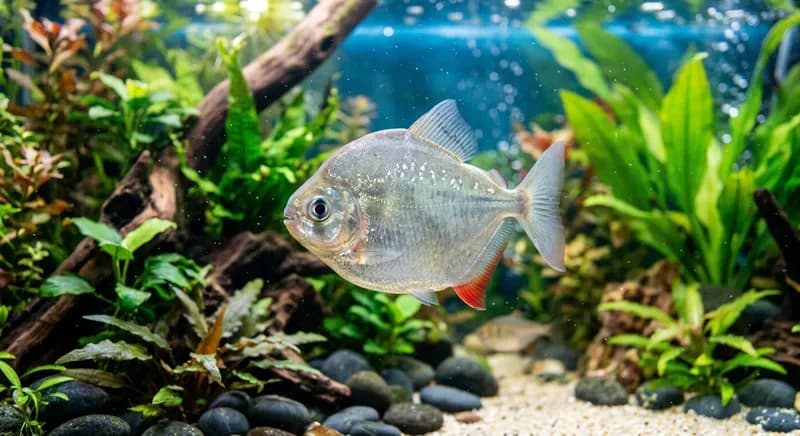
Silver Dollar
Metynnis argenteus
Overview
Silver Dollars are elegant, peaceful fish that bring a touch of grace to any large community tank. They get their name from their silver, dollar-shaped bodies that shimmer under aquarium lighting. These are schooling fish that need groups of five or more to feel secure. They are generally peaceful and get along with most community fish, but there is a catch: they will eat your plants. If you want a planted tank, Silver Dollars are not the right choice unless you are okay with heavy munching. For fish-only large tanks, they are excellent.
Tank Setup
Silver Dollars need room to swim. A 75-gallon tank is the minimum for a school of five, but 100 gallons is much better. They are active swimmers that use the middle level of the tank. Provide open swimming spaces, but also some plants and décor for security. They will eat soft-leaved plants, so either accept this or use hardy plants like Java Fern and Anubias that can survive their grazing. A powerful filter is important because these are messy eaters.
Water Parameters
Silver Dollars are adaptable. They do well in temperatures between 72-82°F, with 77 being ideal. pH should be between 6.0 and 7.5, leaning toward slightly acidic. They are not particularly sensitive to water parameters, but good water quality is always important. Weekly water changes of 25-30% will keep them healthy. They come from river systems in South America, so they appreciate some current from the filter.
Diet & Feeding
Silver Dollars are herbivores, which is important to remember. They need a diet based on plant matter. Quality vegetarian flakes or pellets should be the staple. Supplement with blanched vegetables: zucchini, cucumber, lettuce, spinach, and peas. They will graze on algae and soft plants in the tank. Some will accept occasional protein foods like bloodworms, but plant matter should make up the majority of their diet. Feed several small meals daily.
Behavior & Temperament
Silver Dollars are peaceful schooling fish. They should be kept in groups of at least five, preferably more, to prevent stress and aggression within the group. They are active swimmers and appreciate having plenty of open water. They are generally peaceful and can be kept with most community fish that are not too small or aggressive. They may be shy at first, but will become more confident as they settle in. They are not aggressive and will not bother tankmates.
Compatible Tankmates
Silver Dollars work well with other peaceful large community fish. They can be kept with larger tetras, rasboras, corydoras, and plecos. They are safe with other herbivores like goldfish. Avoid small fish that could be seen as food, and avoid aggressive fish that might harass them. They may eat dwarf shrimp, so they are not suitable for shrimp tanks.
Common Health Issues
Silver Dollars are generally hardy fish. The most common health issue is ich, which appears as white spots on the body. It is usually triggered by stress or poor water quality. Treat by raising temperature to 80°F and using ich medication. They can also be prone to bacterial infections if water quality is poor. Watch for signs like lethargy, loss of appetite, or unusual spots. Quarantine new fish before adding to the tank.
Breeding
Breeding Silver Dollars is difficult in home aquariums. They are egg-scatterers and require a separate breeding tank with soft, acidic water. Males and females look similar, though males may have slightly longer dorsal fins. Spawning usually happens in the morning. The eggs are scattered among plants, and the parents will eat them if given the chance. Raising the fry is challenging because they need very fine foods initially.
Frequently Asked Questions
Quick Stats
What You Need for Silver Dollar
Gear that works well for this species, based on what experienced keepers actually use.
High in vegetable matter, which Silver Dollars need. Flakes are easy to feed and contain natural color enhancers.
Handles up to 70 gallons with excellent biological filtration. Silver Dollars are messy eaters and need strong filtration.
Essential for monitoring water parameters. Tests for ammonia, nitrite, nitrate, pH, and more.
Manage multiple aquarium devices from one place. Useful for large tank setups with heater, filter, air pump, and more.