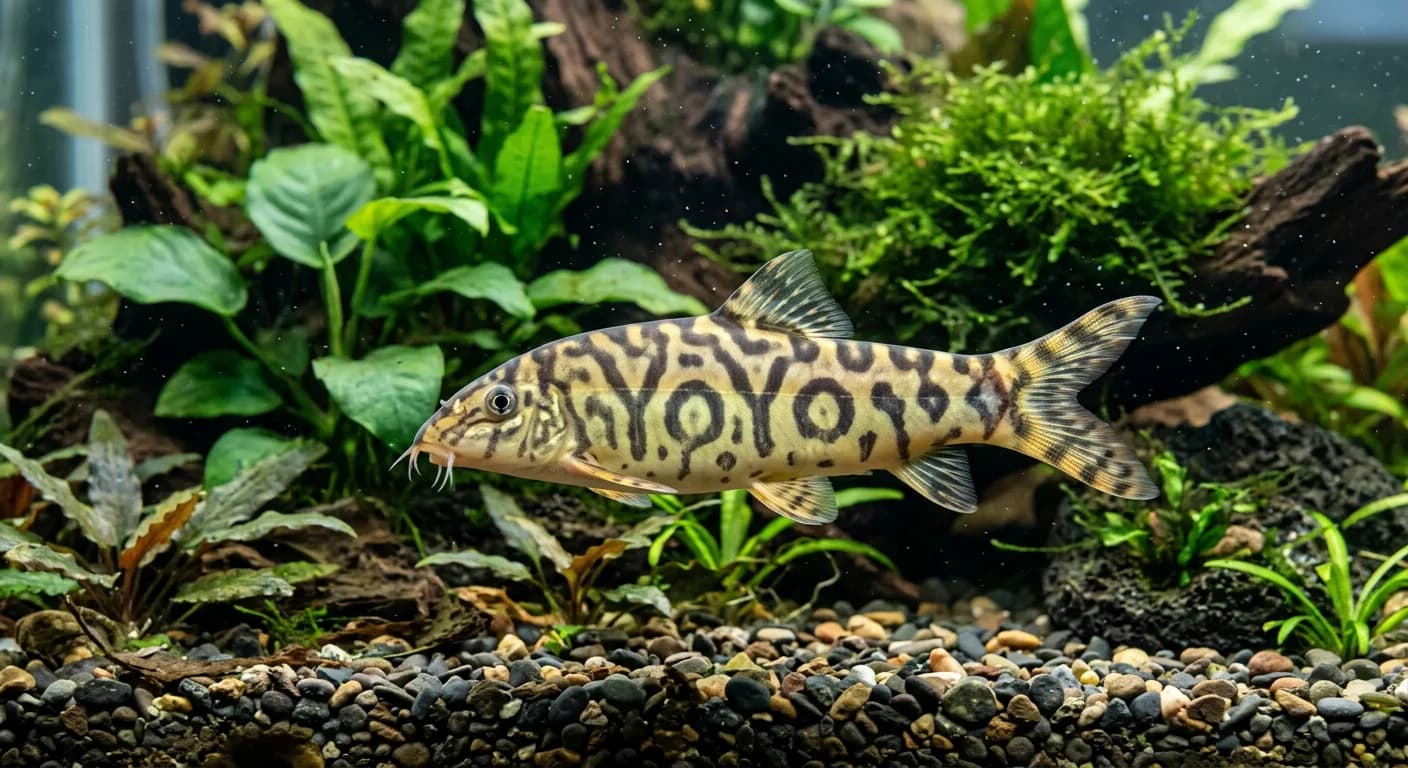
Yoyo Loach
Botia almorhae
Overview
Yoyo Loaches are some of the most entertaining bottom-dwellers you can keep. Their distinctive black and silver pattern resembles the letters Y-O-Y-O when viewed from the side, hence their common name. These active loaches from the rivers of Pakistan and India bring constant movement and personality to the bottom of your tank. Unlike many loach species that hide during the day, Yoyos are active throughout daylight hours, constantly exploring every corner of the tank and investigating anything new. They have playful personalities and will often stack on top of each other in caves or wiggle through decorations in amusing ways. Yoyos are excellent snail eaters, making them popular for controlling pest snail populations. However, they will eat any snail small enough to fit in their mouth, so larger mystery snails are safe while smaller species are not. These social fish do best in groups of at least 3, though 5-6 creates better dynamics and reduces any territorial behavior between individuals.
Tank Setup
Yoyo Loaches need at least 30 gallons for a small group of 3, with 55-75 gallons being much better for their active lifestyle and group dynamics. The tank should have plenty of hiding spots: caves, driftwood, overturned flower pots, and rock formations. They love to squeeze into tight spaces and will claim multiple hiding spots throughout the tank. Use smooth substrate like fine gravel or sand since they spend considerable time foraging along the bottom and may injure their barbels on sharp edges. Live plants work well - choose species like anubias, java fern, and cryptocoryne that can handle occasional digging activity. Filtration should be robust since loaches produce more waste than similarly sized community fish. A canister filter or powerful hang-on-back filter rated for your tank capacity plus 25% extra works well. They appreciate good water flow and well-oxygenated conditions that mimic their natural river habitat.
Water Parameters
Yoyo Loaches prefer stable water conditions with pH between 6.5 and 7.5, leaning toward the slightly acidic side. They do well in soft to moderately hard water and are somewhat sensitive to parameter fluctuations once established. Temperature should remain between 75-82 degrees Fahrenheit, with 78 being optimal. Water quality must be excellent since loaches are more sensitive to poor conditions than many community fish. Keep ammonia and nitrite at zero, nitrates under 20 ppm through regular water changes. They are particularly sensitive to salt and medications, so always research loach-safe treatments before medicating. Their sensitivity to water quality makes them good indicator fish - if Yoyos are acting stressed or lethargic, check water parameters immediately. Perform weekly water changes of 25-30% to maintain stable conditions, and use a good dechlorinator since they are sensitive to chlorine and chloramines.
Diet & Feeding
Yoyo Loaches are omnivores with excellent appetites that readily accept most aquarium foods. Sinking pellets or wafers should form the base of their diet since they are bottom feeders. They love protein-rich foods like bloodworms, brine shrimp, and tubifex worms - either frozen or live. They are famous snail eaters and will actively hunt pest snails throughout the tank, making them excellent biological control agents. Supplement with vegetable matter like blanched zucchini, peas, and cucumber for digestive health. Feed in the evening or after lights out since they are more active during these periods. Spread food around the tank so all group members get their share - dominant individuals may try to monopolize feeding areas. They are active foragers and will sift through substrate looking for leftover food and small organisms. Their thorough scavenging helps keep the tank clean, but they still need dedicated feeding to maintain good health.
Behavior & Temperament
Yoyo Loaches are active, social bottom-dwellers with distinct personalities that make them fascinating to observe. They are constantly in motion during the day, unlike many loach species that hide until evening. They investigate every corner of the tank, squeeze into caves and decorations, and often swim in amusing patterns through the water column. Group dynamics are important - they establish loose hierarchies with dominant individuals claiming the best hiding spots. They often rest together in caves or stack on top of each other in tight spaces. While generally peaceful, they can be territorial with other bottom-dwelling fish, especially those of similar size and shape. They are notorious for their ability to catch and eat snails, using a unique technique of sucking them out of their shells. Their activity level and playful behavior make them excellent display fish that add life and movement to community tanks.
Compatible Tankmates
Yoyo Loaches work well with most peaceful community fish that inhabit the middle and upper water column. Good companions include larger tetras like cardinals and rummy-nose, peaceful barbs like cherry barbs, and livebearers like platies and mollies. They coexist well with corydoras catfish, though the more active Yoyos may outcompete them for food. Angelfish and peaceful dwarf cichlids like German blue rams make good upper-level tankmates. Avoid aggressive or territorial bottom-dwellers like most cichlids, sharks, or large plecos that might compete for territory. Small peaceful fish like neon tetras usually work fine since Yoyos are not predatory toward fish. However, they will eat any shrimp or snails small enough to catch. Never keep them with expensive ornamental snails or dwarf shrimp colonies. Other loach species can work but require careful observation to ensure compatibility.
Common Health Issues
Yoyo Loaches are generally hardy but can be sensitive to poor water quality and are prone to several specific health issues. Ich is common during shipping stress or temperature fluctuations. However, loaches are sensitive to many ich medications - use half-strength copper treatments or salt/heat therapy instead. Skinny disease (internal parasites) can affect newly imported fish, showing as weight loss despite normal eating. Internal bacterial infections occasionally occur, often related to stress or poor water conditions. They are particularly susceptible to stress-related illnesses during the first few weeks in new tanks. Barbel damage can occur from rough substrate or aggressive tankmates, leading to secondary bacterial infections. Never use salt-based medications at full strength - loaches are much more sensitive than typical community fish. Quarantine new additions for at least 3-4 weeks and treat preventively for internal parasites. Maintaining excellent water quality and stable conditions prevents most health problems with this species.
Breeding
Breeding Yoyo Loaches in home aquariums is extremely difficult and rarely achieved by hobbyists. Most breeding occurs in commercial facilities using large outdoor ponds and hormone treatments. They are seasonal spawners that require specific environmental triggers including temperature cycles and water condition changes that are hard to replicate in home tanks. Sex determination is difficult outside of breeding season, though mature females may appear rounder when viewed from above. Males may develop slightly more intense coloration during breeding periods. Even if spawning were to occur, the parents would likely eat their eggs and any surviving fry. The fry are tiny and would require specialized foods like infusoria and baby brine shrimp. Most Yoyo Loaches in the aquarium trade are wild-caught or farm-raised rather than bred by hobbyists. Focus on providing excellent care for adult fish rather than attempting breeding projects. Their long lifespan (10-15 years) makes them rewarding fish to keep even without breeding success.
Frequently Asked Questions
Quick Stats
What You Need for Yoyo Loach
Gear that works well for this species, based on what experienced keepers actually use.
Powerful filtration system that handles the bioload of active loaches. Bio-wheel technology provides excellent biological filtration critical for maintaining the high water quality Yoyo Loaches require.
Maintains stable 75-82°F temperatures that Yoyo Loaches need for optimal health and activity. Consistent heating prevents stress-related illnesses common in temperature-sensitive loaches.
Specially formulated sinking granules for bottom-dwelling fish. High protein content supports the active lifestyle and growth of Yoyo Loaches while providing proper nutrition for their omnivorous diet.
Smooth, fine sand that will not damage sensitive barbels during foraging activities. Easy to clean and maintain, perfect for bottom-dwelling loaches that spend time sifting through substrate.