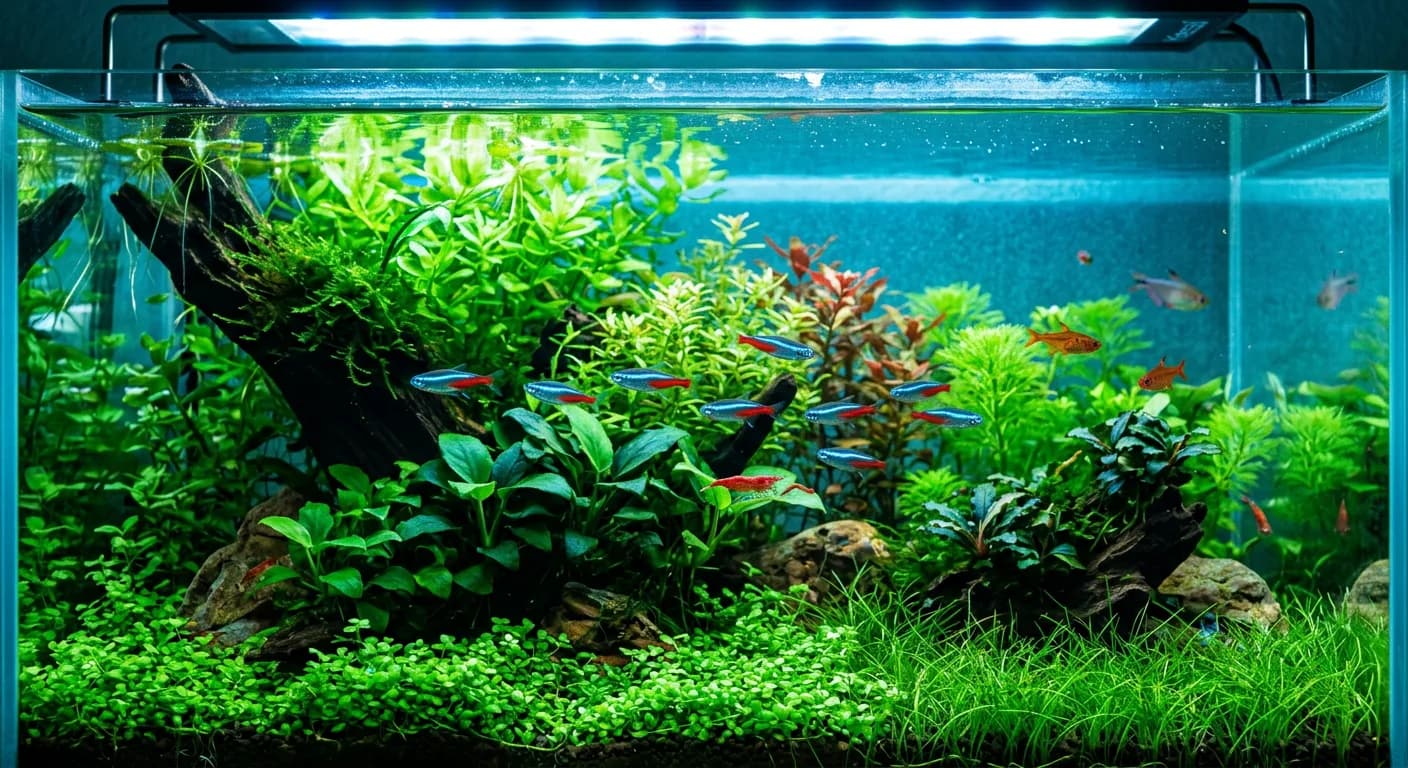
Aquarium Lighting Guide: How to Choose and Use Tank Lights
Getting aquarium lighting right makes the difference between a thriving tank and constant problems. Bad lighting causes algae blooms, stressed fish, and melting plants. Good lighting creates a natural environment where fish show their best colors and plants grow healthy. This guide covers what you need to know about choosing and using aquarium lights for fish-only setups, planted tanks, and high-tech systems.
01
Why Aquarium Lighting Matters
Lighting does way more than make your tank look good. Fish need a proper day-night cycle to maintain their natural rhythms. Without it, they get stressed, their immune systems weaken, and their colors fade. I've seen fish in poorly lit tanks become lethargic and stop eating properly.
For planted tanks, lighting literally feeds your plants. Plants use light for photosynthesis, converting CO2 and nutrients into growth. Too little light and your plants will slowly melt away. Too much light without enough CO2 and nutrients creates the perfect setup for algae to take over.
The timing matters as much as the intensity. Fish evolved with predictable sunrise and sunset cycles. Sudden light changes or irregular schedules stress them out. A proper photoperiod helps fish rest, reproduce, and display natural behaviors.
Algae control starts with lighting. Most algae problems come from too much light for too long, especially when plants aren't using all that energy. Green water, hair algae, and black beard algae all thrive under excessive lighting. Getting your photoperiod and intensity right prevents most algae issues before they start.
Temperature regulation is another factor people overlook. Old fluorescent fixtures pump out serious heat, raising water temperature and stressing fish. Modern LED lights run much cooler, giving you better control over your tank's environment.
02
Light Types Explained
LED lights have basically taken over the aquarium hobby, and for good reason. They last 50,000+ hours compared to 6-12 months for fluorescent bulbs. They run cool, use less electricity, and give you precise control over color temperature and intensity. Most quality LED fixtures let you adjust brightness and even simulate sunrise and sunset.
Fluorescent lights still work, especially T5 HO (high output) bulbs for planted tanks. They're cheaper upfront but cost more long-term due to bulb replacements every 6-12 months. The light output drops significantly after about 6 months even if the bulb still works. T8 fluorescent bulbs are basically obsolete - too weak for anything but basic fish viewing.
T5 HO fixtures were the gold standard for planted tanks before LEDs improved. They produce excellent PAR (photosynthetically active radiation) values and penetrate deep water well. Many planted tank veterans still prefer them for high-tech setups, though quality LEDs now match their performance.
Metal halide lights create intense, point-source lighting that penetrates very deep tanks. They're mainly used for large reef tanks or massive planted setups over 24 inches deep. The heat output is substantial and they need cooling fans.
Cheap LED strips from big box stores usually produce harsh, blue-white light that makes fish look washed out and doesn't support plants. They might say 'full spectrum' but the actual color output is terrible. Quality LED fixtures cost more upfront but the difference in performance and appearance is huge.
Color temperature matters for both appearance and plant growth. 6500K produces natural daylight color that makes fish colors pop and supports plant photosynthesis. Lower temperatures (3000-4000K) look too yellow. Higher temperatures (8000K+) look too blue and harsh.
03
Understanding Light Specs
PAR (Photosynthetically Active Radiation) measures the actual light energy plants can use, measured in micromoles per square meter per second (μmol/m²/s). This matters way more than lumens for planted tanks. Lumens measure what human eyes perceive as bright, but plants use different wavelengths than what looks bright to us.
Low light planted tanks need 20-40 PAR at substrate level. Medium light tanks want 40-80 PAR. High light setups require 80+ PAR but also need CO2 injection and heavy fertilization to prevent algae. Most beginners should start with low-medium light levels.
Color temperature is measured in Kelvin (K). 6500K produces natural daylight color that makes fish colors look their best and provides the right spectrum for plants. 4000K looks yellowish and warm. 8000K+ looks blue and cold. Some LED fixtures let you adjust color temperature throughout the day.
PUR (Photosynthetically Usable Radiation) is PAR that plants actually absorb and use. Different plants use different wavelengths, but most aquatic plants thrive under 6500K light that provides good red and blue spectrum along with green.
Watts per gallon is an outdated measurement that doesn't account for light efficiency or tank depth. A 50-watt LED can outperform a 150-watt fluorescent fixture. Focus on PAR values instead of wattage when comparing lights.
Light spread and penetration matter more than total output. A light that concentrates all its power in the center creates hotspots and shadows. Good fixtures spread light evenly across the tank surface and penetrate to the substrate without major falloff.
Spectrum charts show which wavelengths a light produces. Plants mainly use red (660-700nm) and blue (400-500nm) light, with some green. White LEDs actually combine blue LEDs with yellow phosphor coating, while full spectrum LEDs use multiple colored chips for better plant growth.
04
Photoperiod: How Long to Run Your Lights
Eight hours per day works best for most planted tanks. This gives plants enough light energy for healthy growth without encouraging algae. Fish also prefer consistent 8-hour lighting cycles that mimic natural daylight patterns.
Fish-only tanks can run 6-8 hours daily. Fish don't need as much light as plants, and shorter photoperiods reduce algae growth. Some fishkeepers run lights only when viewing the tank, but fish do better with consistent schedules.
Never run lights more than 10 hours daily unless you have a high-tech planted setup with CO2 injection and perfect nutrient dosing. Extended photoperiods almost always cause algae problems. I've seen too many tanks crash from 12+ hour lighting schedules.
Consistency matters more than exact timing. Pick a schedule and stick to it. Fish and plants adapt to predictable light cycles. Random timing stresses fish and disrupts plant metabolism.
Split photoperiods can help with algae control. Run lights for 4 hours, then off for 2-3 hours (siesta period), then on for another 4 hours. This gives plants time to process nutrients while disrupting algae growth patterns.
Gradual light changes reduce fish stress. Quality LED controllers simulate sunrise and sunset over 30-60 minutes. Sudden bright light shocks fish, especially first thing in morning. If your lights don't have dimming, turn on room lights first.
Timer reliability is essential. Manual switching leads to inconsistent schedules and forgotten lights. Digital timers cost $10-20 and eliminate human error. Smart controllers offer more features but basic timers work fine for most tanks.
Seasonal adjustments aren't necessary for tropical fish tanks. Keep photoperiods consistent year-round. Some advanced planted tank enthusiasts vary intensity slightly, but beginners should focus on consistency first.
05
Lighting for Fish-Only Tanks
Fish need way less light than most people think. Their primary lighting requirement is a consistent day-night cycle, not intense brightness. Many fish actually prefer subdued lighting and show better colors under moderate illumination.
Stress reduction comes from proper photoperiods, not bright lights. Harsh lighting makes fish skittish and hides their natural colors. Fish evolved in environments with filtered light from water depth and plant cover.
6-8 hour photoperiods work perfectly for fish-only tanks. This provides enough light for viewing while minimizing algae growth. Shorter photoperiods also reduce electricity costs since you don't need high-output fixtures.
Color temperature around 6500K makes fish colors pop without looking artificial. Cooler temperatures (8000K+) wash out red and yellow colors. Warmer temperatures (4000K) make everything look muddy. 6500K hits the sweet spot for natural appearance.
Basic LED strips handle most fish-only tanks perfectly. You don't need expensive planted tank fixtures or high PAR output. Simple white LED strips provide adequate illumination for fish viewing and photography.
Cichlid tanks often benefit from slightly brighter lighting to show off their intense colors, but still don't need planted-tank levels. African cichlids especially display better colors under good lighting.
Bottom-dwelling fish like corydoras and plecos prefer dimmer lighting. They come from shaded river bottoms and bright lights stress them out. Provide caves and hiding spots if you need brighter lighting for other fish.
Night viewing requires special consideration. Blue "moonlight" LEDs let you observe nocturnal fish behavior without disrupting their sleep cycles. Regular white light at night stresses fish and disrupts their rest.
06
Lighting for Low-Tech Planted Tanks
Low-tech planted tanks thrive under moderate lighting without CO2 injection. Target 20-40 PAR at substrate level for healthy plant growth without algae problems. This light level supports most easy aquatic plants while staying beginner-friendly.
6500K color temperature works best for low-tech setups. This provides the red and blue wavelengths plants need while making the tank look natural. Avoid overly blue or warm color temperatures that don't support plant growth.
Eight-hour photoperiods give plants enough energy without encouraging algae. Low-tech tanks rely on slow, steady growth rather than rapid plant development. Longer photoperiods usually cause more problems than benefits.
Plant selection matters more than light intensity. Java fern, anubias, cryptocoryne, and java moss all thrive under moderate lighting. These plants actually prefer lower light levels and suffer under intense illumination.
Fertilizer becomes more important with proper lighting. Even low-tech tanks need root tabs or liquid fertilizers to prevent nutrient deficiencies. Plants under adequate lighting will quickly deplete available nutrients.
Water changes help maintain the nutrient balance that prevents algae. Change 25-30% weekly to remove excess nutrients while replenishing trace elements. This keeps the ecosystem stable under your lighting schedule.
Surface agitation improves gas exchange, which matters more in planted tanks. Plants produce oxygen during photosynthesis but consume it at night. Good surface movement prevents CO2 depletion and oxygen swings.
LED fixtures designed for planted tanks offer better spectrum than basic aquarium lights. Look for lights specifically marketed for plants, not just fish viewing. The spectrum difference significantly affects plant health and growth rates.
Hygger Auto On Off LED Aquarium Light
Built-in timer with sunrise/sunset mode. Set it once and forget it. Strong enough for java fern, anubias, and most low-tech plants up to 20 gallons.
07
Lighting for High-Tech Planted Tanks
High-tech planted tanks require 60+ PAR at substrate level combined with pressurized CO2 injection and daily fertilizer dosing. This creates rapid plant growth that can outcompete algae for nutrients, but the margin for error shrinks dramatically.
CO2 injection becomes mandatory at high light levels. Plants can't process intense light without adequate CO2, leading to nutrient imbalances and massive algae blooms. Pressurized CO2 systems work better than liquid carbon supplements at high-tech levels.
Daily fertilizer dosing prevents nutrient deficiencies that cause plant melt and algae growth. High light levels accelerate plant metabolism, rapidly depleting nitrogen, phosphorus, potassium, and trace elements. Automated dosing systems help maintain consistency.
The algae control challenge intensifies with high lighting. Any imbalance in CO2, nutrients, or circulation can trigger algae outbreaks. Green dust algae, hair algae, and staghorn algae all love high light conditions with poor plant growth.
Plant selection shifts toward fast-growing species that can handle intense lighting. Stem plants like ludwigia, rotala, and hygrophila thrive under high light. Slow-growing plants like anubias often struggle and develop algae on their leaves.
Circulation becomes critical for distributing CO2 and nutrients evenly. Dead spots in water flow create areas where plants can't access CO2, leading to poor growth and algae problems. Powerheads or strong filter output help maintain flow.
Monitoring requirements increase significantly. Test CO2 levels with drop checkers, monitor plant growth rates, and watch for early algae signs. High-tech tanks demand daily attention and quick responses to problems.
Startup periods require extra care in high-tech setups. New tanks lack established plant mass to process high light levels, making them prone to algae crashes. Many experts recommend starting with lower lighting and gradually increasing intensity as plants establish.
08
Common Lighting Mistakes
Running lights too long is the most common beginner mistake. Twelve-plus hour photoperiods almost guarantee algae problems, especially in new tanks. Fish and plants both prefer 6-8 hour cycles, not marathon lighting sessions.
Cheap white LED strips produce harsh, unnatural light that stresses fish and doesn't support plants. These lights often claim 'full spectrum' but lack the proper red and blue wavelengths plants need. The color rendering makes fish look washed out and pale.
Skipping timers leads to inconsistent lighting schedules that stress fish and disrupt plant growth. Manual switching inevitably results in forgotten lights and irregular photoperiods. Digital timers cost $15 and solve this problem completely.
Surface disturbance blocking light penetration reduces effective PAR values at plant level. Oil films, biofilms, and floating debris can cut light transmission by 20-30%. Regular surface skimming and water changes maintain light clarity.
Mounting lights too high reduces intensity and wastes energy. Most LED fixtures work best 6-12 inches above the water surface. Higher mounting requires more powerful (expensive) lights to achieve the same PAR levels.
Ignoring color temperature differences makes tanks look artificial. Mixing 3000K warm white with 10000K cool white creates weird color shifts. Stick with 6500K for natural appearance and good plant growth.
Old fluorescent bulbs lose output rapidly but people keep using them. T5 and T8 bulbs drop to 70% output after 6-8 months even though they still light up. Replace bulbs on schedule for consistent plant growth.
Overlighting new tanks before plants establish causes massive algae blooms. New plants need time to root and start growing before they can handle full lighting intensity. Start with shorter photoperiods and gradually increase over 2-3 weeks.
Table of Contents
Related Content
Popular Fish Species
Essential Gear
Best Aquarium Light for Freshwater Tanks
Hygger Auto On Off LED Aquarium Light