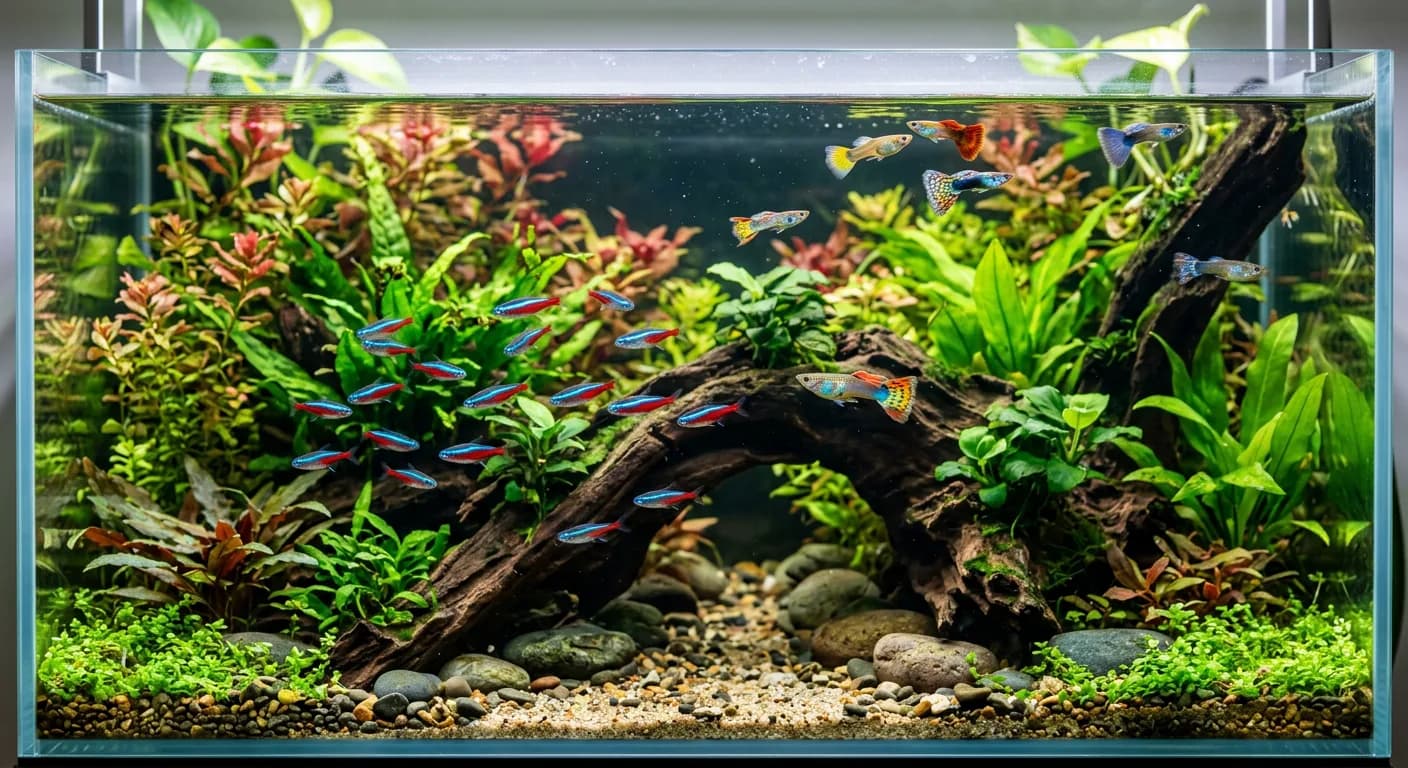
Best Beginner Fish for Your First Aquarium (2026)
Starting your first aquarium feels overwhelming when you see hundreds of colorful fish at the pet store. After keeping fish for over a decade and helping dozens of friends set up their first tanks, I've learned that choosing the right beginner fish makes the difference between a thriving aquarium and an expensive mistake. The fish on this list have proven themselves in real-world conditions, tolerate beginner mistakes, and give you the best chance of success.
01
What Makes a Fish Beginner-Friendly
The best beginner fish share five key traits that I've observed across hundreds of successful first-time setups.
Hardy water tolerance tops the list. Beginner-friendly fish handle pH swings from 6.8 to 7.8 without stress, tolerate temperature fluctuations of 3-4 degrees, and survive occasional ammonia spikes while you learn proper maintenance. I've seen guppies thrive in everything from soft rainwater to moderately hard tap water.
Forgiving feeding habits matter more than most guides admit. The best starter fish accept multiple food types, won't die if you miss a day, and don't require live foods or complex feeding schedules. My cherry barbs have eaten flakes, pellets, frozen bloodworms, and even leftover fish food from other tanks without issue.
Peaceful temperament keeps your tank stable. Aggressive fish stress beginners and tankmates alike. I recommend fish that ignore other species, don't establish large territories, and won't harass slower swimmers. Community fish work best for first tanks.
Wide availability means you can find healthy specimens at most pet stores and get help when problems arise. Rare fish often come with rare problems that stump even experienced staff. Stick with species carried by multiple local stores.
Observable behavior helps you learn fish-keeping skills. The best beginner fish show clear signs when something's wrong, display interesting natural behaviors, and respond visibly to good care. Watching fish behavior teaches you more about aquarium management than any book.
Fish that tick all five boxes give new keepers the highest success rate. They forgive mistakes while you learn, provide positive feedback when you do things right, and build confidence for more challenging species later.
02
Best Livebearers for Beginners
Livebearers dominate beginner fish lists for good reason. They reproduce easily, handle parameter swings, and display active personalities that make aquarium-watching enjoyable.
Guppies remain the ultimate starter fish after decades of proven performance. Males display brilliant colors in red, blue, orange, and combinations, while females grow larger and less colorful but equally hardy. They tolerate temperatures from 65-82F, handle pH from 6.0-8.5, and eat any food small enough to fit their mouths. If you are choosing between a solo betta and livebearers, see our betta vs guppy comparison. I've kept guppies in everything from 5-gallon nano tanks to 75-gallon community setups.
The key with guppies: buy from quality breeders or stores with healthy stock. Cheap "feeder" guppies often carry diseases and have poor genetics. Spend the extra $3-5 per fish for healthy specimens. Males live 1-2 years, females 2-3 years with proper care.
Platies offer similar hardiness with different body shapes and color patterns. Mickey Mouse platies, red wag platies, and sunset platies all handle beginner conditions well. They grow slightly larger than guppies (2.5 inches vs 2 inches) and prefer temperatures around 70-78F. Platies mix well with guppies in community tanks.
Mollies work best for beginners with larger tanks (20+ gallons). Black mollies, orange mollies, and dalmatian mollies tolerate salt additions, handle higher temperatures, and eat algae as part of their natural diet. They need more swimming space than guppies but reward you with personality and active behavior.
All livebearers produce babies regularly, sometimes monthly with good nutrition. This teaches breeding basics without complex setups. Separate pregnant females or provide dense plants for fry to hide. Even if most babies get eaten, some usually survive to grow up.
Feed livebearers high-quality flakes twice daily, with occasional treats like frozen bloodworms or brine shrimp. They appreciate vegetable matter in their diet, so blanched peas or cucumber work well as supplements.
03
Best Schooling Fish for Beginners
Schooling fish add movement and activity to aquariums, but many popular species require more expertise than beginners realize. These proven options school reliably and forgive common mistakes.
Zebra Danios top my list for hardy schooling fish. These silver-striped speedsters tolerate temperatures from 60-78F, making them perfect for unheated tanks. They school tightly when content, spread out when exploring, and handle parameter fluctuations that would stress tetras. Buy at least 6, preferably 8-10 for natural behavior.
I've kept zebra danios in everything from 10-gallon tanks to pond setups. They're nearly indestructible, eating any appropriately-sized food and adapting to most water conditions. The only downside: they never stop moving, which some people find distracting.
Cherry Barbs offer the schooling experience with calmer energy. Males develop deep red coloration during breeding season, while females stay more subdued. They prefer groups of 6 or more and occupy the middle water column without bothering other species. Temperature range of 70-79F works well for heated tanks.
Cherry barbs appreciate planted tanks with some hiding spots but aren't picky about water chemistry. They school loosely most of the time, tightening up when startled or during feeding. Much more relaxed than danios but still active enough to be interesting.
Neon Tetras deserve mention with caveats. While beautiful and popular, they're more sensitive than their reputation suggests. They need stable temperatures (75-80F), soft to moderately hard water, and established tanks with stable nitrogen cycles. Don't add neons to brand-new setups.
When conditions suit them, neons school beautifully and live 3-5 years. Their electric blue stripe and red coloration make them aquarium standouts. Buy healthy specimens from reputable stores and quarantine if possible. Cheap neons from chain stores often carry diseases.
For all schooling species: buy the whole group at once to reduce territorial disputes, provide open swimming space, and feed small amounts multiple times daily. Schools need room to move naturally.
04
Best Bottom Dwellers for Beginners
Bottom-dwelling fish fill the lower water column and help maintain cleaner substrates. The best beginner options stay small, handle varied water conditions, and get along with community fish.
Bronze Corydoras (also called bronze cories) earn their reputation as perfect beginner catfish. These peaceful, whisker-faced characters grow to about 2.5 inches and live 5-7 years with good care. They prefer groups of 4-6 and spend their time peacefully sifting through substrate for leftover food.
Bronze cories tolerate temperatures from 68-78F and handle pH from 6.0-8.0. They appreciate fine sand or rounded gravel that won't damage their barbels (whiskers). Sharp gravel can cause infections and barbel damage over time. I use pool filter sand in most cory tanks.
These fish breathe air occasionally, swimming to the surface for a quick gulp. This normal behavior often worries new owners, but it's completely natural. Cories also make subtle clicking sounds when content, especially during feeding time.
Bristlenose Plecos work well for beginners who want algae-eating help, but only in 20+ gallon tanks. These brown, flat catfish grow to 4-5 inches and develop distinctive bristles on their noses as they mature. They rasp algae off glass, decorations, and plants without destroying anything.
Unlike common plecos that grow to massive sizes, bristlenose plecos stay manageable for home aquariums. If a store label just says "pleco," check our bristlenose pleco vs common pleco guide before buying. They need hiding spots like caves or driftwood and appreciate vegetables like zucchini or cucumber slices. Temperatures from 72-80F work well.
Feed bristlenose plecos sinking algae wafers or catfish pellets after dark. They're most active during evening hours and can be shy during bright daylight. Provide caves or hollow decorations for daytime hiding.
Otocinclus catfish suit smaller tanks (10+ gallons) but require stable conditions and established algae growth. These tiny algae-eaters work best for keepers who've maintained tanks successfully for 2-3 months. They're sensitive to parameter changes but excellent for brown algae control.
All bottom dwellers appreciate sinking foods and nighttime feeding. Don't rely on "leftover" food to sustain them, especially in clean tanks with efficient filtration.
05
Best Single Fish Options
Some fish work best as solo specimens or pairs, perfect for smaller tanks or keepers who want personality over quantity. These species develop individual character and interact with their owners.
Betta Fish remain the classic choice for single-fish setups, though their reputation for "easy" care oversimplifies their needs. Male bettas display gorgeous fins in colors from deep blue to bright red, white, or multicolored patterns. They recognize their owners, respond to feeding times, and often swim to the front glass when you approach.
Bettas need heated water (76-82F) and gentle filtration that won't damage their flowing fins. Despite pet store marketing, they require more than tiny bowls. A 5-gallon tank works as the minimum, with 10+ gallons being better for water stability and swimming room.
Feed bettas high-protein pellets designed for their carnivorous diet. They appreciate variety with frozen bloodworms, brine shrimp, or daphnia. Overfeeding causes more problems than underfeeding, so stick to 3-4 pellets twice daily.
Male bettas cannot live with other male bettas but often succeed in carefully chosen community tanks. Avoid fin-nipping species like tiger barbs or fast swimmers that might outcompete them for food. Female bettas can sometimes live in groups ("sororities") but require more experience to manage successfully.
Honey Gouramis offer similar personality with different care requirements. These peaceful, golden-colored fish grow to about 2 inches and build bubble nests when content. They prefer planted tanks with gentle flow and appreciate floating plants for cover.
Honey gouramis tolerate temperatures from 72-82F and handle a wide pH range. They're less territorial than bettas and mix well with peaceful community fish. Feed them small pellets or flakes with occasional frozen foods.
Both species benefit from live or silk plants that provide hiding spots and territorial boundaries. Avoid plastic plants with sharp edges that can tear delicate fins.
Single fish often develop stronger bonds with their keepers and display more natural behaviors than stressed fish in overcrowded tanks. They're perfect for learning basic fishkeeping skills before advancing to community setups.
06
Fish Beginners Should Avoid
Certain species appear in every pet store but cause heartbreak for new fishkeepers. Learning what to avoid saves money, prevents animal suffering, and preserves your enthusiasm for the hobby.
Goldfish in small tanks top the list of beginner mistakes. Common goldfish grow to 8-12 inches and live 10-20+ years with proper care, but most people keep them in containers too small for their needs. A single goldfish needs a 40+ gallon tank with excellent filtration and weekly water changes.
The "goldfish bowl" myth persists despite overwhelming evidence of its cruelty. Goldfish produce enormous amounts of waste, need cool water (65-72F), and require space to swim. They're actually excellent fish for the right setup: unheated tanks, outdoor ponds, or large indoor aquariums with appropriate filtration.
Fancy goldfish varieties (bubble-eye, lionhead, oranda) face additional challenges with specialized feeding needs and vulnerability to water quality issues. Save goldfish for when you have proper space and equipment.
Large cichlids like Oscars tempt beginners with their intelligence and personality, but they grow to 12+ inches, eat smaller fish, and need 75+ gallon tanks. Young oscars look manageable at 2-3 inches, but they grow fast and become aggressive as they mature.
Common Plecos seem helpful for algae control but grow to 12-18 inches and produce massive amounts of waste. They often eat more food than they clean up. Bristlenose plecos offer similar benefits without the size problems.
Pacu fish get sold as "vegetarian piranhas" but grow to 20+ inches and need enormous tanks or ponds. They're related to piranhas and have similar powerful jaws, though they prefer plant matter.
Angelfish appeal to beginners with their elegant appearance, but they grow large (6+ inch body height), can be territorial, and eat fish small enough to fit in their mouths. They need tall tanks (minimum 20 inches high) and careful tankmate selection.
Red-tailed sharks and rainbow sharks look appealing but become increasingly aggressive as they mature. They establish large territories and chase other bottom-dwellers relentlessly.
The pattern here: avoid fish that grow large, need specialized diets, require huge tanks, or develop aggressive tendencies. Start with genuinely beginner-friendly species and work up to more challenging fish as your experience grows.
07
Choosing Fish Based on Your Tank Size
Tank size determines your fish options more than any other factor. Each tank volume supports different bio-loads and swimming requirements, so match your fish selection to your actual aquarium size.
5-Gallon Tanks work best for single fish or very light stocking. A single betta, 3-4 male guppies (no females to prevent breeding), or 6-8 cherry shrimp represent appropriate stocking levels. Avoid schooling fish that need groups, as the bio-load becomes unmanageable quickly.
The key with small tanks: frequent water changes (twice weekly), gentle filtration, and careful feeding to prevent ammonia spikes. Consider them "high-maintenance" setups that require more attention per gallon than larger tanks.
10-Gallon Tanks open up schooling options and community possibilities. Six zebra danios, 8 neon tetras (in established tanks), or 4-6 male guppies work well. You could also do a betta with a few otocinclus catfish or cherry shrimp for variety.
Ten-gallon tanks benefit from weekly water changes of 25-30% and good filtration rated for the tank size. They're easier to maintain than 5-gallon setups but still require careful stocking decisions.
20-Gallon Long Tanks represent the sweet spot for beginner communities. The extra horizontal swimming space accommodates more active fish, and the increased water volume buffers against parameter swings. A typical stocking might include 8-10 cherry barbs, 4-6 bronze corydoras, and a bristlenose pleco.
Twenty-gallon tanks allow for more diverse communities: livebearers with tetras, danios with bottom-dwellers, or centerpiece fish with appropriate tankmates. Weekly water changes of 20-25% usually maintain stable conditions.
40+ Gallon Tanks support larger communities and bigger fish species. You could keep 15-20 small schooling fish, multiple species of bottom-dwellers, and larger centerpiece fish like angelfish or gouramis. The increased water volume makes maintenance more forgiving.
Larger tanks actually require less daily attention per gallon than smaller setups. The greater water volume dilutes waste products and provides more stable parameters. However, they cost more to heat, require larger filters, and need bigger water change volumes.
General Stocking Guidelines: Start with fewer fish than you think the tank can handle. Add fish gradually over weeks or months, allowing the biological filtration to adapt. Monitor water parameters closely during the first few months.
Remember that fish grow, and their waste production increases with size. Plan for adult sizes, not the juveniles you buy at the store. A tank that seems perfectly stocked with young fish can become overcrowded as they mature.
Focus on horizontal swimming space for active species and vertical space for tall-bodied fish like angelfish. Match your fish selection to your specific tank dimensions, not just the gallon capacity.
Table of Contents
Related Content
Popular Fish Species
Essential Gear
Best Filter for a 20 Gallon Tank
Aquaneat 3-Pack Biosponge Filter
Best Fish Food for Freshwater Aquariums
Fluval Bug Bites Tropical Fish Food
Best Filter for 10-Gallon Fish Tanks
AquaClear 20 Power Filter
Best Beginner Fish Tank & Starter Kit
Aqueon 10 Gallon LED Aquarium Starter Kit