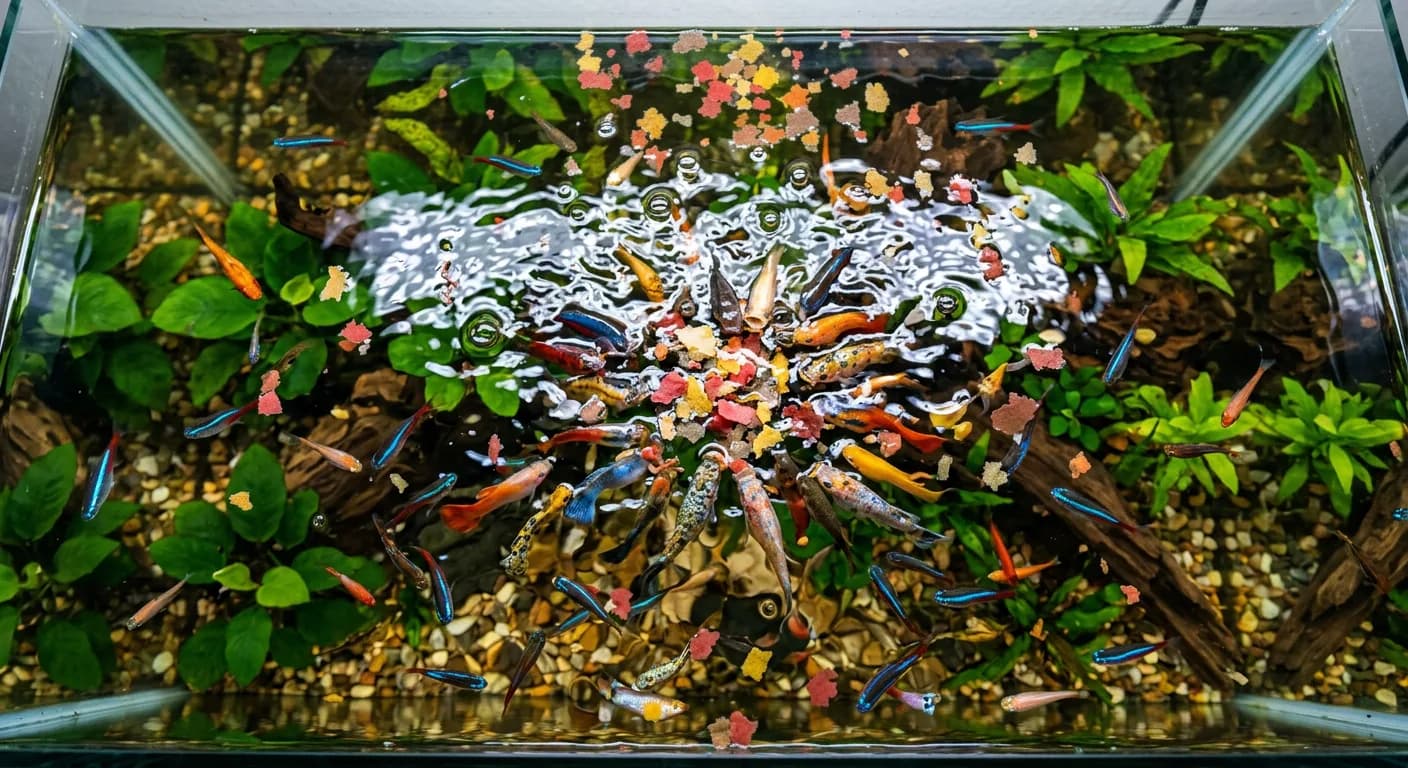
How to Feed Your Fish (Without Killing Them With Kindness)
Overfeeding is the number one mistake new fishkeepers make. It is also the most deadly. A fish that looks hungry is not necessarily a fish that needs food. Fish are opportunistic feeders in the wild and will eat until they physically cannot fit more in their stomachs, then they basically just wait to digest. In your tank, that excess food rots, releases ammonia, and creates the water quality problems that kill your fish slowly while you feel good about how well you are feeding them. This guide gives you the exact numbers and rules so you stop guessing. Feed the right amount, the right frequency, and the right food for your specific setup. Your fish will be healthier, your tank will stay cleaner, and you will actually spend less money on food because nothing gets wasted.
01
The 2-3 Minute Rule (How Much to Feed)
Here is the gold standard: feed an amount your fish can completely consume in 2-3 minutes. That is it. That is the entire secret.
In practice, this looks like a pinch of flakes that covers about the surface area of a dime for a small community tank with 6-10 fish. For a single betta, it is 2-3 pellets. For a goldfish, maybe a quarter-sized portion of flakes or a few pellets. For a large cichlid, a thumbnail-sized pinch of cichlid pellets.
If there is any food floating to the bottom after 3 minutes, you are overfeeding. If your fish are inhaling everything in 30 seconds and still frantically searching, add a tiny bit more next time. The goal is the "in-between" where they eat with interest but are not desperate.
The amount varies wildly by fish size, species, and tank temperature. Warmer water increases metabolism and hunger. Larger fish eat more. Schooling fish in a group eat more collectively than the same number of fish would individually because movement increases appetite. Adjust up or down based on what you observe, but always start with the 2-3 minute rule as your baseline.
02
How Often to Feed (Adults vs. Juveniles)
Adult fish (past their initial growth phase, usually 6+ months depending on species): once per day is sufficient for 90% of community fish. Some species do better with every-other-day feeding, and we will get to that.
Juvenile fish, fry, and growing fish: they need more frequent meals to support their development. Two to three small meals per day is ideal. In the wild, fry eat constantly. In your tank, try to hit at least twice daily. If you work during the day, feed once before you leave and once when you are home.
Here is the breakdown by common fish types:
- Small community tetras, rasboras, danios: Adults do fine on once daily. juveniles need 2x daily.
- Guppies and platies: Once daily for adults. Fry need 3x daily minimum.
- Goldfish: Once daily for adults. Goldfish are cold-blooded and their metabolism slows significantly in cooler water, so they actually do better with smaller, more frequent meals when young, tapering to once daily as adults.
- Cichlids: Once daily for adults. Most cichlids are prone to aggression when full and some territorial disputes calm down when they are not constantly hunting for food. Juveniles need 2x daily.
- Bottom feeders (corydoras, plecos, loaches): Once daily is fine, but they are most active at night so many keepers do a "lights out" feeding with a single algae wafer or sinking pellet.
Consistency matters more than exact frequency. Feeding at the same times each day helps fish anticipate meals and reduces stress. Pick a time that works for your schedule and stick with it.
03
Types of Fish Food (And When to Use Each)
There is a massive difference between a $3 jar of unnamed flakes and quality food. The cheap stuff is mostly filler with minimal nutrition. Your fish might eat it but they will not thrive on it. That said, you do not need the most expensive food either. Here is the breakdown:
Flakes: The standard entry-level food. Good for surface feeders and mid-water fish. Look for brands where fish is the first ingredient, not corn or wheat. Hikari, Seachem, and Omega One are reliable mid-range brands. Store-brand flakes are often 80% grains and your fish literally poop out most of what they eat.
Pellets: More nutritious than flakes because they hold their shape and do not dissolve in water before being eaten. Sinking pellets are essential for bottom feeders. Floating pellets let you watch your fish eat and are great for surface and mid-water feeders. Pellet size matters, so get the right size for your fish's mouth.
Frozen Food: This is where you level up. Frozen bloodworms, daphnia, brine shrimp, and mysis shrimp are excellent protein sources that most fish love. They are far more nutritious than dried versions. Keep a freezer block of frozen foods and thaw a small portion in tank water before feeding. Never freeze-thaw-refreeze.
Live Food: The gold standard for finicky eaters and breeding conditioning. Baby brine shrimp, daphnia, blackworms, and fruit flies are common options. The catch: live food can carry parasites or bacteria into your tank. Quarantine live food for a week before feeding if possible, or source from reputable dealers. Tubifex worms are notoriously dirty and can introduce pathogens.
Gel Food: Popular for bottom feeders and as a healthier alternative to frozen. You mix a powder with water and it solidifies into a gel that sinks and stays intact. Gel foods are customizable, and you can add vegetables, proteins, or medications. Repashy is the most popular brand, especially for plecos and corydoras.
Vegetable Matter: Essential for herbivores and omnivores. Blanched zucchini slices, cucumber, spinach, and shelled peas work well. Attach them to a veggie clip so they do not float everywhere. Remove uneaten vegetables within 24 hours to prevent water fouling.
Algae Wafers: Specifically for herbivorous bottom feeders. Hikari Algae Wafers and Omega One Veggie Rounds are good. Do not drop these in at lights-out without considering your other fish, because fast-swimming surface feeders will demolish them before they sink.
04
Feeding Different Fish Categories
Different fish eat from different parts of the tank and have different nutritional needs. Here is how to feed each category:
Surface Feeders: Hatchets, danios, some bettas. These fish have upturned mouths and grab food from the surface. Floating flakes or slow-sinking pellets work best. They eat quickly, often within 30 seconds. Do not overfeed here. They are aggressive eaters and will stuff themselves.
Mid-Water Feeders: Tetras, rasboras, barbs, most community fish. These eat anywhere from surface to bottom depending on the moment. Standard flakes or slow-sinking pellets work. They typically school while eating, which makes portion control easier. Watch the group and stop when most are no longer actively hunting.
Bottom Feeders: Corydoras, plecos, loaches, snail feeders. These need sinking food. This is the most commonly underfed group because their food gets eaten by other fish before reaching the bottom. Feed sinking wafers or pellets after lights-out, or use a feeding ring to create a calm zone. Corydoras are especially active at dawn and dusk, so a late afternoon or evening feeding complements their natural behavior.
Omnivores: The majority of community fish. They eat both plant and animal matter. A varied diet is key: flakes or pellets as a base, supplemented with frozen foods 2-3 times per week and vegetables weekly.
Carnivores: Species that need primarily meaty foods. Many community fish sold as "tropical" are actually carnivorous or omnivorous (like angelfish). For true carnivores (oscars, some cichlids, pufferfish), frozen shrimp, krill, bloodworms, and special carnivore pellets should make up the bulk of their diet. Some need live or frozen fish as part of their diet, so research your specific species.
Herbivores: Goldfish, bristlenose plecos, sailfin plecos, some mollies. These need constant vegetable matter. Algae wafers, blanched vegetables, and spirulina-based foods are staples. Goldfish are particularly aggressive herbivores and will literally eat themselves to death if overfed on protein-heavy foods.
05
Overfeeding Problems (Why Less Is More)
The consequences of overfeeding cascade through your entire tank:
Ammonia Spikes: Uneaten food decays and releases ammonia directly. Your filter can handle some ammonia from fish waste, but food decay adds a massive and sudden load. New tanks or lightly stocked tanks with dirty substrate can see ammonia jump from 0 to 8 ppm overnight after one overfeeding session.
Nitrate Crashes and Swings: This is counter-intuitive but well-documented in advanced fishkeeping. Excessive organics cause bacterial blooms that initially consume ammonia and nitrite, then crash when they run out of food. The crash releases stored ammonia all at once. In simple terms: overfeeding today can kill your fish three days later through a phantom ammonia spike.
Water Cloudiness: Decaying food and the bacterial bloom it triggers cause green, white, or gray cloudiness. This is not just ugly. It indicates an unstable ecosystem.
Fish Health Issues: Constant access to rich food leads to obesity, fatty liver disease, and reduced lifespan. Overfed fish are also more susceptible to bacterial infections, dropsy, and swim bladder issues.
Filter Clogging: Excess food and waste overwhelm mechanical filtration, reducing flow and degrading water quality further.
Algae Blooms: The nutrients from decaying food fuel algae explosions. If you have persistent algae problems, look at your feeding habits before buying more plants or algae-eaters.
The fix is simple: cut portions in half for a week. You will be amazed at how much clearer your water becomes and how much more active your fish are. They are not starving. They are healthier.
06
Fasting Days (Yes, Your Fish Need Them)
One day per week without food is incredibly beneficial for most adult fish. Here is why:
Digestive Rest: Fish digestive systems need breaks just like yours. A weekly fast lets their gut clear out and reset.
Waste Reduction: Less food = less poop = cleaner water between water changes.
Mimics Natural Patterns: In the wild, fish do not eat every day. Predators might go days between successful hunts. Your fish are evolutionarily adapted to variable food availability.
Health Benefits: Fasting reduces instances of swim bladder issues, constipation, and obesity. It also seems to boost immune function.
Emergency Tank Cycling: If you have to leave for a last-minute trip and cannot arrange a fish sitter, fasting your fish for a week is genuinely safer than having someone overfeed them. Adult fish easily survive 7-10 days without food.
Pick one day (Sunday is common) and do not feed. If you have bottom feeders that need daily sinking food, you can skip the fast or feed them lightly while fasting the rest. For fry and juveniles, do not fast. Growing fish need consistent nutrition.
Some species benefit from more frequent fasting. Large carnivorous cichlids and oscars do well on 4-5 days per week of feeding. Research your specific fish if you are unsure.
07
Proper Food Storage (It Goes Bad Faster Than You Think)
Fish food is not expiration-proof. Here is how to keep it fresh:
Keep It Sealed: Air exposure degrades vitamins, especially vitamin C. Close the container tightly after each use. Many foods come in resealable bags, but transfer to an airtight container if the original packaging does not seal well.
Store in a Cool, Dark Place: Heat and light destroy nutrients. A kitchen cabinet away from the stove is fine. Do not store in a garage where summer heat can exceed 90°F.
Buy Small Quantities: A huge tub of flakes that takes a year to finish will be mostly nutrient-degraded by the end. Buy food you can use within 2-3 months. You spend less money and your fish eat better.
Freeze-Dried vs. Frozen: Freeze-dried foods have a long shelf life but rehydrated they expand in a fish's stomach, causing issues. Soak freeze-dried food in tank water for 5 minutes before feeding. Frozen foods should stay frozen until use. Do not let them thaw and refreeze.
Watch for Signs of Spoilage: If food smells rancid, has changed color significantly, or shows mold, throw it out. Pellets that crumble easily are too dry and have lost nutrition. Flakes that are more powder than flake have degraded.
Protein Content Matters: Foods high in protein (bloodworms, meat-based foods) go rancid faster than plant-based foods. Use these more quickly after opening.
A good habit: write the date you open a new container. If it has been more than 6 months, consider replacing it even if it has not gone obviously bad.
08
Special Cases: Goldfish, Bettas, Cichlids, and Shrimp
These common aquarium pets have specific needs that diverge from general community fish advice:
Goldfish: They are herbivorous and produce massive waste. They need near-daily water changes in smaller tanks (under 40 gallons) because of their bioload. Feed goldfish-specific food (lower protein, higher vegetable content) or gel foods with vegetable matter. A single comet or common goldfish in a 75+ gallon with excellent filtration can be fed once daily. In bowls or small tanks, stick to tiny portions 2-3 times per day maximum. Goldfish are cold-water fish, so do not keep them in heated tanks. They do best at 65-72°F.
Bettas: These are carnivorous labyrinth fish. They do not need to surface for air in a heated, well-oxygenated tank, but they do need protein-rich food. Quality betta pellets (2-3 per feeding, 1-2 times daily) or frozen bloodworms/daphnia are ideal. Do not feed bettas flake food. They often reject it or it lacks the protein they need. Bettas are prone to bloating. If your betta looks puffy, skip feeding for a day. They are territorial and will often not eat the day after a water change or tank cleaning. This is normal.
Cichlids: A huge family with varied needs. African cichlids are mostly herbivorous and need vegetable-based foods (spirulina, algae wafers). Central and South American cichlids (angelfish, Oscars, convicts) are omnivorous to carnivorous and need higher protein. Cichlids are aggressive eaters, so use a feeding ring or target feeding to ensure everyone gets their share. Many cichlids benefit from the "Saturday skip" (fasting one day per week). Oscars and large cichlids only need feeding 3-4 times per week as adults.
Shrimp (Cherry, Amano, Crystal): These are scavengers and algae eaters. They need very little supplemental feeding if there is biofilm and algae in the tank. Overfeeding shrimp is incredibly easy and deadly because excess food ruins water quality fast. If you have shrimp, feed a tiny pinch of specialized shrimp food 2-3 times per week, maximum. Watch them for 30 seconds. If most are not actively eating, you have fed too much. Remove uneaten food within a few hours. Calcium supplementation (cuttlebone or mineral stones) is important for shell health.
Table of Contents
Related Content
Popular Fish Species
Essential Gear
Best Fish Food for Freshwater Aquariums
Fluval Bug Bites Tropical Fish Food