Aquarium Water Quality: Fix Problems Before Your Fish Get Sick
Water quality decides whether your aquarium works or doesn't. When parameters are stable, fish stay healthy and plants fill in. When they're off, you get mysterious deaths, algae blooms, sick shrimp, and overnight crashes that seem to come from nowhere. Most aquarium content treats water quality like a checkbox. Test once, move on. That works until it doesn't. When your tank crashes, when fish start dying, when white fuzz appears on a fin, water quality becomes the only thing that matters. This guide covers both the acute stuff (crashes, disease, algae disasters) and the ongoing maintenance that prevents them. Consider it your troubleshooting reference for everything that goes wrong with water.
01
Why Tanks "Crash" and How to Recover
"My tank exploded" shows up in forums constantly. It's almost never an actual explosion. What happens is a slow buildup of problems that hits a breaking point, usually triggered by one extra stressor: a new fish, a skipped water change, a summer heatwave bumping the temperature.
The usual cause is nitrogen cycle failure. Your filter houses bacteria that convert ammonia (fish waste) into nitrite, then into nitrate. This cycle takes weeks to establish in a new tank, and it can collapse in established ones too. Adding too many fish at once overwhelms the bacteria. Cleaning filter media with tap water kills them with chlorine. Some medications wipe them out. Even leaving a filter off for a day causes problems in heavily stocked tanks.
Ammonia and nitrite are your first diagnostics. Ammonia burns gills and causes immediate distress: gasping at the surface, red or inflamed gills, clamped fins. Nitrite enters the bloodstream and blocks oxygen transport, making fish lethargic and gasping. Nitrate, the end product, only becomes dangerous at high levels over extended periods.
For immediate triage: stop feeding entirely. Do a 50% water change with a gravel vacuum to pull waste from the substrate. Test ammonia, nitrite, and nitrate daily. If ammonia or nitrite reads above 0, add a bacteria booster like Seachem Stability or FritzZyme. Keep lights off to reduce plant stress. Don't add any new fish until parameters hold at zero ammonia, zero nitrite, and under 20 ppm nitrate for at least two weeks.
Prevention is straightforward: don't overstock, don't overfeed, do weekly water changes, and never clean filter media in tap water. Rinse it in old tank water or dechlorinated water only.
02
Algae: Identifying and Treating the Different Types
Algae isn't your enemy. It's a symptom. Different types tell you different things about your tank, and reading them correctly is half the battle.
Green algae is the most common and least concerning. It grows on glass, decorations, and plants when there's excess light or nutrients. Green spot algae shows up as small dots on slow-growing leaves, usually pointing to weak lighting or inconsistent CO2. Green dust algae is a fine coating on glass that wipes off easily.
Black beard algae (BBA) is the stubborn one. It grows in dark patches on driftwood, plants, and equipment, and it's notoriously hard to get rid of. Inconsistent CO2, high flow areas, and excess nutrients all feed it. The only reliable approach is systemic: fix CO2 delivery, cut lighting duration, and add siamese algae eaters or Amano shrimp. You can spot-treat small patches with hydrogen peroxide, but that doesn't fix the underlying problem.
Blue-green algae (BGA) isn't actually algae. It's cyanobacteria. It shows up as a slimy, smelly layer coating substrate and plants. Poor water circulation, decaying organic matter, and excess phosphate create the right conditions for it. Unlike true algae, BGA responds to antibiotics (use sparingly, and only for severe cases), but it comes back if you don't fix the environment. Better circulation, less feeding, and thorough substrate vacuuming usually take care of it.
Hair algae and thread algae grow in long strands and typically signal excess nutrients that your plants aren't absorbing. If you've got hair algae, your plants are probably struggling, whether from low CO2, poor lighting, or nutrient gaps. The fix is healthier plant growth, not more algae eaters.
The only real algae prevention is a balanced system. Healthy plant growth outcompetes algae for nutrients. Consistent CO2 (if you run it) keeps plants growing well. Appropriate light duration, 6-8 hours max, starves algae of the energy it needs to spread.
03
White Stuff: Fungal Infections vs. Ich vs. Other Growths
"What's the white stuff?" might be the most common aquarium forum question, and the answer matters because treatments are completely different depending on what it is.
True fungal infections look like white cottony growths, usually appearing on wounds, dead tissue, or weakened fish. Fungus is a secondary infection: a fish gets injured or stressed, then fungus moves in on the damaged area. It has a fuzzy, cotton-like texture and can show up on fins, scales, or body. Treatment starts with improving water quality (fungal infections almost always mean poor water conditions), moving the affected fish to a hospital tank if you can, and using antifungal medications like methylene blue or salt baths. Plain white growth on an otherwise healthy fish is rarely fungus.
Ich (Ichthyophthirius multifiliis) looks like salt grains scattered across the fish's body, fins, and gills. The spots are raised, and you can feel them if you gently pass a net under the fish. Ich is a parasite, highly contagious, and it almost always appears after adding new fish without quarantine. The standard treatment: raise temperature to 86°F (30°C) for 10-14 days while adding aquarium salt or ich medication. The heat speeds up the parasite's life cycle so medication can kill it during the free-swimming stage.
Columnaris looks like white-to-grayish patches, often starting on the mouth or fins. It's a bacterial infection that gets mistaken for fungus frequently. Unlike fungus, columnaris patches tend to be slimy rather than cottony, and they often spread from the mouth backward. It moves fast, within days, while true fungal growth is slower.
White growth on plants or decorations is usually mineral deposits from hard water, fungal sporing from overwatered terrestrial plants above the tank, or protein film on the water surface. None of these harm fish, though protein film suggests poor surface agitation.
Before treating anything, identify it accurately. Wrong treatment wastes time while the real problem gets worse. When in doubt, test water first. Almost every disease outbreak connects back to poor water quality as the root cause.
04
Shrimp Tank Water Quality
Shrimp tanks have their own set of water quality problems because the biomass is so small relative to the water volume. A few dozen shrimp produce a fraction of what even a single small fish produces. Sounds great until you realize your nitrogen cycle is fragile and easily disrupted because of it.
The "Day 150 problem" that shrimp keepers talk about is a tank that seems stable, then suddenly crashes. What's usually happening: nitrate has been creeping up without enough biological filtration or plant mass to absorb it, and a minor trigger (slight overfeeding, a temperature spike, adding new hardscape) pushes things over the edge. Shrimp react to parameter swings far more dramatically than most fish.
Parameters matter more in shrimp tanks. Ghost shrimp and most neocaridina (cherry shrimp, blue dream, etc.) prefer pH between 6.5 and 8, but sudden pH shifts are more dangerous than the number itself. Caridina species (bees, crystals) need very specific pH (5.5-7.0) and low KH (0-4). Hard water causes molting failures and deaths.
For maintenance: feed very lightly. One pellet or flake per 10 shrimp, removed after 2 hours if nobody's eaten it. Overfeeding is the number one cause of shrimp tank crashes. Water changes should be small, 10-15% weekly, rather than the 25-30% you'd do for fish. Large changes cause parameter swings that shrimp can't handle. Use a sponge filter. The gentle flow works well for shrimp and provides solid biological filtration.
Algae control in shrimp tanks needs extra caution. Many algae eaters will eat shrimp, especially babies. Nerite snails are safe. Amano shrimp eat some algae but aren't reliable cleaners on their own. Siamese algae eaters will eat shrimp. Stick to husbandry (less light, controlled nutrients) rather than stocking algae eaters.
05
Live Plant Tanks: Balancing Nutrients and Light
Planted tanks have all the same water quality concerns as fish-only tanks, plus another layer: the plants themselves change water chemistry, and what they need directly affects your maintenance routine.
Planted tank success comes down to three variables: light, CO2, and nutrients (macros and micros). Too much light without enough CO2 and nutrients causes algae. Too little light limits plant growth, letting nutrients build up and cause algae. Too many nutrients (especially phosphate and nitrate) cause algae. The skill is keeping all three in proportion.
Nutrient deficiency shows up on leaves. Iron deficiency turns new leaves pale yellow. Potassium deficiency creates holes in older leaves with yellowing edges. Nitrogen deficiency makes older leaves yellow while new growth stays green. Magnesium deficiency shows as yellowing between veins on older leaves. Your plants are telling you what they need if you know what to look for.
Nutrient lockout is the opposite problem. It happens when pH is too high or too low, blocking roots from absorbing nutrients even when they're present in the water. If your plants look deficient but you're dosing fertilizers, check pH first.
Difficult plants like Red River Flakes (RRF) struggle in heavily stocked tanks because fast growers and stem plants outcompete them for nutrients and light. If your RRF is melting, try pruning nearby plants, stabilizing CO2, and bumping up micronutrient dosing. Low-tech tanks (no CO2 injection) won't work for RRF. They need both high light and CO2.
Light management prevents more algae than anything else. Use a timer. Run lights 6-8 hours max, in one continuous period rather than split (which disrupts plant rhythms). After planting new plants or making big changes, drop light to 4 hours daily for 2 weeks so plants can recover and root in.
06
The Maintenance Schedule That Works
Here's the weekly routine that prevents most problems before they start. It takes about 15-20 minutes for a standard tank and scales with size and complexity.
Weekly: Test ammonia, nitrite, nitrate, and pH. This isn't optional for the first six months of any tank, and it's ongoing if you've had issues or keep sensitive species. Record results in a notebook or phone note. Look for trends over weeks and months. If nitrate is slowly climbing, your bioload is too high or your water changes aren't keeping up. Do a 25-30% water change with a gravel vacuum to stir the substrate and pull out debris. Check filter flow rate. If it's slowed, rinse the media in old tank water (not tap). Check that the heater is working. Make sure all equipment is running.
Monthly: Inspect the heater for calcium deposits or damage. Trim dead or melting plant leaves. Clean algae from glass (partial clean, not the whole thing at once; some algae provides beneficial competition). If you use CO2, check that equipment is delivering consistent bubbles. Inspect tubing for cracks or disconnections. Watch fish behavior. If anyone's hiding more than usual, acting differently, or showing physical changes, investigate.
Every 4-6 weeks: Deep clean filter media only if flow has dropped noticeably. Don't clean it on a schedule if it's still working fine. Beneficial bacteria live there. If you must clean, swish gently in old tank water. Replace carbon in filters if you use it (it stops working after about 4-6 weeks).
The difference between struggling keepers and successful ones comes down to mindset. Reactive maintenance means waiting for problems, then scrambling. Proactive maintenance means testing, recording, and adjusting before things become crises. The few minutes per week you spend testing will save you hours of troubleshooting and a lot of dead fish.
07
Equipment for Water Quality Management
Good equipment makes water quality management easy. Bad equipment turns simple tasks into frustrating chores.
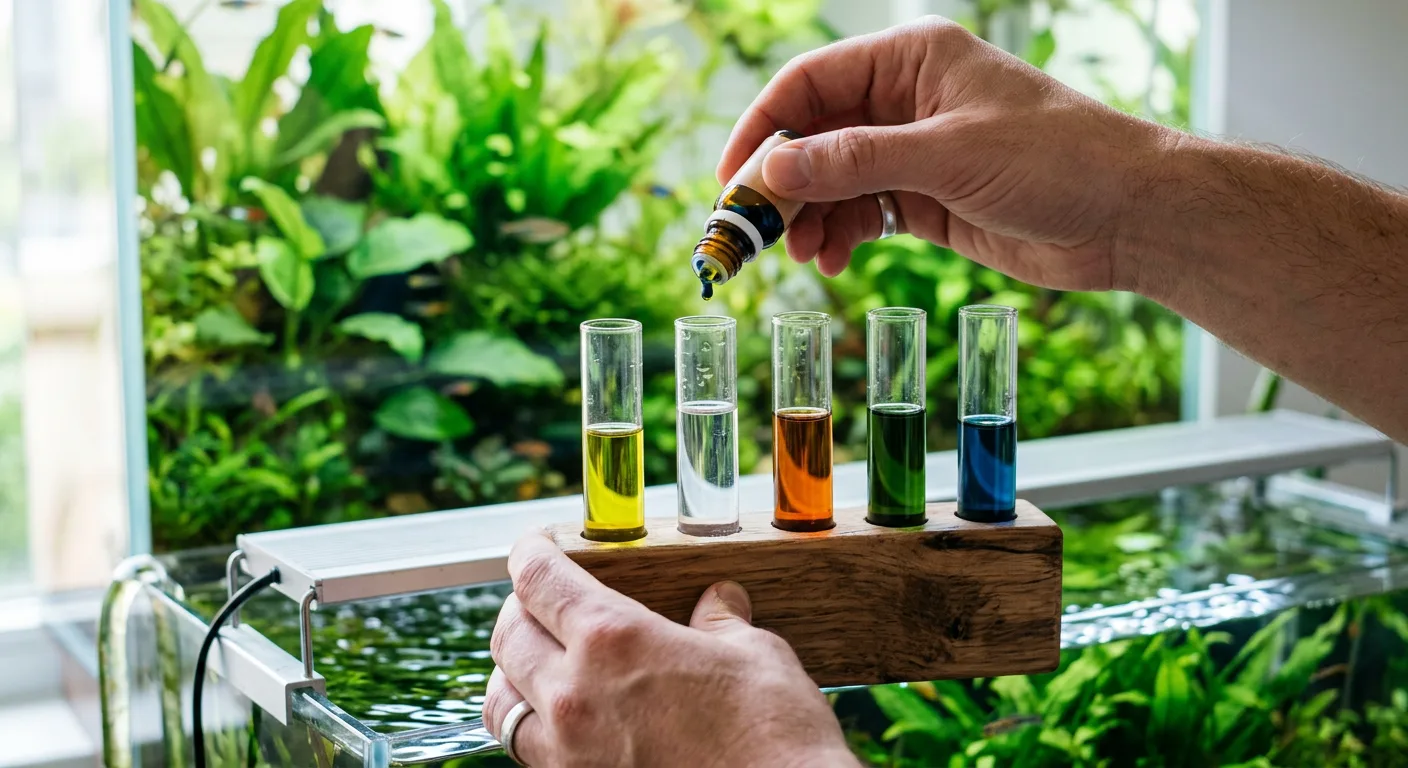
A reliable test kit is the most important purchase. The API Master Test Kit is the go-to for beginners. It includes tests for ammonia, nitrite, nitrate, pH, high-range pH, and KH. It's accurate enough for home use and costs less than test strips while being far more reliable. For more advanced testing, Salifert makes professional-grade tests for phosphate, iron, and other parameters. Digital pH and temperature meters are convenient but need regular calibration.
A gravel vacuum (siphon) is necessary for pulling waste out of substrate. The Python No Spill Clean and Fill connects directly to your faucet, letting you fill the tank while you vacuum. It turns a 30-minute bucket chore into a 10-minute job. If your tank is near a sink, this is the single best upgrade you can make.
Every tank needs water conditioner. Seachem Prime handles chlorine, chloramine, and temporarily binds ammonia and nitrite (useful during cycling or emergencies). A 500mL bottle treats 5,000 gallons, so one bottle lasts most hobbyists years.
For planted tanks, a quality LED light with a timer and a pressurized CO2 system (not DIY yeast) are worth the investment. Cheap lights lead to algae problems. DIY CO2 is inconsistent and usually creates more issues than it solves. Budget accordingly.
A thermometer isn't optional either. Digital ones with probes are more accurate than stick-on strips. Temperature swings stress fish and trigger disease.
Table of Contents
Related Content
Popular Fish Species
Essential Gear
Best Aquarium Test Kit for Freshwater Tanks
API Freshwater Master Test Kit
Best Aquarium Gravel Vacuum
Python No Spill Clean and Fill (25 ft)