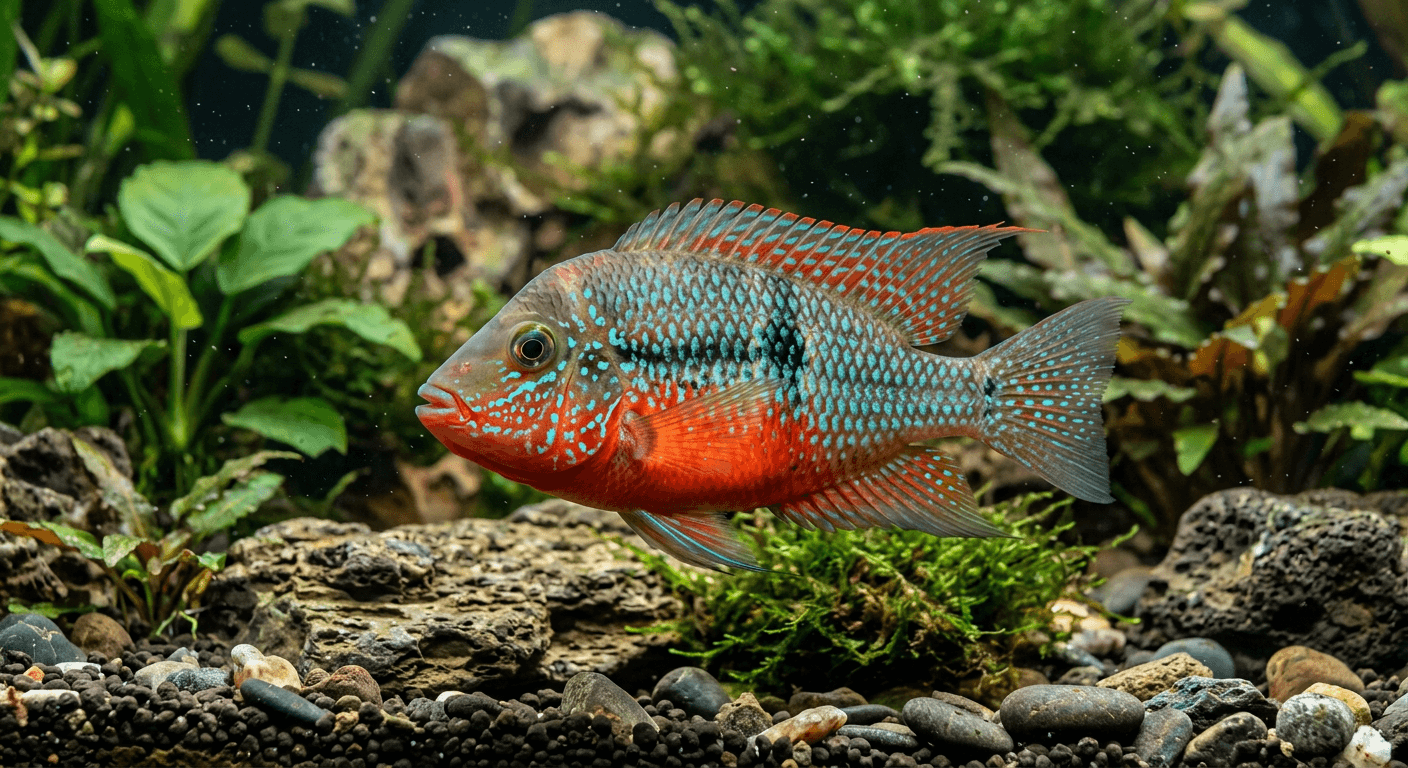
Firemouth Cichlid
Thorichthys meeki
Overview
The first time a firemouth cichlid flares at you, it looks like a tiny dragon just opened its mouth. That bright red-orange throat pouch fans out, the gill covers spread wide, and the fish doubles in apparent size. It is one of the best bluffs in the hobby. Almost never leads to real fighting. This display is how the species got its name, and it is the main reason people fall in love with them. Firemouths are Central American cichlids from rivers in Mexico and Guatemala. They top out around 5-6 inches, live 10-15 years with decent care, and are widely considered the best beginner cichlid after kribensis. Hardy, forgiving of water chemistry mistakes, and not nearly as destructive as convicts or Jack Dempseys. Pairs form strong bonds and are devoted parents. Watching a mated pair defend their fry while flaring at anything that comes within six inches of their brood is worth the price of admission alone.
Tank Setup
A 30-gallon tank works for a single firemouth, but 55 gallons is the better target if you want a pair or any kind of community. These fish need caves and hiding spots. Stacked rocks, terracotta pots on their sides, or driftwood with gaps underneath all work. Provide at least two or three cave options so a pair can choose their favorite for spawning. Sand substrate is non-negotiable. Firemouths are dedicated diggers. They sift sand through their gills looking for food, and they excavate pits near their chosen cave when breeding. Gravel can damage their gills during sifting. Keep plants around the tank edges, not in the center where the fish will uproot them. Hardy species like java fern and anubias attached to rocks or wood survive best. Leave open swimming space in the middle. Standard filtration rated for your tank size handles them fine, but overfilter if possible since cichlids produce more waste than similarly sized community fish.
Water Parameters
Firemouths are flexible on water chemistry, which is part of what makes them so beginner-friendly. Temperature between 75-82 degrees Fahrenheit, with 78 being the sweet spot. pH anywhere from 6.5 to 8.0, so most tap water works after conditioning. They handle moderately hard water well, which sets them apart from many South American cichlids that need soft, acidic conditions. Weekly 25-30% water changes keep things stable. Nitrates should stay below 20 ppm. The main thing firemouths do not tolerate is ammonia or nitrite, same as any fish. If your tank is cycled and you keep up with water changes, these fish will not give you chemistry problems.
Diet & Feeding
Firemouths are omnivores that lean toward the protein-heavy side. A quality cichlid pellet should make up the core diet. Supplement with frozen bloodworms, brine shrimp, and mysis shrimp 2-3 times per week. They also accept blanched vegetables like zucchini and shelled peas, though they show less enthusiasm for greens than for meaty foods. Feed once or twice daily, only what they finish in 2-3 minutes. Overfeeding is a real risk with cichlids because bloat can develop fast. Firemouths are not picky eaters and will enthusiastically take food from the surface, mid-water, or substrate. In a community tank, make sure food reaches other fish since firemouths are assertive feeders without being bullies about it.
Behavior & Temperament
The firemouth's reputation is scarier than the fish itself. That throat display looks genuinely intimidating, but it is almost always a bluff. Two firemouths facing off will flare at each other for a few seconds, then both swim away. Actual physical contact is rare outside of breeding. During spawning season, a pair claims a cave and the surrounding territory. They will chase away intruders with flaring and short charges, but they do not pursue fish across the tank the way more aggressive cichlids do. Pairs bond strongly and often stay close together even when not breeding. The male tends to be the primary territory defender while the female stays closer to the eggs or fry. Outside of breeding, firemouths cruise the middle water column, occasionally dipping to the substrate to sift for food. They are aware of their surroundings and will watch you approach the tank. Some keepers describe them as having a dog-like awareness of their owner.
Compatible Tankmates
The best tankmates are fish too large or too armored to be bothered by occasional flaring. Bristlenose plecos and rubber-lip plecos are excellent choices since they stay out of the firemouth's way and have enough armor to shrug off any posturing. Clown loaches work well in larger tanks (55 gallons and up) and add activity at the bottom level. Mystery snails and nerite snails are completely ignored. In a 55-gallon or larger, mollies and swordtails can work since they are fast enough and large enough to avoid trouble. Silver dollars pair nicely in bigger setups where there is room for a school. Avoid small fish like neon tetras, cardinal tetras, ember tetras, guppies, and endlers. They fit in a firemouth's mouth and will eventually end up there. All shrimp are at risk. Skip other territorial cichlids like german blue rams, electric blue acaras, oscars, discus, dwarf gouramis, and angelfish. Two territorial species in the same footprint causes stress for everyone.
Common Health Issues
Hole-in-the-head disease (HITH) is the biggest concern with any Central American cichlid. It shows up as small pits or erosion on the head and lateral line, usually caused by poor water quality combined with a nutrient-deficient diet. Prevention is straightforward: keep nitrates low, feed a varied diet with both protein and vegetable matter, and do not skip water changes. Ich can hit after a stressful event like shipping or a sudden temperature swing. Raise the temperature to 84F and treat with ich medication. Bloat from overfeeding is another common issue. If a firemouth stops eating and looks swollen, fast for 2-3 days and do a large water change. Internal parasites show up occasionally, especially in wild-caught specimens. A preventive deworming with praziquantel after purchase is a good habit for any new cichlid.
Breeding
Firemouths are substrate spawners and surprisingly good parents. A bonded pair will clean a flat rock or the inside of a cave, then the female deposits 100-500 eggs in neat rows. Both parents guard the clutch aggressively, and this is when you will see the most intense flaring behavior directed at tankmates. Eggs hatch in about 3-4 days. The fry stay attached to the substrate absorbing their yolk sacs for another few days before becoming free-swimming. Once mobile, the fry form a tight cloud around the parents, who escort them around the tank and actively defend them. Both parents participate, with the male running perimeter defense while the female stays in the middle of the fry school. Feed free-swimming fry baby brine shrimp and crushed flake. Growth is steady, and juvenile coloring starts to develop around 6-8 weeks. The throat display begins showing up in young fish at around 2 inches. Getting a pair is easiest by buying 6-8 juveniles and letting them pair off naturally, then rehoming the extras.
Frequently Asked Questions
Quick Stats
What You Need for Firemouth Cichlid
Gear that works well for this species, based on what experienced keepers actually use.
Rated for 40-70 gallons, so it handles the higher bioload of cichlids with room to spare. Customizable media baskets let you run extra biological filtration for a messy digger.
Black soldier fly larvae-based pellets sized for medium cichlids. High protein content matches the firemouth's preference for meaty foods without the mess of frozen.
LCD display shows real-time temperature so you catch drift before it stresses your fish. The flat profile fits behind hardscape where a digging cichlid cannot knock it loose.
Fine, smooth sand that is safe for gill-sifting firemouths. Will not scratch gill plates or mouth tissue during digging. pH neutral so it will not shift your water chemistry.