Zebra Loach
Botia striata
Overview
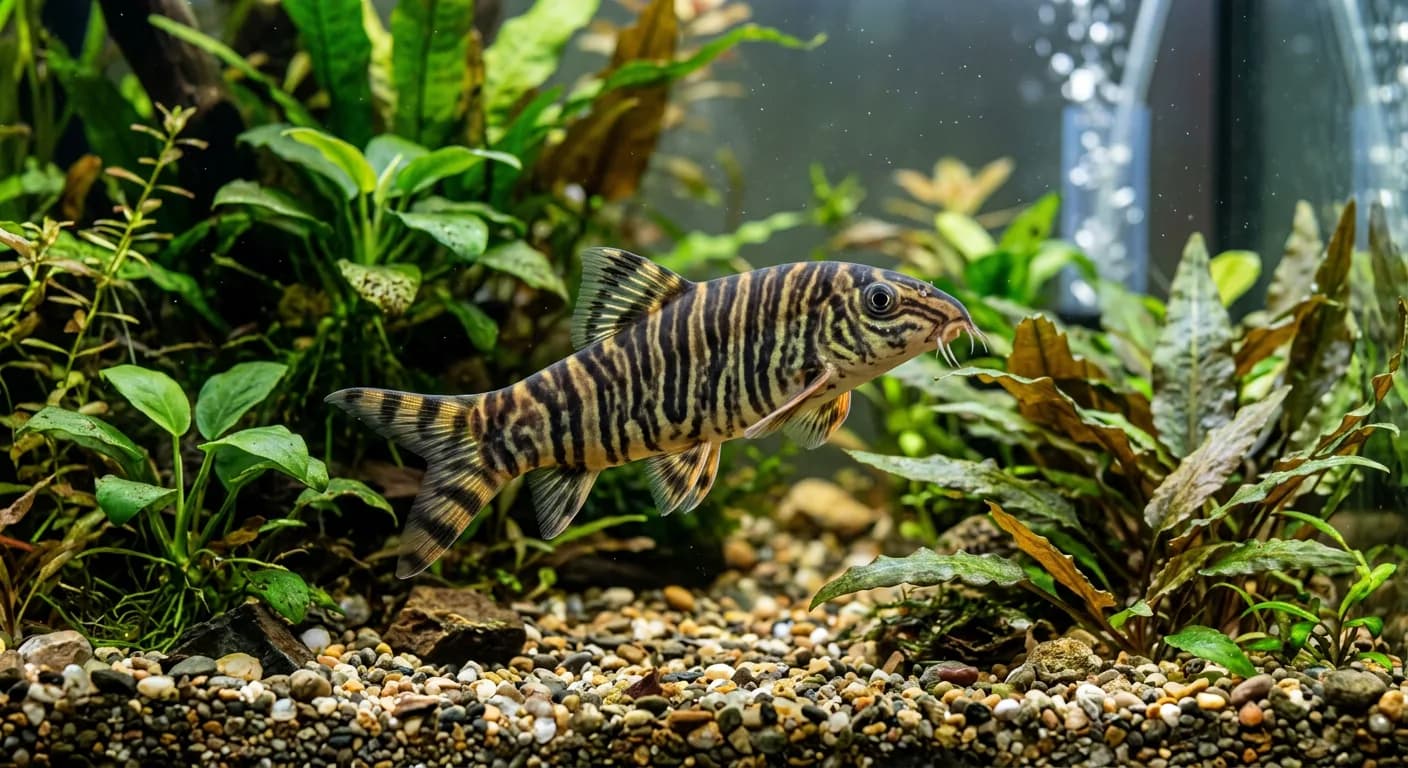
Zebra loaches are charming bottom-dwellers that bring personality to any community tank. Their bodies are covered in alternating dark and light stripes, giving them a bold pattern that stands out against plants and substrate. They stay relatively small, reaching only 3-4 inches as adults, which makes them suitable for tanks that might be too small for larger loach species. These fish have a reputation for being one of the more peaceful loaches available, getting along well with a wide range of tankmates. They are active during the day unlike many bottom-dwellers, often rooting around the substrate or exploring driftwood and plants. Zebra loaches are social creatures that do best in groups of five or more. A solitary zebra loach will hide constantly and may even pine away. In a group, they establish a loose hierarchy and will often sleep in piles or rest together in hiding spots. They can live for 10-15 years with proper care, making them a long-term commitment but also a rewarding one.
Tank Setup
A 20-gallon tank is the minimum for a small group of zebra loaches, though a 30-gallon is strongly recommended if you plan to keep a group of five or more. These fish originate from fast-flowing streams in India, so they appreciate clean, well-oxygenated water with some current. A good hang-on-back filter or canister filter that provides gentle flow works well. Add a layer of sand or smooth gravel as substrate since they like to root around and can injure their barbels on rough substrate. Include plenty of hiding spots using driftwood, smooth rocks, and dense plants. Java fern, anubias, and crypts all work well and provide the shaded areas these fish prefer. Leave open areas on the substrate for foraging. Zebra loaches appreciate a tank that feels secure, so adding leaf litter like indian almond leaves can help them feel at home while also softening the water slightly.
Water Parameters
Zebra loaches are adaptable but do best in slightly acidic to neutral water with a pH between 6.0 and 7.5. Temperature can range from 73 to 86 degrees, with 79 being ideal. They are not particularly hardwater fish, so they do well in most municipal water supplies as long as it is not extremely hard. The most important factor is water quality. These fish are sensitive to poor water conditions and can be the first to show signs of stress when parameters slip. Ammonia and nitrite must always be zero. Nitrates should stay below 20 ppm through regular water changes of 25-30% weekly. They are somewhat sensitive to medications, especially copper-based treatments, so use half-doses when treating and observe carefully. Sudden temperature changes can trigger ich, so avoid placing the tank near windows or air conditioners.
Diet & Feeding
Zebra loaches are omnivores that spend much of their time foraging along the bottom of the tank. A quality sinking pellet or wafer should form the basis of their diet. Hikari Sinking Wafers are an excellent choice and are readily accepted. Supplement with frozen or live foods like bloodworms, brine shrimp, and daphnia. They will also graze on algae and biofilm growing on surfaces, which helps keep the tank clean. zucchini slices and blanched vegetables make good occasional treats. Feed them once or twice daily, offering only what they consume within a few minutes. Since they are bottom-feeders, make sure food reaches them and does not get eaten by mid-water fish first. Using a feeding dish or target feeding with tongs can help ensure everyone gets their share.
Behavior & Temperament
Zebra loaches are peaceful bottom-dwellers that add activity without aggression. They are social fish that should always be kept in groups, with five being the minimum recommended number. In a group, they display interesting social behaviors including resting piled together and occasionally chasing each other playfully. They are primarily active during the day, unlike many loach species that are nocturnal. You will often see them exploring the tank, rooting through the substrate, or investigating new additions to the tank. They can be somewhat shy at first in a new setup, so give them time to settle in. Once comfortable, they become bold and entertaining residents. They get along well with most community fish and are unlikely to bother tankmates. Their small size and peaceful nature make them ideal for community tanks that might not handle larger, more aggressive loach species.
Compatible Tankmates
Zebra loaches work well with a wide variety of peaceful community fish. Other bottom-dwellers like corydoras (bronze, sterbai, panda, pygmy) and kuhli loaches make excellent tankmates since they share similar water preferences and occupy different micro-habitats within the tank. Small to medium-sized schooling fish like harlequin rasboras, cherry barbs, rummy-nose tetras, and neon tetras provide activity in the middle and upper levels without bothering the loaches. Honey, pearl, and dwarf gouramis add color and occupy the top levels. Livebearers like platies, mollies, and swordtails also work well. Avoid large, aggressive fish like oscars, flowerhorn cichlids, and jack dempseys that might see the zebra loaches as food. Fin-nipping fish like tiger barbs and aggressive puffers should be avoided. Betta fish may stress the loaches with their active swimming patterns in smaller tanks.
Common Health Issues
Zebra loaches are generally hardy when kept in appropriate conditions, but they can be susceptible to common freshwater diseases. Ich is the most frequently encountered issue, appearing as white spots on the body and fins. It is usually triggered by stress or temperature fluctuations and responds well to standard heat treatment combined with aquarium salt. They can be sensitive to medications, so when treating for ich or other ailments, use half the normal dose and monitor closely for adverse reactions. Fungal infections can occur on wounds, especially if water quality is poor. Maintaining excellent water quality through regular partial water changes is the best prevention against most health problems. These fish have delicate barbels around their mouths that can become damaged on rough substrate, so keep the substrate smooth to prevent infections.
Breeding
breeding Zebra loaches in home aquariums is extremely difficult and rarely accomplished. They have not been bred commercially on a wide scale, and most specimens available in the hobby are wild-caught or tank-raised in specialized facilities. If breeding were to be attempted, it would require a separate breeding tank with very soft, slightly acidic water and temperatures on the higher end of their range. The adults would need to be conditioned with high-protein live foods. Spawning behavior is not well-documented in home aquariums, and raising the fry would require extremely small foods like infusoria. For most hobbyists, breeding is not a realistic goal, and the focus should be on keeping a healthy group of adult fish. Enjoy these fish for their personality and behavior rather than trying to breed them.
Frequently Asked Questions
Quick Stats
What You Need for Zebra Loach
Gear that works well for this species, based on what experienced keepers actually use.
Rated for aquariums up to 20 gallons with excellent biological filtration. The multi-stage filtration system handles the bioload of a zebra loach group while providing gentle flow these fish prefer. The filter media basket is easy to maintain and customizable.
100W adjustable heater suitable for 20-30 gallon tanks. The LED display shows current temperature at a glance. Sufficient for maintaining the 73-86F range zebra loaches need. Includes automatic shut-off for safety.
Complete test kit measures pH, ammonia, nitrite, and nitrate. Essential for monitoring water quality since zebra loaches are sensitive to poor conditions. The liquid test kits are more accurate than strip tests.
Nutritionally balanced sinking wafer designed for bottom-feeders. The formula includes shrimp and fish meal that zebra loaches find irresistible. Wafer format remains intact longer than flakes, giving bottom-dwellers time to eat.