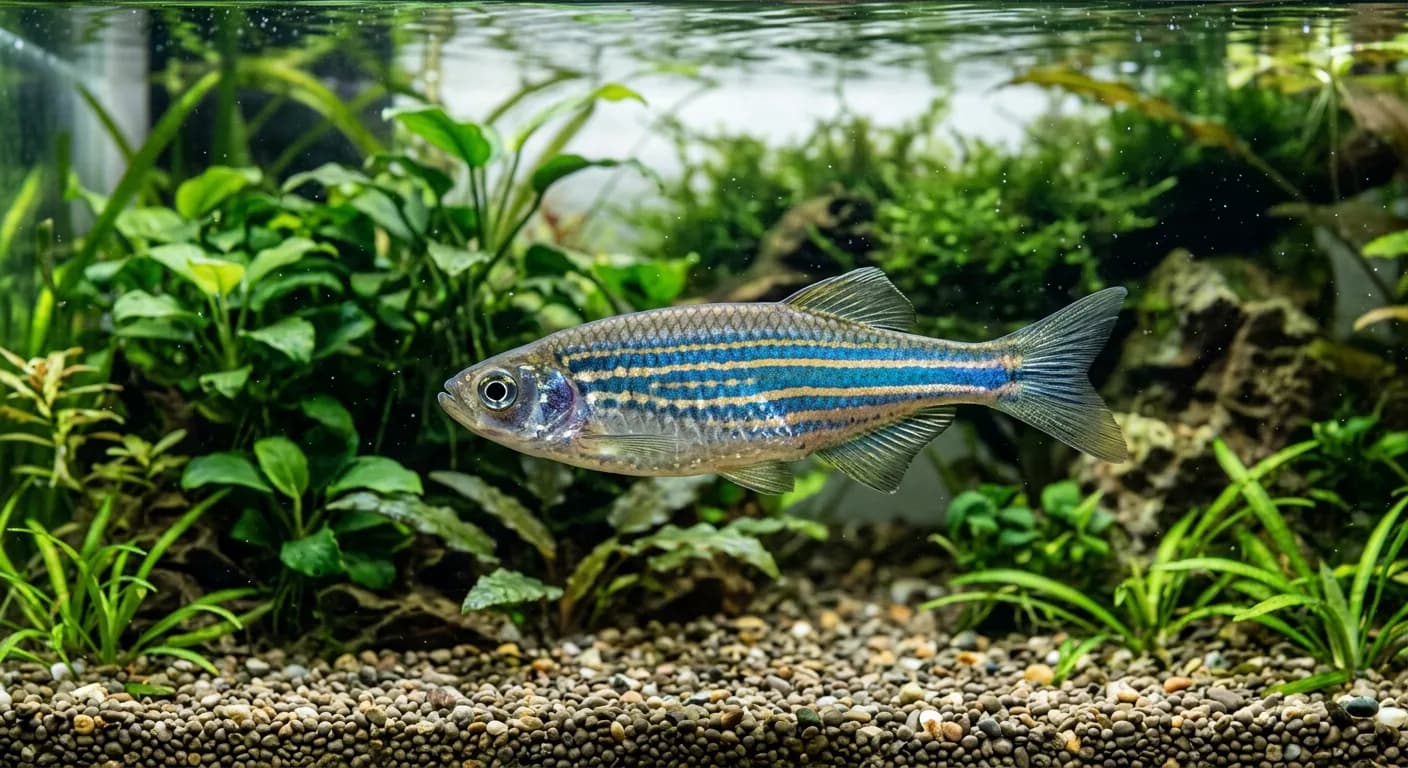
Giant Danio
Devario aequijinchus
Overview
Giant Danios are the overachievers of the danio world. While their zebra danio cousins stay compact, these fish grow to a respectable 4 to 6 inches and have the personality to match their size. They have a sleek, torpedo-shaped body with a distinctive pattern of horizontal stripes and spots in blue, gold, and silver. The species was reclassified from Danio to Devario aequijinchus a few years back, but most hobbyists still call them giant danios. These are active fish that never stop moving. They dart around the tank in groups, investigating everything and demanding attention. A school of 6 giant danios in a 55-gallon tank is a constant source of entertainment. They are hardy, adaptable, and get along with most community fish, making them an excellent choice for someone who wants a larger, more visible schooling fish. The one thing to know is they need swimming room. A cramped tank makes them jumpy and dull.
Tank Setup
Start with a 30-gallon minimum, though 55 gallons brings out their best behavior. Giant danios come from fast-flowing streams in Myanmar, Thailand, and surrounding regions, so they appreciate some water current. A hang-on-back filter that creates moderate surface movement works well. They are not particularly demanding about decor, but they do appreciate having plants along the edges so they have security without losing swimming space. Java fern, anubias, and Vallisneria all work well. Use sand or smooth gravel as substrate. Keep the tank covered. Giant danios are known jumpers, especially when startled or during active swimming bouts. Good lighting shows off their colors, and these fish look their best under full-spectrum LEDs. They are best kept in groups of 5 or more, and a 55-gallon gives a group of 6 to 8 plenty of room to swim without crowding out tankmates.
Water Parameters
Giant danios are forgiving fish that adapt to a wide range of conditions. pH between 6.5 and 7.5 works well, and they handle moderately hard water without issues. Temperature should stay between 72 and 77 degrees, with 74 being a good target. They are more tolerant of temperature variation than many tropical fish, which makes them forgiving for beginners. Ammonia and nitrite must always be zero, of course, but nitrates can climb a bit higher than with more sensitive species, up to 30 ppm without major concern. That said, consistent water quality produces the best colors and activity. Weekly 25% water changes keep nitrates in check. These fish have been tank-bred for generations, so they are hardier than wild-caught specimens. They do appreciate slightly cooler water than many common community fish, which makes them a good match for rooms that stay on the cooler side.
Diet & Feeding
Giant danios are not picky eaters and will accept most foods. A quality flake or small pellet forms the base of their diet. Fluval Bug Bites, Omega One flakes, or New Life Spectrum pellets all work well and bring out good coloration. Supplement with frozen bloodworms, brine shrimp, or daphnia two to three times per week. They are enthusiastic eaters that will greedily accept food at the surface and throughout the water column. Feed two to three times daily, offering only what they consume in about two minutes. Giant danios are fast eaters that can outcompete slower tankmates, so watch that shy fish still get their share. They are omnivores that appreciate some vegetable matter in their diet, so occasional offerings of blanched zucchini or spirulina-based foods help round out their nutrition. Young fish grow quickly and benefit from protein-rich foods to support their development.
Behavior & Temperament
Giant danios are hyperactive schooling fish that spend most of their time cruising the middle and upper regions of the tank. They swim constantly, darting from one end to the other in coordinated groups. This activity level is a key part of their appeal, but it can stress more sedate fish. They are peaceful with their own kind and other community fish, rarely showing aggression. Within a school, they establish a loose hierarchy through harmless chasing and displays. Males may flare at each other during these interactions, but actual fighting is uncommon. They are curious fish that will investigate new additions to the tank and may nip at very slow-moving or long-finned tankmates out of curiosity rather than aggression. A group of 5 to 6 provides enough social interaction to keep them engaged without excessive aggression. Without enough company, they can become skittish and hide.
Compatible Tankmates
Giant danios pair well with other active community fish that can handle their high energy level. Corydoras varieties, including bronze, sterbai, panda, and pygmy, make excellent bottom-dwellers that coexist peacefully. Other danios and rasboras, like harlequin rasboras and zebra danios, create impressive mixed-school displays. Cherry barbs, tetras, and livebearers all work as mid-water companions. Bristlenose plecos and siamese algae eaters handle algae cleanup without competing for swimming space. Avoid pairing them with slow-moving fish like bettas, which will be stressed by the constant activity. Oscars and other large cichlids will view them as food. Dwarf puffers are too aggressive. Goldfish prefer cooler water. Basically, match them with fish that can swim at their pace and handle similar water parameters.
Common Health Issues
Giant danios are remarkably hardy fish that resist most common aquarium diseases. The most frequent issues arise from poor water quality or stress from overcrowding. Ich is always a possibility when adding new fish, appearing as white spots on the body and fins. Standard heat treatment, raising temperature to 86 degrees over 48 hours, combined with aquarium salt usually clears it up. They can occasionally develop bacterial infections if water quality declines, showing up as frayed fins or cloudy eyes. Improving water quality first, then treating with antibiotics if needed, handles most bacterial problems. Internal parasites are rare but can occur in newly imported fish, indicated by weight loss despite normal eating. Medicated food with praziquantel works for most intestinal parasites. The best prevention is keeping them in a properly sized group in clean water with a varied diet. Quarantine new additions for two weeks before adding them to the main tank.
Breeding
Breeding giant danios is achievable for hobbyists willing to set up a separate breeding tank. They are egg scatterers that do not provide parental care. Set up a tank with spawning mops or fine-leaved plants like java moss. Keep the water at 74 to 77 degrees with a pH around 7.0. Condition the breeding group with high-protein foods like live or frozen bloodworms and brine shrimp for one to two weeks. Males will chase females actively, and spawning typically occurs in the morning. A single female can produce several hundred eggs in one spawning event. Remove the adults after spawning, because they will eat the eggs given any opportunity. Eggs hatch in 24 to 48 hours depending on temperature. The fry are tiny and need infusoria or liquid fry food for the first week, then graduate to newly hatched baby brine shrimp. Growth is relatively fast compared to many tropical fish, with fry reaching about an inch within two months. Sexual maturity occurs around six months.
Frequently Asked Questions
Quick Stats
What You Need for Giant Danio
Gear that works well for this species, based on what experienced keepers actually use.
Rated for up to 30 gallons with adjustable flow. The multi-stage filtration handles biological, mechanical, and chemical filtration. Reusable filter media sponges save money over time. Creates enough current without being overpowering for giant danios.
Fully submersible heater with adjustable temperature control. LED display shows current temperature at a glance. Available in multiple wattages to match tank size. Automatic shut-off prevents overheating. Reliable performance at an affordable price point.
Comprehensive liquid test kit measures pH, ammonia, nitrite, and nitrate. Includes detailed instructions for accurate testing. Long-lasting supplies for hundreds of tests. The gold standard that most hobbyists rely on for reliable results.
Insect-based formula with black soldier fly larvae as the first ingredient. High protein content supports growth and coloration in danios. Small floating flakes stay intact longer, allowing slow feeders to get their share. Formulated for daily feeding of omnivorous tropical fish.