Julii Corydoras
Corydoras julii
Overview
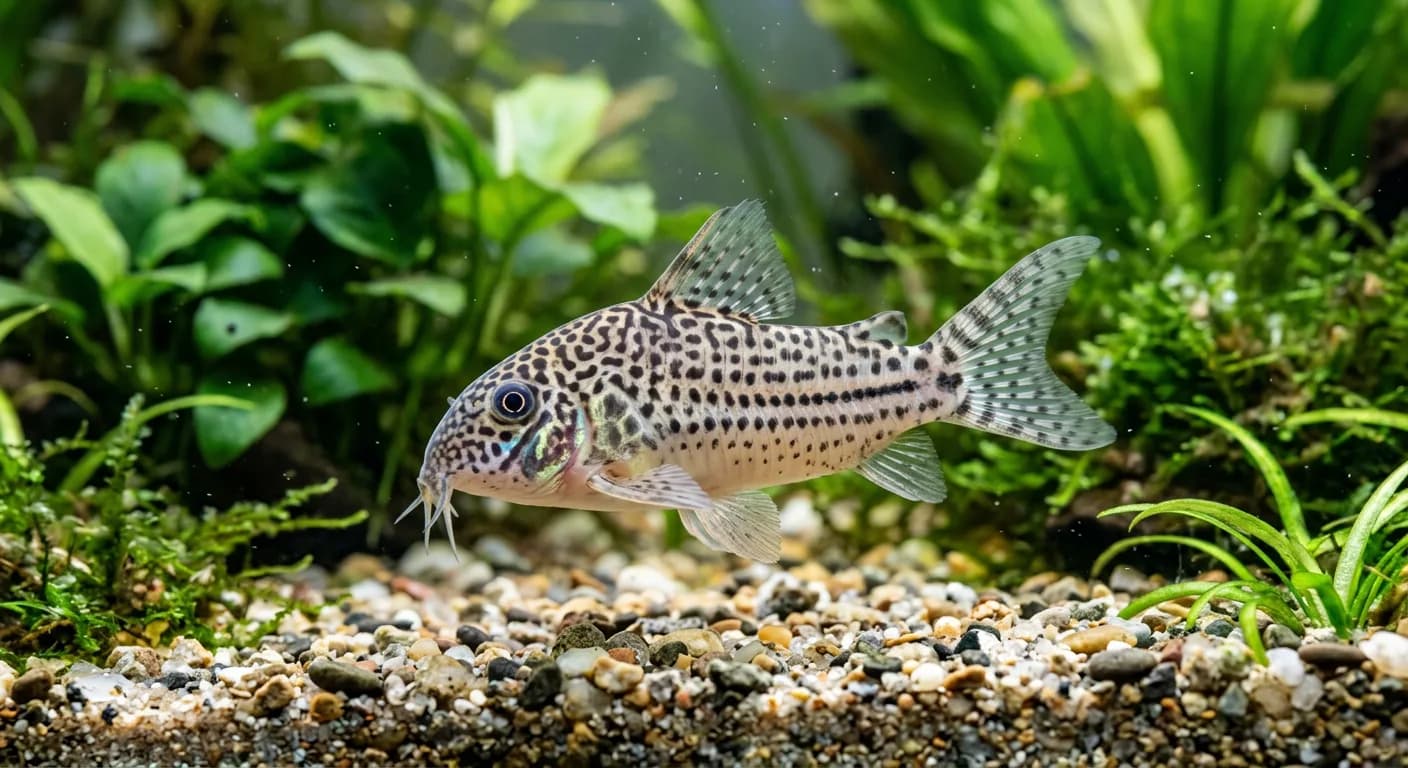
Julii corydoras are one of the most recognizable cory species thanks to their distinctive spotted pattern. The body is a light silver-gray covered in small black spots that extend onto the fins, giving them a leopard-like appearance. This pattern helps them blend into sandy substrates in the wild. They are peaceful, bottom-dwelling fish that spend most of their time rooting around the substrate for food. Julii corydoras are social fish that need to be kept in groups. A single cory will hide constantly and may refuse to eat. Six is the minimum group size, and a group of 8-10 in a 20-gallon tank creates a natural, active school. They are excellent community fish that get along with almost any peaceful tankmate. Their small size makes them suitable for planted tanks and shrimp setups. Unlike some cory species, Julii corydoras are relatively active during the day, often coming out to explore the tank once they feel secure.
Tank Setup
A 10-gallon can house a small group of 6 Julii corydoras, but a 20-gallon is the ideal size. These fish need a smooth substrate like sand or fine gravel. Sharp gravel can damage their barbels, which are sensitive organs they use to find food. Add some plants for cover, but leave open areas on the substrate for foraging. Java fern, anubias, and mosses work well and do not require strong lighting. Driftwood and rocks provide additional hiding spots. Filtration does not need to be powerful. A sponge filter or a gentle hang-on-back filter works well. These fish come from slow-moving waters in South America and do not appreciate strong current. They are not jumpers, but a lid is still recommended to prevent accidents. Live plants are beneficial because they help maintain water quality and provide grazing surfaces.
Water Parameters
Julii corydoras are adaptable and tolerant of a wide range of conditions. They do best in water with a pH between 6.0 and 8.0, which covers most tap water parameters. Temperature should be kept between 72 and 79 degrees. They prefer slightly softer water but tolerate moderately hard water without problems. Like all corydoras, they are sensitive to poor water quality. Ammonia and nitrite must always be zero. Nitrates should be kept under 20 ppm with weekly water changes of 25-30%. These fish have a low bioload, so a 20-gallon tank with a group of 6-8 is easy to maintain. Avoid sudden temperature swings during water changes. Some owners add aquarium salt to their water, but this is not necessary and is not recommended if you keep shrimp.
Diet & Feeding
Julii corydoras are omnivores that spend most of their time foraging through the substrate. They are not picky eaters and will consume most foods that reach the bottom of the tank. A quality sinking pellet or wafer should form the basis of their diet. Hikari Sinking Wafers are an excellent choice. They also enjoy frozen foods like bloodworms, brine shrimp, and daphnia. Supplement with live foods when available. Feed them once or twice daily, offering only what they can consume in a few minutes. Since they are bottom feeders, make sure food reaches them. In a community tank, food often gets eaten by mid-water fish before reaching the bottom. Dropping food directly into their area or using a feeding dish helps ensure they get their share. They also graze on algae and biofilm on surfaces.
Behavior & Temperament
Julii corydoras are peaceful, social fish that spend their days actively swimming along the bottom of the tank. They are most active in the morning and evening, often grouping together and exploring the substrate. A healthy school will spread out across the tank, each fish rooting through the sand looking for food. They communicate with each other through subtle body language and occasional rapid fin movements. Males sometimes display to females, but this is not aggressive. These fish are not territorial and do well in community tanks. They may rest motionless on the substrate or on plant leaves, which is normal behavior. They occasionally dart to the surface for a quick breath of air, which is a normal corydoras behavior. They feel most secure in a group and will be more active and visible when kept with at least 6 individuals.
Compatible Tankmates
Julii corydoras are ideal community fish that get along with almost any peaceful species. They work well with small to medium tetras like neons, cardinals, embers, and rummy-nose tetras. Rasboras, barbs, and danios make good tankmates. They are compatible with most livebearers including guppies, platies, mollies, and swordtails. Other bottom-dwellers like kuhli loaches, other cory species, and bristlenose plecos share their space without issues. They do well in planted tanks with shrimp and are safe with amano shrimp, cherry shrimp, and ghost shrimp. Avoid large, aggressive fish like cichlids, oscars, and silver dollars that may see them as food. Fast-swimming fish that compete aggressively for food may outcompete corydoras at feeding time.
Common Health Issues
Julii corydoras are hardy fish that are less prone to disease than many other aquarium species. The most common issues arise from poor water quality. Ammonia or nitrite exposure can damage their gills and barbels. Maintaining clean water through regular partial changes is the best prevention. They can be affected by ich, which appears as white spots on the body and fins. Raising the temperature to 86 degrees over 48 hours and adding aquarium salt usually clears up mild cases. Bacterial infections can occur after injuries from sharp substrate or aggressive tankmates. Keeping the substrate clean and smooth prevents most problems. These fish are scaleless, which means they are more sensitive to medications than scaled fish. When treating for disease, use half the normal dose of medications and observe carefully. Quarantining new additions for two weeks helps prevent introducing disease to your established school.
Breeding
Breeding Julii corydoras in the home aquarium is achievable with the right conditions. These are egg scatterers that do not provide parental care. To trigger spawning, feed high-quality foods like live or frozen bloodworms and brine shrimp for a couple of weeks. Perform a large, cool water change of 30-40% to simulate rainy season conditions. Males will chase females around the tank, and the female will carry eggs on her ventral fin before attaching them to surfaces like plants, glass, or heater tubes. A single female can lay 100-200 eggs over several days. Remove adults after spawning, or they will eat the eggs. Eggs hatch in 3-5 days depending on temperature. The fry are tiny and need infusoria or liquid fry food for the first week. They grow quickly and can be fed crushed flake food and baby brine shrimp within two weeks. Keep the breeding tank clean and separate fry from adults.
Frequently Asked Questions
Quick Stats
What You Need for Julii Corydoras
Gear that works well for this species, based on what experienced keepers actually use.
Provides gentle biological filtration without creating strong currents that stress corydoras. The sponge material also offers a surface for beneficial bacteria and can be cleaned and reused. Silent operation suits the peaceful nature of a community tank.
Reliable adjustable heater suitable for 10-20 gallon tanks. Includes automatic shut-off for safety. Compact size fits easily in smaller aquariums without being conspicuous. Maintains stable temperatures in the 72-79F range Julii corydoras need.
Complete test kit measures pH, ammonia, nitrite, and nitrate. Essential for monitoring water quality in a corydoras tank. These fish are sensitive to poor water, so regular testing helps prevent health problems before they start.
High-protein sinking wafers designed for bottom feeders. Quickly softens for easy eating. Does not cloud water and stays intact longer than flake food, allowing corydoras to graze at their natural pace. Supports healthy growth and coloration.