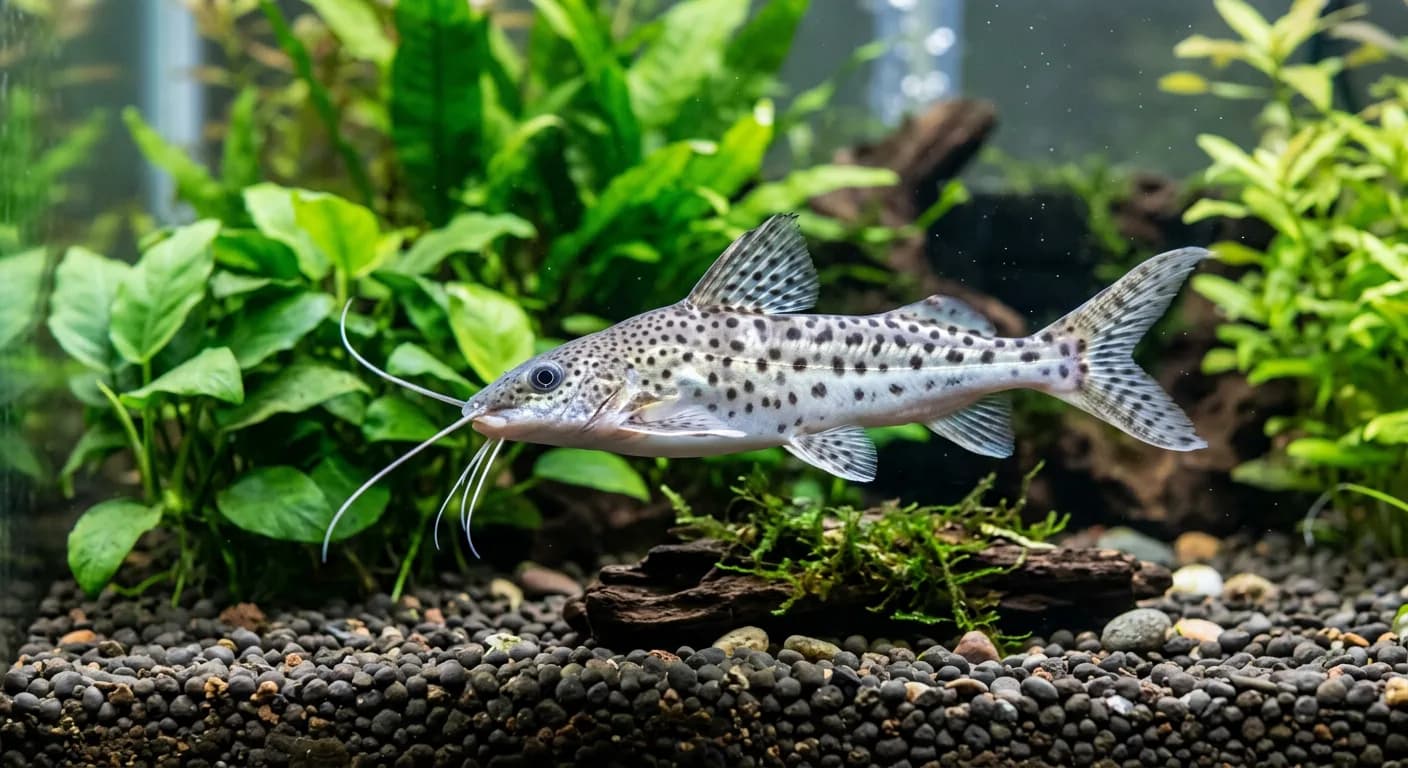
Pictus Catfish
Pimelodus pictus
Overview
Pictus Catfish are among the most active and entertaining catfish species available to aquarists. Their silvery bodies covered in black spots and extremely long whiskers (barbels) make them instantly recognizable. Unlike many catfish that hide during the day, Pictus are active throughout daylight hours, constantly swimming around the tank in loose schools. These South American natives are fast swimmers that patrol the entire bottom third of the aquarium, investigating every corner and decoration. They are peaceful fish that work well in community tanks, though they will eat anything small enough to fit in their mouth. Pictus are social creatures that should be kept in groups of at least 3, with 5-6 creating better dynamics and more natural behavior. Their constant activity and distinctive appearance make them excellent display fish that add movement and interest to community setups. However, they require more space than many people realize due to their active swimming style and schooling nature.
Tank Setup
Pictus Catfish need at least 55 gallons for a small school of 3, with 75 gallons or larger being much better for their active lifestyle. They are fast swimmers that appreciate open areas for swimming, combined with hiding spots like caves, driftwood, or PVC tubes. Use smooth substrate like fine gravel or sand to protect their sensitive barbels during foraging activities. Live plants can work but choose robust species like anubias, java fern, and cryptocoryne that can handle occasional disturbance. The tank should be well-covered since Pictus are capable jumpers, especially when startled or during feeding time. Filtration needs to be robust since active schooling fish produce substantial waste. A canister filter rated for your tank size plus 25-30% extra capacity handles their bioload well. They appreciate good water movement and well-oxygenated conditions. Lighting can be moderate since they are active during the day but also comfortable under bright lights.
Water Parameters
Pictus Catfish prefer stable tropical conditions with pH between 6.5 and 7.5, leaning toward neutral. They do well in soft to moderately hard water and are somewhat sensitive to parameter fluctuations. Temperature should remain between 75-81 degrees Fahrenheit, with 78 being optimal for their health and activity level. Water quality must be excellent since active schooling fish are more sensitive to poor conditions than solitary species. Maintain ammonia and nitrite at zero, nitrates under 20 ppm through regular water changes. They are sensitive to salt and many medications, so research catfish-safe treatments before medicating. Their sensitivity makes them good indicator fish for water quality issues. Perform weekly water changes of 25-30% to maintain stable conditions. Use a quality dechlorinator since they are sensitive to chlorine and chloramines in tap water. Consistent conditions are more important than specific parameters once they are established.
Diet & Feeding
Pictus Catfish are omnivores with excellent appetites that readily accept most aquarium foods. Sinking pellets or wafers should form the base of their diet since they are primarily bottom feeders. They love protein-rich foods like bloodworms, brine shrimp, and tubifex worms - either frozen or live. They will also eat any small fish that fit in their mouth (anything under 1.5 inches), so tankmate selection is important. Supplement with vegetable matter like blanched zucchini, peas, and algae wafers for balanced nutrition. Feed in the evening or after lights dim since they become more active during these periods, though they will feed during the day as well. Spread food around the tank so all school members get their share - they can be competitive during feeding time. They are active foragers that will sift through substrate looking for leftover food, helping keep the tank clean. Their hearty appetite and fast growth require consistent, quality nutrition.
Behavior & Temperament
Pictus Catfish are active, peaceful schooling fish with fascinating social behaviors. Unlike typical catfish that hide during the day, they remain active and visible throughout daylight hours. They swim in loose schools that expand and contract as they explore different areas of the tank. Group dynamics are important - they establish social hierarchies and interact with each other regularly. They are curious fish that investigate new additions to the tank and are not shy around people. Their swimming style is different from most catfish - they glide smoothly through the water column rather than sitting on the bottom. They are peaceful toward other fish but will eat anything small enough to be considered food. Their long barbels are constantly moving as they search for food and investigate their environment. The larger the school, the more confident and active they become. Single Pictus often become shy and hide, missing much of their natural behavior.
Compatible Tankmates
Pictus Catfish work well with medium to large peaceful community fish that are too big to be eaten. Good companions include larger tetras like cardinals and rummy-nose, peaceful barbs like cherry barbs, and robust livebearers like platies and mollies. They coexist well with other catfish like bronze corydoras (though they may outcompete them for food) and bristlenose plecos. Angelfish and peaceful dwarf cichlids like German blue rams make good upper-level tankmates. Avoid small fish like neon tetras, guppies, or endlers that will be seen as food. Also avoid very aggressive or territorial fish that might stress the peaceful Pictus. Other schooling bottom-dwellers like loach species can work well in larger tanks. Shrimp and snails small enough to be eaten should be avoided, though large mystery snails are usually safe. Choose tankmates that share their preference for active, well-lit environments rather than shy, nocturnal species.
Common Health Issues
Pictus Catfish are generally hardy but can be sensitive to poor water quality and are prone to several specific health issues. Ich is the most common problem, usually triggered by shipping stress, temperature fluctuations, or poor water quality. However, like all scaleless fish, they are sensitive to many ich medications - use half-strength copper treatments or salt/heat therapy with caution. Barbel damage can occur from rough substrate or poor water quality, leading to secondary bacterial infections. Internal parasites occasionally affect newly imported fish, showing as weight loss despite normal eating. Stress-related illnesses are common during the first few weeks in new tanks, especially if kept alone or in too-small groups. White spot disease and bacterial infections may occur in poor conditions. Never use full-strength salt treatments or copper-based medications - scaleless fish require different dosing. Quarantine new additions for 3-4 weeks and maintain excellent water quality to prevent most health problems. Their active nature means illness is often apparent quickly through changes in swimming behavior.
Breeding
Breeding Pictus Catfish in home aquariums is extremely difficult and rarely achieved by hobbyists. Most successful breeding occurs in large commercial setups or outdoor pond systems. They are seasonal spawners that require specific environmental triggers including temperature cycles, water chemistry changes, and hormonal treatments that are difficult to replicate in home tanks. Sex determination is nearly impossible outside of breeding condition, when females become noticeably rounder. Males may develop slightly more intense coloration and longer barbels during breeding season. Even if spawning were to occur, they are egg scatterers that provide no parental care and would likely eat their own eggs. The fry would be tiny and require specialized foods like infusoria and baby brine shrimp. Most Pictus in the aquarium trade are wild-caught or farm-raised in Southeast Asia rather than bred by hobbyists. Focus on providing excellent care for adult fish and enjoying their active schooling behavior rather than attempting breeding projects. Their 8-12 year lifespan makes them rewarding long-term companions without breeding success.
Frequently Asked Questions
Quick Stats
What You Need for Pictus Catfish
Gear that works well for this species, based on what experienced keepers actually use.
Powerful filtration system that handles the bioload of active schooling catfish. Bio-wheel technology provides excellent biological filtration needed for maintaining high water quality that Pictus require.
Maintains stable 75-81°F temperatures that Pictus Catfish need for optimal health and activity. Consistent heating prevents stress-related illnesses in temperature-sensitive catfish.
High-protein sinking granules specially formulated for bottom-dwelling catfish. Natural insect protein supports their active lifestyle and provides complete nutrition for schooling catfish.
Fine, smooth sand substrate that protects sensitive barbels during foraging activities. Easy to clean and maintain, perfect for active bottom-dwelling catfish that constantly sift through substrate.