Buenos Aires Tetra
Hyphessobrycon anisitsi
Overview
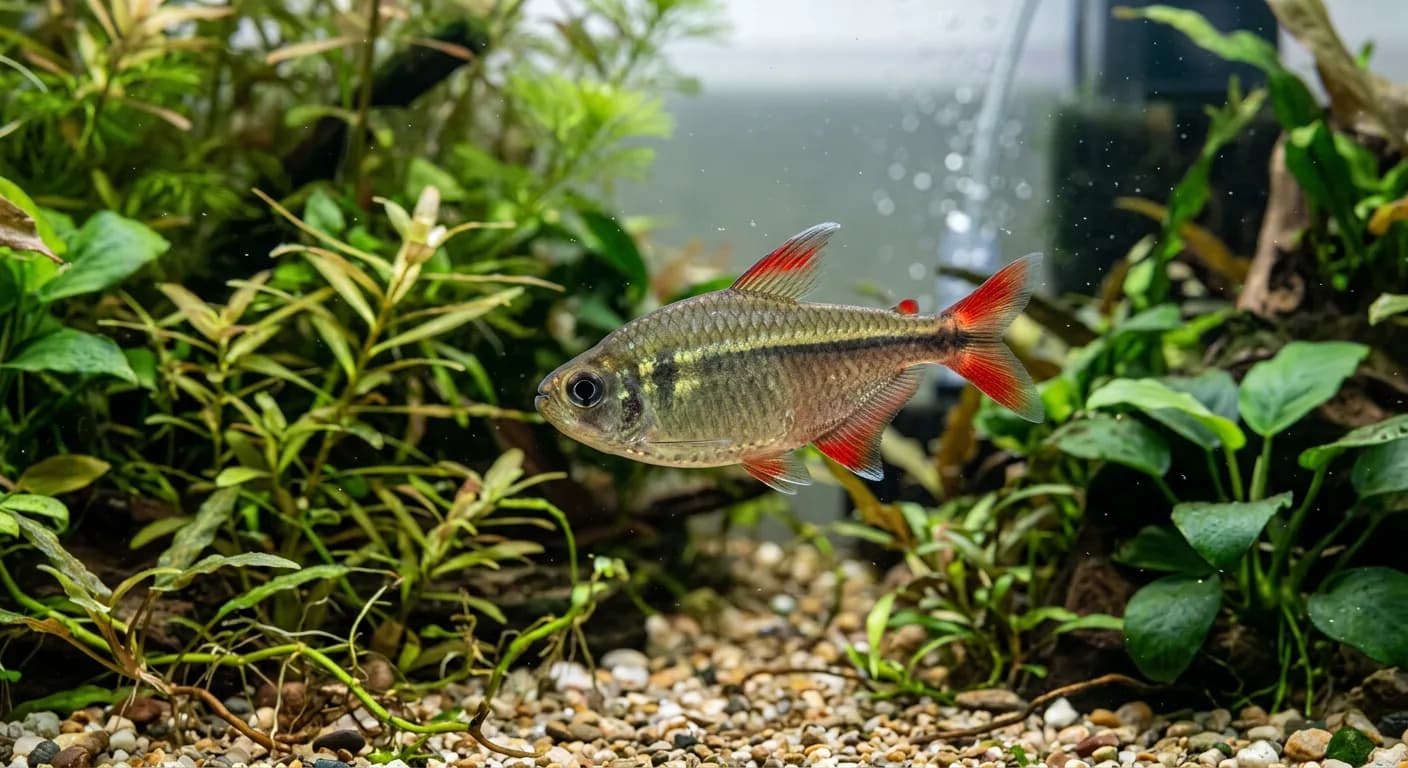
The Buenos Aires tetra is one of the most overlooked community fish in the hobby. Most people walk right past them at the fish store, drawn to the brighter tetras like cardinals or neons. That is a mistake. These fish have a sleek silver body with a distinctive red adipose fin and a splash of yellow in the tail. The males develop an extended dorsal fin as they mature, giving them a more dramatic look than the standard tetra silhouette. They are active, confident swimmers that fill a tank with constant movement. A group of six or more will zip around the middle of the tank, exploring every corner and claiming territory in a peaceful sort of way. What makes them special is their hardiness. Unlike many tetras that need pristine water conditions, Buenos Aires tetras tolerate a wider range of parameters. They handle temperature swings better than most tropical fish, which makes them a great choice for beginners who are still learning to balance their tank. They are also less prone to the color loss that plagues other tetras when water quality dips.
Tank Setup
A 30-gallon tank works for a school of six, but a 40-gallon gives them room to really move. These fish are active swimmers that use the entire middle layer of the tank. They come from the Paraguay and Parana river basins in South America, where the water varies quite a bit depending on the season. That background translates to a fish that adapts to different conditions in the home aquarium. Plants are not strictly necessary, but these tetras do appreciate some cover. They will hover in planted areas and dart out to chase each other around the tank. Java fern, anubias, and Vallisneria all work well and can handle the pH range these fish prefer. A hang-on-back filter rated for the tank size provides adequate filtration. These tetras are not particularly demanding about water flow, so a standard filter output works fine. A dark substrate helps their silver coloring stand out, and it also makes the red in their fins pop. Keep the tank covered. Like most tetras, they may jump when startled, especially when first introduced to a new tank.
Water Parameters
Buenos Aires tetras are forgiving when it comes to water chemistry. They do well in pH between 6.0 and 8.0, which covers most tap water supplies. Temperature flexibility is their strong suit. They thrive in the 64 to 82 degree range, which is wider than most tropical fish. This makes them an excellent choice for tanks where temperature stability is a challenge, such as in rooms that cool down at night. In terms of hardness, they handle both soft and moderately hard water without issues. Ammonia and nitrite should always be zero. Nitrates should stay under 40 ppm, though these tetras tolerate higher levels than many other species. Weekly water changes of 25 percent keep things stable. The one thing they do not tolerate is sudden changes in water chemistry. When performing water changes, match the temperature of the new water to the tank to avoid stressing them. They have been tank-bred for generations, which means the fish available today are much hardier than wild-caught specimens.
Diet & Feeding
These fish are not picky eaters. A quality flake or small pellet forms the foundation of their diet. They will accept most commercial foods, including those aimed at general community tanks. Supplement with frozen foods a few times per week. Bloodworms, brine shrimp, and daphnia all bring out their best coloration. They are mid-water feeders that will grab food as it drifts down but also come to the surface to eat. Feed them twice daily, offering only what they consume in about two minutes. One thing to note: Buenos Aires tetras are known to nibble on plants, especially soft-leaved species like Java moss and certain rotalas. They usually do not cause serious damage, but if you have a heavily planted tank with delicate plants, keep an eye on them. High-protein foods help maintain the red color in their fins. A varied diet keeps them healthy and active. They are not aggressive feeders, so make sure shyer tankmates get their share during feeding time.
Behavior & Temperament
Buenos Aires tetras are active fish with a semi-aggressive streak that surprises some owners. They are generally peaceful but can chase tankmates, especially when establishing territory within the school. The chasing is mostly display and rarely results in actual conflict or fin damage. Males will flare at each other and compete for attention from females, but these displays are more show than substance. They are schooling fish that feel safest in a group of six or more. A lone Buenos Aires tetra or a group that is too small will become skittish and may hide. In a proper school, they are confident and curious, exploring the tank throughout the day. They occupy the middle water column and will sometimes nip at the fins of very slow-moving tankmates or fish with long, flowing fins. This is not malicious behavior, more like playful curiosity that gets a bit rough. Keeping them with other active community fish usually prevents any issues. They are a good choice for a tank with robust plants because they will not damage the hardscape or uproot decorations.
Compatible Tankmates
These tetras do well with most community fish that match their activity level. Corydoras, including bronze, sterbai, panda, and pygmy varieties, make excellent bottom-dwelling companions. Rasboras like the harlequin work well as mid-water schoolmates. Livebearers such as platies, mollies, and swordtails share similar water preferences and tolerate the occasional chasing from the tetras without issue. Bottom feeders like bristlenose plecos, siamese algae eaters, and otocinclus are all compatible. Smaller fish like neon tetras and cardinal tetras work in a large enough tank, though the Buenos Aires may outcompete them for food. Avoid pairing them with slow-moving fish that have long fins, as the nipping behavior can become a problem. Bettas are a poor match because the tetras may harass them. Large cichlids like oscars will eat them. Tiger barbs are too aggressive and may cause issues. Discus need higher temperatures than what works best for these tetras. In general, stick with active community fish that are similar in size or larger.
Common Health Issues
Buenos Aires tetras are remarkably healthy when kept in appropriate conditions. They are not prone to many of the diseases that affect more delicate tetras. The most common issue is ich, which can occur after introducing new fish or if water temperature drops suddenly. Treatment is straightforward: raise the temperature to 86 degrees over 48 hours and add aquarium salt. They recover quickly from minor ailments thanks to their robust constitution. Internal parasites occasionally affect imported fish, showing up as weight loss or a hollow belly despite normal eating. Medicated food containing praziquantel handles most parasite issues. Fin rot can occur if water quality is poor, but this is easily prevented with regular maintenance. The best approach to keeping these fish healthy is consistent water changes and avoiding overfeeding. They are not as sensitive to parameter fluctuations as many other tetras, which makes them forgiving of the occasional mistake that new fishkeepers make.
Breeding
Breeding Buenos Aires tetras is achievable in a home aquarium. They are egg scatterers that do not provide parental care. To trigger spawning, condition a group with live and frozen foods for two weeks. A separate breeding tank of 20 gallons works well. Use spawning mops or fine-leaved plants like java moss as a substrate for the eggs. Keep the water slightly acidic, around pH 6.5, and raise the temperature to the upper end of their range, around 78 degrees. The male will chase the female through the plants, and she will scatter hundreds of eggs during these pursuits. Remove the adults after spawning, because they will eat the eggs given the chance. The eggs hatch in 24 to 36 hours, depending on temperature. The fry are tiny and need infusoria or liquid fry food for the first few days. They can transition to freshly hatched baby brine shrimp within a week. Growth is relatively fast compared to other tetras. The fry will reach maturity in about six months and develop their adult coloration during that time. Males can be distinguished from females once they mature, as the males develop the elongated dorsal fin that gives them their distinctive silhouette.
Frequently Asked Questions
Quick Stats
What You Need for Buenos Aires Tetra
Gear that works well for this species, based on what experienced keepers actually use.
Rated for up to 30 gallons with excellent biological filtration. The multi-stage design handles the bioload of a Buenos Aires tetra school without creating excessive current. Easy media customization and quiet operation make this a reliable choice for community tanks.
Insect-based formula with black soldier fly larvae as the first ingredient. High protein content supports the active lifestyle of Buenos Aires tetras. The flake format works well for mid-water feeding, and the variety of particle sizes lets these active eaters find their preferred food size.
Adjustable heater with manual temperature control. The 100-watt rating handles 30-gallon tanks well. Includes an external thermostat dial so you can set and verify the exact temperature. Compact design fits discreetly in the tank while providing reliable heating across the 64-82F range these tetras need.
Complete test kit that measures pH, ammonia, nitrite, and nitrate. The liquid test kits provide more accurate readings than strip tests. Essential for monitoring water quality and catching issues before they stress your tetras. One kit lasts for hundreds of tests, making it cost-effective for regular monitoring.