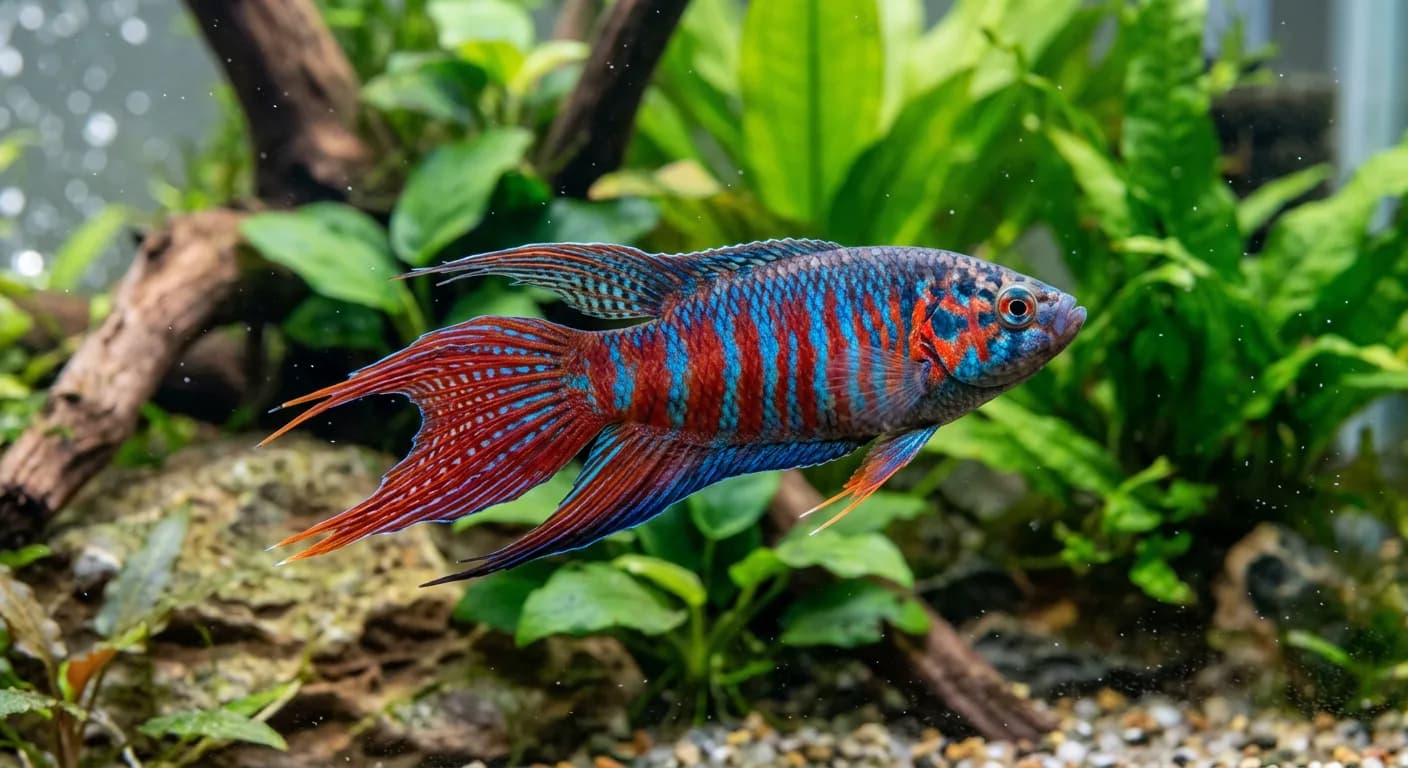
Paradise Fish
Macropodus opercularis
Overview
Paradise fish hold a special place in aquarium history as one of the first tropical fish successfully bred in captivity and among the first imports to Europe in the 1860s. They are labyrinth fish closely related to bettas and gouramis, but with one major difference: they are cold-tolerant and do not require heated tanks. Wild paradise fish can survive temperatures from near freezing to the low 80s, making them incredibly adaptable. Their coloration is stunning when mature - alternating red and blue vertical stripes with elaborate flowing fins. Males develop more intense colors and longer fins than females. However, paradise fish are notoriously aggressive, often compared to bettas in temperament. Males are territorial and will fight with other males, other labyrinth fish, and many community species. They are best kept alone or with very carefully chosen tankmates. Their hardiness and temperature tolerance make them excellent choices for unheated tanks or seasonal outdoor ponds in temperate climates.
Tank Setup
A 20-gallon tank is adequate for a single paradise fish, though 30+ gallons provides more options for tankmates and territories. The unique advantage of paradise fish is that they do not require heaters in most indoor environments, thriving at room temperature between 60-75 degrees. This makes them ideal for unheated setups, basements, or seasonal outdoor containers. Provide plenty of hiding spots and visual barriers since males are territorial. Dense plantings, caves, and driftwood help break up sight lines and provide territories. Live plants thrive in their preferred cooler temperatures - java moss, anubias, and vallisneria all do well. Floating plants provide security and spawning sites. Filtration should be gentle since they prefer calm water and need surface access for breathing. Hang-on-back filters work well with the output directed against the tank wall to minimize surface disturbance. Good surface area is important since they breathe atmospheric air regularly. Cover the tank to prevent jumping but ensure air gaps for breathing.
Water Parameters
Paradise fish are remarkably adaptable to different water conditions, tolerating pH from 6.0 to 8.0 and various hardness levels. Their temperature tolerance is their most unique feature - they thrive in unheated tanks at 60-75 degrees. This makes them perfect for cooler environments where heating costs are a concern or where consistent heating is not possible. They can survive brief temperature drops into the 50s and handle spikes into the low 80s, though they prefer the cooler range for long-term health. Water quality standards remain the same as other fish: ammonia and nitrite at zero, nitrates under 20 ppm. Regular water changes of 25% weekly maintain good conditions. They are less sensitive to dissolved oxygen than many tropical fish due to their labyrinth organ but still benefit from good water quality. The lack of heating requirements makes them excellent for outdoor seasonal setups or emergency situations where equipment fails.
Diet & Feeding
Paradise fish are opportunistic omnivores that accept virtually any aquarium food. Quality flake or small pellets work as daily staples, though they prefer floating foods since they feed primarily at the surface. Supplement with frozen foods like bloodworms, brine shrimp, and daphnia 2-3 times per week. Live foods are especially appreciated and help bring out their best colors. They will hunt live mosquito larvae, fruit flies, and small insects if offered. Paradise fish also graze on algae and biofilm naturally. Feed twice daily in small amounts they can consume within 2-3 minutes. They are aggressive feeders that may bully tankmates at feeding time, so ensure all fish get adequate food in community setups. In cooler water, their metabolism slows, and they may need less frequent feeding during winter months. Their appetite remains good year-round unlike some fish that reduce feeding in cooler temperatures.
Behavior & Temperament
Paradise fish are aggressive and territorial, especially males. They behave similarly to bettas, establishing territories and fighting with perceived rivals. Males cannot be housed together and will often harass females outside of breeding periods. They are labyrinth fish that surface regularly to breathe air, which is normal behavior. Their aggression extends to other labyrinth fish, long-finned species, and fish with similar colors or body shapes. However, they can be surprisingly tolerant of fast-moving, schooling fish that do not compete for territory. Males build bubble nests at the surface even without females present. They are intelligent fish that recognize their owners and learn feeding routines. Their territorial displays involve flaring fins, intense coloration, and aggressive posturing. Despite their aggression, they rarely cause serious injuries in properly sized tanks with adequate hiding spots. Their hardiness extends to their temperament - they adapt well to different setups and are less stressed by changes than many tropical species.
Compatible Tankmates
Paradise fish tankmate selection is challenging due to their aggressive nature and specific temperature requirements. The best companions are other cold-tolerant species that can handle some aggression. White cloud mountain minnows work well since they prefer cooler water and are fast enough to avoid harassment. Rosy barbs and zebra danios can coexist if there is adequate swimming room. Bottom-dwelling dojo loaches and hillstream loaches occupy different space and are generally ignored. Larger snails like mystery snails are typically safe. Avoid other labyrinth fish entirely - the aggression is usually fatal. Tropical community fish are poor choices both for temperature requirements and aggression issues. Small, delicate fish will be harassed or eaten. Slow-moving or long-finned species invite aggression. The safest approach is often a species-only setup or pairing with fast-moving, cold-tolerant schooling fish in larger tanks. Any community setup requires careful monitoring and backup plans for aggressive behavior.
Common Health Issues
Paradise fish are extremely hardy with few specific health issues when kept in appropriate conditions. Their cold tolerance actually reduces many common tropical fish diseases since many pathogens thrive in warmer water. Ich can still occur but responds well to salt treatment without needing temperature increases. Being labyrinth fish, they need access to surface air and can be sensitive to poor air quality or surface films. Ensure good ventilation and avoid chemicals near the tank. Fin rot may occur with poor water quality, appearing as frayed or deteriorating fins. Their aggressive nature means injuries from fighting are possible, though serious damage is rare with proper tank setup. Internal parasites are occasionally seen in wild-caught specimens. The cooler temperatures they prefer actually slow bacterial and parasitic growth compared to heated tropical tanks. Their biggest health threat is usually aggression-related stress either from inadequate territory or inappropriate tankmates. Maintaining good water quality and proper tank setup prevents most health issues.
Breeding
Paradise fish are bubble nest builders that breed readily in home aquariums, often more easily than many tropical species. Set up a breeding tank with shallow water (6-8 inches), gentle filtration, and floating plants. No heater is needed - room temperature is perfect for breeding. Condition a pair with live and frozen foods. Males build elaborate bubble nests at the surface using saliva and plant matter. The breeding display is spectacular with both fish showing intense colors. After spawning, remove the female immediately as males become extremely protective and aggressive. Males guard the nest and fry, fanning eggs and retrieving fallen ones. Eggs hatch in 24-48 hours, and fry become free-swimming within 3-5 days. Remove the male once fry are free-swimming to prevent predation. Feed fry with infusoria initially, then baby brine shrimp. Fry grow well in cooler water and are generally hardier than tropical species fry. Multiple spawnings are common if conditions remain stable. Their ease of breeding made them popular among early aquarists.
Frequently Asked Questions
Quick Stats
What You Need for Paradise Fish
Gear that works well for this species, based on what experienced keepers actually use.
Gentle filtration ideal for labyrinth fish that prefer calm surface conditions. No heater needed with paradise fish, so a quality filter is the main equipment requirement.
Essential for monitoring water quality in any aquarium setup. Particularly important for cold-water tanks where biological processes may be slower.
High-quality floating food perfect for surface-feeding paradise fish. Insect-based protein supports their omnivorous diet and brings out good coloration.
Supports live plants that thrive in cooler water temperatures. Dark substrate shows off the vibrant red and blue coloration of paradise fish beautifully.