Rosy Barb
Pethia conchonius
Overview
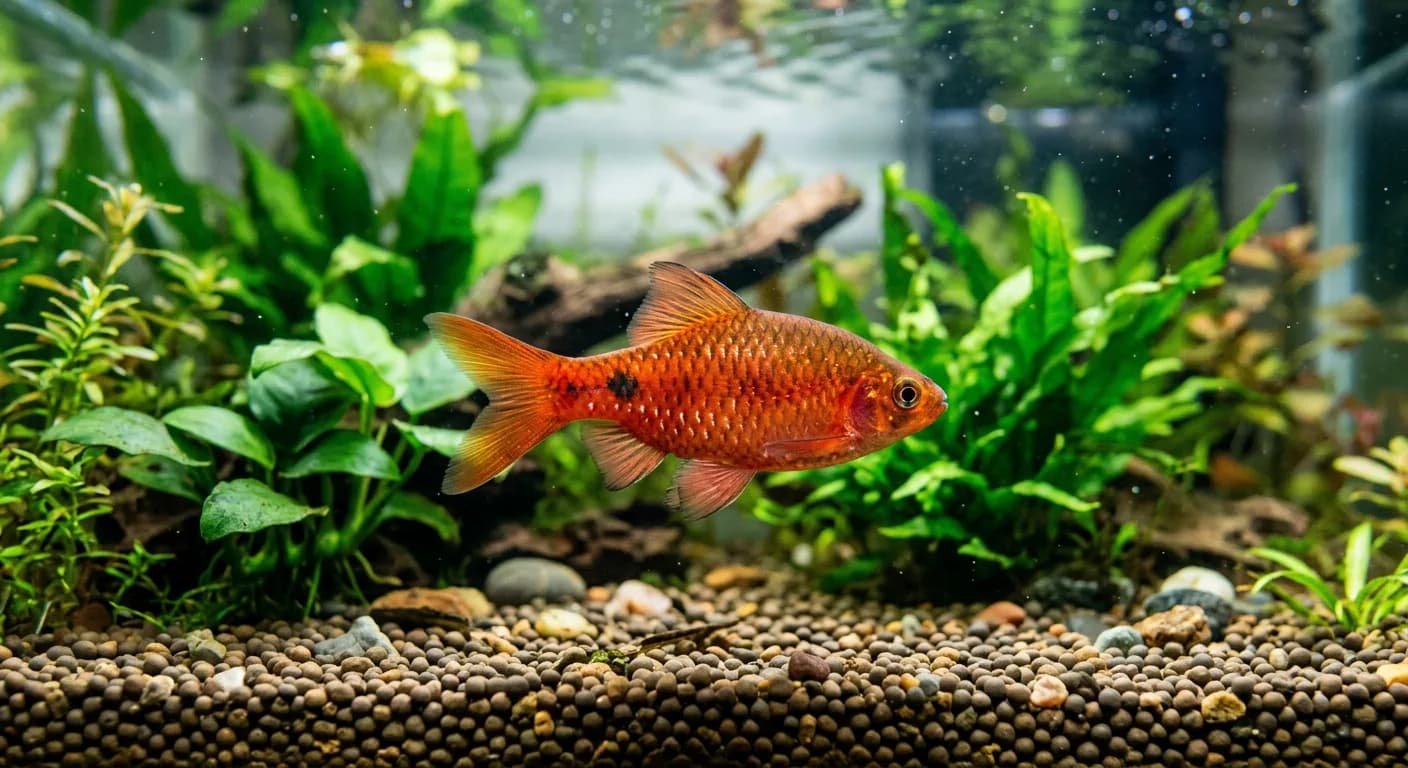
Rosy Barbs are one of the few tropical fish that actually prefer cooler temperatures, making them perfect for unheated tanks or aquarists who want to save on electricity costs. Males develop stunning rosy-red coloration with black-tipped fins, especially during breeding season, while females remain more subdued with golden-brown bodies and clear fins. These hardy fish from northern India and Bangladesh thrive in temperatures that would stress most tropical species. They are active schooling fish that constantly swim in loose groups, creating movement and energy in the middle water column. Rosy Barbs are peaceful but assertive - they hold their own with other active fish without being aggressive toward smaller tankmates. A school of 8-10 in a 55-gallon tank creates a beautiful display of constant motion and color. Their tolerance for cooler water makes them excellent companions for other coldwater species and ideal for seasonal outdoor ponds in temperate climates.
Tank Setup
Rosy Barbs need at least 30 gallons for a small school, with 55 gallons being much better for their active swimming style. They appreciate a well-planted tank with open swimming areas in the center and planted borders. Choose hardy plants like java fern, anubias, and hornwort that thrive in cooler temperatures. They come from flowing waters, so good filtration that provides moderate current works well. A quality hang-on-back filter or canister filter that turns over the tank 5-6 times per hour handles their needs. Use fine gravel or sand substrate since they occasionally forage along the bottom. The biggest advantage is that most homes stay within their preferred temperature range naturally - no heater needed in most cases. Room temperature between 65-75 degrees works perfectly. They can handle brief temperature swings that would stress tropical fish. Add some driftwood and rocks for territorial boundaries and aesthetic appeal.
Water Parameters
Rosy Barbs are extremely adaptable to different water conditions, which makes them perfect for beginner aquarists. pH can range from 6.0 to 8.0 without problems, and they handle both soft and hard water well. Temperature should stay between 64-72 degrees Fahrenheit, with 68 degrees being ideal. They can tolerate temperatures down to 60 degrees for short periods and up to 75 degrees without stress. No heater is needed in most homes, which is unique among aquarium fish. Water quality should still be maintained: ammonia and nitrite at zero, nitrates under 20 ppm. They are forgiving of parameter fluctuations and beginner mistakes. Weekly water changes of 25-30% keep conditions stable. Their tolerance for variable conditions makes them excellent for seasonal outdoor pond keeping in temperate climates during warmer months.
Diet & Feeding
Rosy Barbs are omnivores with good appetites that readily accept most aquarium foods. High-quality flake food or small pellets form the base of their diet. They appreciate variety: frozen bloodworms, daphnia, and brine shrimp 2-3 times per week keep them healthy and colorful. Live foods like daphnia and mosquito larvae trigger natural hunting behaviors and bring out the best coloration, especially in breeding males. They also benefit from vegetable matter - blanched peas, spinach, and zucchini should be offered weekly for digestive health. Feed twice daily, offering only what they can consume in 2-3 minutes. Rosy Barbs are active feeders but not aggressive toward tankmates during feeding time. In cooler temperatures their metabolism slows slightly, so adjust feeding frequency accordingly. Their omnivorous nature and hearty appetite make them easy to feed and maintain in good condition.
Behavior & Temperament
Rosy Barbs are peaceful, active schooling fish that create constant movement in the aquarium. They swim in loose schools that expand and contract as they explore the tank, investigate decorations, and search for food. Males display to each other and to females with enhanced coloration and fin posturing, but actual aggression is rare and never harmful. They are curious fish that will investigate new additions to the tank and come to the front when people approach. The larger the school, the more confident and active they become. A group of 6 is the minimum, but 10-12 creates the best display. They occupy the middle water column primarily but will venture to the surface for food and occasionally explore the bottom. Their peaceful but assertive nature makes them excellent community fish that can hold their own with other active species without bullying smaller tankmates.
Compatible Tankmates
Rosy Barbs do well with other hardy, active fish that can tolerate cooler temperatures. White Cloud Mountain Minnows are perfect companions since they share identical temperature preferences. Other barb species like cherry barbs work well, though avoid tiger barbs which can be nippy. Corydoras species (bronze, panda, sterbai) are excellent bottom-dwellers that prefer cooler water. Zebra danios and larger livebearers like platies and mollies can work in the upper temperature range. Avoid tropical fish that need consistent temperatures above 75 degrees like discus, angelfish, or most gouramis. Also avoid very small fish like neon tetras that might be stressed by their active swimming. Cool-water loaches like hillstream loaches or weather loaches make interesting tankmates. Their peaceful nature allows them to coexist with almost any similarly sized, non-aggressive fish that shares their temperature preferences.
Common Health Issues
Rosy Barbs are extremely hardy and disease-resistant, making them one of the healthiest freshwater fish species. Ich occasionally occurs during shipping stress or rapid temperature changes, but they respond well to standard treatment. Since they prefer cooler water, ich treatment needs to be modified - gradually raise temperature to 76-78 degrees (not the usual 86) and add aquarium salt. Fin rot can occur in poor water conditions but clears up quickly with improved water quality. Their tolerance for temperature variation actually makes them less susceptible to stress-related diseases than most tropical fish. Parasites are rare but can occur with new fish from poor sources. Quarantine new additions for 2-3 weeks before adding to the main tank. The best preventive medicine is maintaining good water quality and providing a varied diet. Rosy Barbs that live in clean conditions with proper care rarely get sick and often exceed their expected lifespan.
Breeding
Rosy Barbs are relatively easy to breed and will often spawn in well-maintained community tanks. To encourage breeding, condition adults with high-quality foods including live or frozen options for 2-3 weeks. Set up a separate breeding tank with fine-leaved plants or spawning mops. Lower the temperature slightly to 64-66 degrees to simulate seasonal changes, then gradually raise to 70 degrees. Males will intensify their red coloration and chase females into plant thickets where eggs are scattered. Females can lay 200-400 eggs that stick to plants and decorations. Remove the adults immediately after spawning since they will eat their own eggs. Eggs hatch in 3-4 days depending on temperature. Fry need infusoria or liquid fry food for the first week, then graduate to freshly hatched baby brine shrimp. Growth is moderate, with young fish reaching adult size in 8-10 months. Males develop their distinctive red coloration around 6-8 months old.
Frequently Asked Questions
Quick Stats
What You Need for Rosy Barb
Gear that works well for this species, based on what experienced keepers actually use.
Reliable filtration for 30-gallon Rosy Barb setups without creating excessive current. Adjustable flow rate works well for active schooling fish in medium tanks.
Essential for monitoring water quality in unheated tanks where temperature and parameters can fluctuate more than tropical setups. Critical for successful coolwater fish keeping.
High-quality protein from black soldier fly larvae supports the active lifestyle and color development of Rosy Barbs. Appropriate pellet size for their mouths and feeding style.
Supports plant growth in cooler water temperatures that Rosy Barbs prefer. Plants provide natural spawning sites and help maintain water quality in active fish tanks.