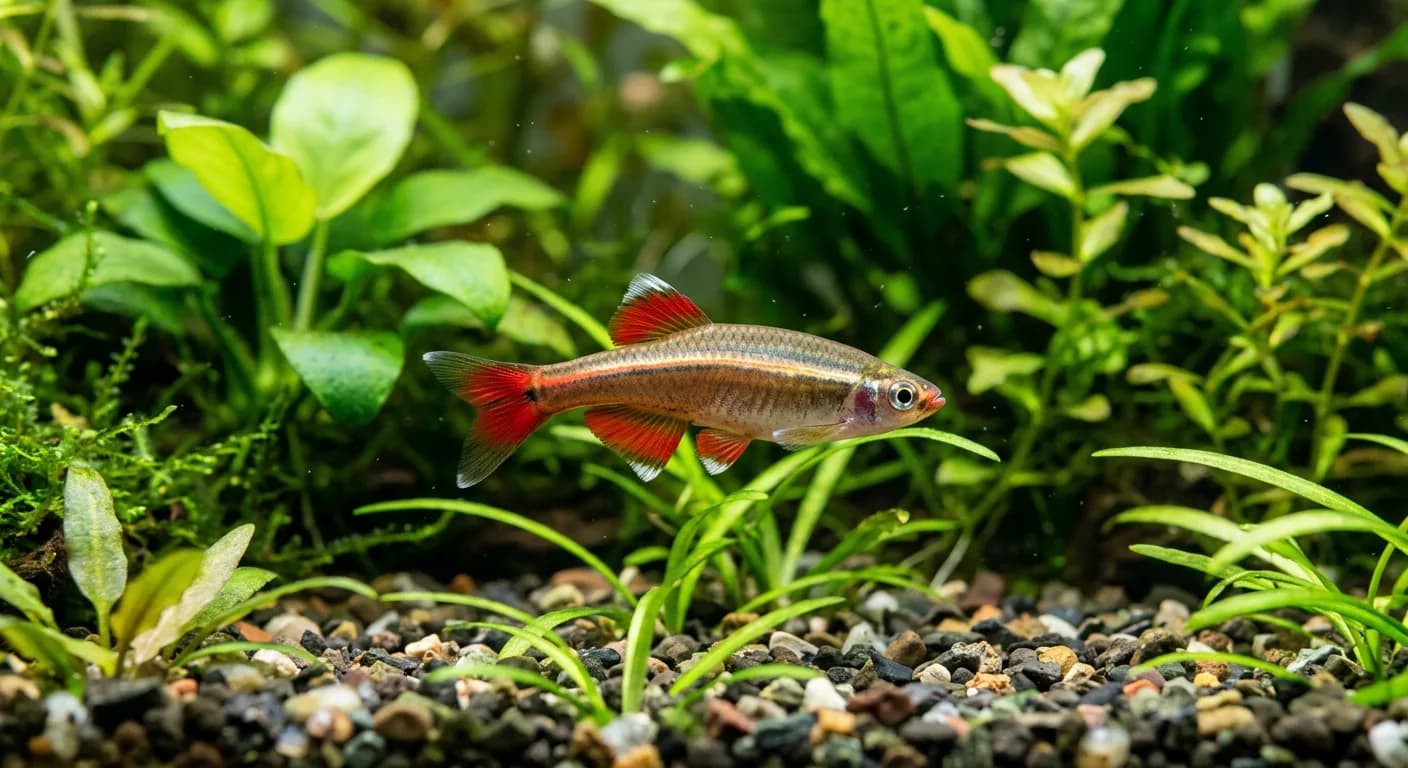
White Cloud Mountain Minnow
Tanichthys albonubes
Overview
White Cloud Mountain Minnows are the perfect fish for anyone who wants to keep a coldwater tank without a heater. These small, hardy fish from the mountain streams of China thrive in temperatures that would stress out tropical species. The males develop beautiful red fins and a bright golden stripe down their sides, especially during breeding season. Females are more subdued but still attractive with silver bodies and clear fins. At just 1.5 inches fully grown, they pack a lot of personality into a tiny package. They are active swimmers that use every level of the tank, constantly chasing each other in playful schools. A group of 8-10 in a 20-gallon tank creates a lively, colorful display. These fish are almost bulletproof when it comes to water conditions. They handle temperature swings, moderate pH ranges, and even beginner mistakes better than most species. If you live in a cooler climate and want to skip the heater bill, White Clouds are your fish.
Tank Setup
White Clouds do well in tanks as small as 10 gallons, but a 20-gallon long gives them proper swimming space and room for a larger school. They come from fast-flowing mountain streams, so they appreciate good water movement and excellent filtration. A canister filter or quality hang-on-back filter that turns over the tank 6-8 times per hour works well. Add some live plants like java moss, hornwort, or elodea. These plants thrive in the cooler temperatures White Clouds prefer and provide hiding spots for fry if your fish decide to breed. Use fine gravel or sand as substrate. Driftwood and smooth rocks mimic their natural habitat. Lighting can be moderate since you are not trying to grow demanding plants. The key advantage of White Clouds is that you can skip the heater entirely in most homes. Room temperature between 65-75 degrees works perfectly. They actually prefer the lower end of that range and become more active in cooler water.
Water Parameters
White Clouds are remarkably adaptable to different water conditions. pH anywhere from 6.0 to 8.0 works fine, and they handle both soft and moderately hard water without problems. Temperature should stay between 60-72 degrees Fahrenheit, with 64-68 being ideal. They can tolerate brief drops into the upper 50s and spikes into the mid-70s without stress. No heater is needed in most homes, which makes them unique among aquarium fish. Water quality should still be good: ammonia and nitrite at zero, nitrates under 20 ppm. They are forgiving of occasional spikes, but consistent water quality keeps them healthiest. Weekly water changes of 25-30% maintain good conditions. Their tolerance for cooler, variable temperatures makes them excellent for outdoor ponds in temperate climates during warmer months.
Diet & Feeding
White Clouds are omnivores with small mouths that need appropriately sized food. High-quality flake food forms the base of their diet. Look for flakes specifically sized for small fish or crush larger flakes into smaller pieces. They also enjoy micro pellets, frozen daphnia, bloodworms, and brine shrimp. Live foods like baby brine shrimp, daphnia, and mosquito larvae trigger natural feeding behaviors and bring out their best colors. Feed twice daily, offering only what they can consume in 2-3 minutes. These fish have fast metabolisms and benefit from frequent small meals rather than one large feeding. In cooler temperatures their metabolism slows down slightly, so adjust feeding frequency accordingly. They are active feeders that compete well with tankmates, but watch that slower bottom-dwellers still get their share of food.
Behavior & Temperament
White Clouds are peaceful, active fish that spend most of their time in loose schools swimming through the middle and upper water column. Males display to each other and to females with flared fins and bright colors, but actual aggression is rare and never harmful. They are constantly in motion, darting between plants and chasing each other in playful groups. The more you keep together, the more confident and active they become. A school of 6 is the minimum, but 10-12 in a 20-gallon tank creates the best display. They are curious fish that will investigate new additions to the tank and come to the front glass when people approach. During breeding season, males become more colorful and territorial around spawning sites, but they never cause injury to each other or other tankmates. Their peaceful nature makes them excellent community fish for tanks with similar-sized, non-aggressive species.
Compatible Tankmates
White Clouds do well with other small, peaceful fish that can handle cooler temperatures. Corydoras (bronze, panda, pygmy) are excellent choices since they prefer cooler water and occupy the bottom of the tank. Other small schooling fish like harlequin rasboras and cherry barbs work well. Zebra danios and celestial pearl danios share similar temperature preferences. Small livebearers like endlers and certain guppies can work if kept in the upper temperature range. Bristlenose plecos and otocinclus handle the cooler temperatures well and provide cleanup services. Avoid tropical fish that require consistent temperatures above 75 degrees. Large cichlids, aggressive barbs, and predatory fish will eat or stress White Clouds. Bettas are not ideal since they need warmer, more stable temperatures and may be stressed by the constant activity of a White Cloud school.
Common Health Issues
White Clouds are among the hardiest freshwater fish and rarely get sick when kept in proper conditions. The most common issue is ich, usually triggered by rapid temperature changes or poor water quality. Since they prefer cooler water, the standard heat treatment for ich needs modification. Gradually raise temperature to 78-80 degrees (not the usual 86) and add aquarium salt. Their tolerance for temperature variation actually makes them less susceptible to ich than most tropical species. Occasional fin rot can occur in poor water conditions or overcrowded tanks. Clean water and better filtration usually resolve this quickly. Internal parasites are rare but can occur with new fish from poor sources. Quarantine new additions for 2-3 weeks before adding to your main tank. The best preventive medicine is consistent water quality and a varied diet. White Clouds that live in clean, stable conditions with good nutrition rarely get sick and often live longer than their expected lifespan.
Breeding
White Clouds are easy to breed and often spawn spontaneously in community tanks with good conditions. To encourage breeding, condition adults with live or frozen foods for 1-2 weeks and perform frequent water changes. Lower the temperature slightly to 62-65 degrees to simulate seasonal changes. Males will intensify in color and chase females into plant thickets or spawning mops. Females scatter adhesive eggs among fine-leaved plants like java moss or artificial spawning mops. Remove adults after spawning since they will eat the eggs. Eggs hatch in 4-6 days depending on temperature. Fry are tiny and need infusoria or liquid fry food for the first week, then graduate to freshly hatched baby brine shrimp. Growth is relatively slow in cooler water. Young fish reach breeding size in 6-8 months and develop full adult coloration around one year. White Clouds will often breed continuously in well-planted tanks with stable conditions, providing a steady supply of fry for other tanks or trading with other aquarists.
Tankmates to Avoid
These species don't mix well with White Cloud Mountain Minnow. Tap a name for the full breakdown.
Frequently Asked Questions
Quick Stats
Compatibility Questions
See all compatibility pairings →What You Need for White Cloud Mountain Minnow
Gear that works well for this species, based on what experienced keepers actually use.
Perfect size for 10-20 gallon White Cloud tanks. Provides excellent mechanical and biological filtration without creating excessive current that might stress small fish.
Essential for monitoring water quality in unheated tanks where parameters can fluctuate more than tropical setups. Tests pH, ammonia, nitrite, and nitrate accurately.
High-protein insect-based formula in small pellet size perfect for White Cloud mouths. Contains natural color enhancers that bring out the red in their fins.
Nutrient-rich substrate that supports plant growth in cooler water temperatures. Plants thrive with White Clouds and provide natural spawning sites for breeding.