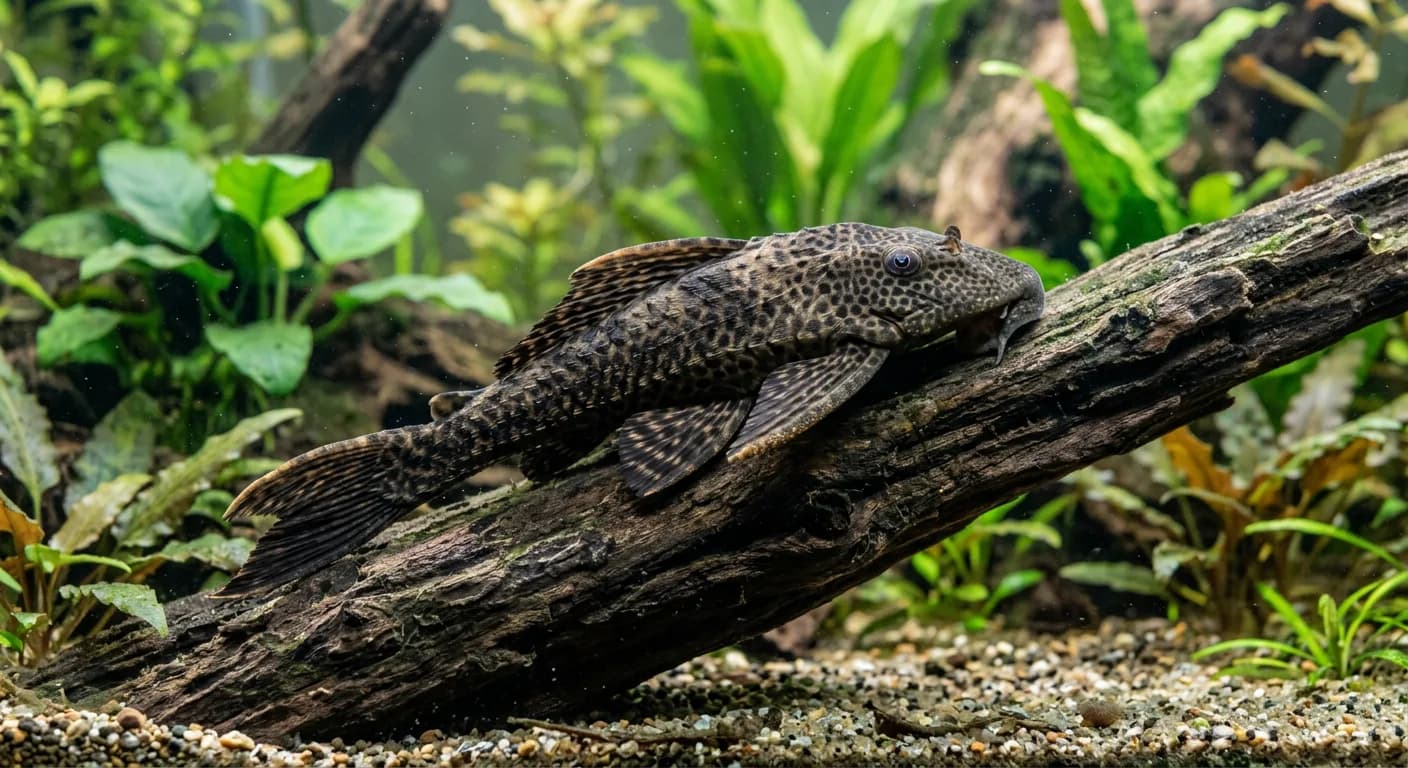
Common Pleco
Hypostomus plecostomus
Overview
The common pleco is one of those fish that gets bought as a tiny algae-eating solution and ends up being a massive tank commitment. Baby plecos at the store are usually 2-3 inches, but they grow fast and large. A full-grown common pleco in a home aquarium reaches 12-18 inches and produces an enormous amount of waste. They do eat algae when young, but as they mature, they become more omnivorous and will eat anything they can fit in their mouth. The good news is they are incredibly hardy and can handle a wide range of water conditions. They tolerate pH swings, temperature fluctuations, and water quality issues that would stress other fish. The bad news is most people underestimate their space and filtration requirements. A 55-gallon tank that seems huge for a 4-inch pleco becomes cramped when that fish hits 12 inches and starts producing waste like a goldfish. Common plecos are also surprisingly strong and can move decorations around the tank, uproot plants, and dig in substrate.
Tank Setup
A 75-gallon tank is the absolute minimum for one adult common pleco, and 125+ gallons is where they really have room to move. They need excellent filtration with strong biological capacity. Plan on filtration rated for 2-3 times your actual tank size because of their heavy bioload. A canister filter is almost mandatory for anything over 75 gallons. They appreciate caves, driftwood, and hiding spots where they can wedge themselves during the day. Driftwood serves a dual purpose as they rasp on it for fiber in their diet. Use sand or rounded gravel as substrate since they spend time on the bottom and can damage their barbels on sharp gravel. Plants can work, but choose sturdy species like java fern, anubias, or vallisneria, and secure them well. Common plecos will uproot or bulldoze through soft plantings. Water flow should be moderate to strong. They come from rivers in South America and appreciate current. A powerhead or additional circulation pump helps create flow and keeps waste from settling.
Water Parameters
Common plecos are tolerant of a wide pH range from 6.5 to 8.0, making them compatible with both soft and hard water setups. Temperature should stay between 72-78 degrees. They handle fluctuations better than most tropical fish but do best with stable conditions. The key parameter to watch is nitrates because of their heavy waste production. Aim for weekly water changes of 30-50% to keep nitrates under 20 ppm. Ammonia and nitrite must stay at zero, especially important with their bioload. Test water frequently when the pleco is growing rapidly. A 6-inch pleco produces noticeably more waste than a 3-inch pleco, and filtration that worked fine for the smaller fish may be overwhelmed as they grow. Good surface agitation helps with oxygen levels since large fish consume more oxygen, especially in warmer water.
Diet & Feeding
Young common plecos eat algae and biofilm, but adults need a varied diet with substantial vegetable matter. Sinking algae wafers should be the staple, fed every other day. Supplement with blanched vegetables like zucchini, cucumber, sweet potato, and peas. Fresh vegetables should be removed after 24 hours to prevent water quality issues. They also appreciate driftwood to rasp on for fiber. Protein can come from sinking shrimp pellets, bloodworms, or other fish foods that fall to the bottom. Feed at night when they are most active. Common plecos are opportunistic and will eat anything that fits in their mouth, including smaller fish, so be careful with tiny tankmates. Adults in large tanks may need feeding 3-4 times per week rather than daily to prevent overfeeding and water quality problems. Their appetite grows with their size, and a 12-inch pleco can consume a surprising amount of food.
Behavior & Temperament
Common plecos are peaceful but can be territorial toward other bottom-dwelling fish, especially other plecos. They are most active at night and during low-light periods. During the day, they usually hide in caves or under driftwood. Young plecos are shy and skittish, but adults become bold and may even beg for food. They use their strong sucker mouth to attach to glass, decorations, and sometimes other fish. This behavior is normal but can damage delicate fish. Common plecos are incredibly strong and will move anything they can push. Tank decorations, heaters, and equipment need to be secured. They are not aggressive but their size alone can intimidate smaller tankmates. Their swimming style is different from most fish - they dart in short bursts rather than swimming continuously. When stressed or threatened, they can lock their pectoral fins, making them difficult to catch or move.
Compatible Tankmates
Common plecos do best with medium to large community fish that can handle their size and bioload impact. Cichlids like oscars, electric blue acaras, and angelfish are good matches since they occupy different areas of the tank and have similar water requirements. Larger corydoras species, clown loaches, and other substantial bottom-dwellers can coexist if there is adequate space and multiple hiding spots. Robust livebearers like mollies, platies, and swordtails work well in the upper water column. Avoid small fish like neon tetras, guppies, or dwarf shrimp that could become food. Other plecos or large catfish should be avoided unless you have a massive tank with multiple territories. Fast-swimming fish like larger barbs or rainbow fish can work if the tank is big enough. The key is choosing tankmates that share similar water parameters and can handle the increased waste load that comes with housing a large pleco.
Common Health Issues
Common plecos are hardy but can develop problems related to poor water quality or inadequate diet. Fin rot is the most common issue, usually caused by high nitrates or poor water conditions. Treat with increased water changes and antibacterial medication if needed. Ich can occur with temperature stress or when introducing new fish. Standard heat treatment works well since plecos tolerate higher temperatures. Poor diet can lead to digestive issues and sunken belly appearance. Increase vegetable matter in their diet and ensure they are getting enough fiber from driftwood or vegetables. Large plecos can injure themselves by getting stuck in decorations or filter intakes. Ensure all openings are too small for them to enter or large enough for easy escape. Internal parasites are occasionally seen in wild-caught specimens, showing as weight loss despite eating. Medicated food with praziquantel handles most internal parasites. The best prevention is excellent water quality through proper filtration and frequent water changes.
Breeding
Breeding common plecos in home aquariums is challenging and rarely accomplished outside of commercial facilities. They are cave spawners that need specific conditions including large territory, perfect water quality, and seasonal temperature/water changes that mimic their natural habitat. Males develop breeding tubercles on their pectoral fins and head during breeding season. They excavate caves in riverbanks in the wild, which is impossible to replicate in home tanks. Spawning requires water temperatures in the mid-70s with significant water changes to trigger breeding behavior. Eggs are deposited in caves and guarded by the male for 7-10 days until hatching. Fry are large enough to take crushed algae wafers immediately but grow slowly. Most common plecos in the hobby are commercially bred in large outdoor ponds or imported from South America. Home breeding is possible in ponds or massive indoor systems (200+ gallons) with perfect conditions, but success is uncommon.
Frequently Asked Questions
Quick Stats
What You Need for Common Pleco
Gear that works well for this species, based on what experienced keepers actually use.
Bio-wheel technology provides excellent biological filtration for high bioload fish. The 350 model handles tanks up to 75 gallons with the flow rate needed for waste management.
Fine, smooth sand that will not damage pleco barbels. Easy to clean and maintain with a strong filter. Much safer than gravel for bottom-dwelling fish.
Specially formulated for bottom-feeding catfish. High in vegetable matter with the nutrition adult plecos need. Wafers sink quickly and hold together well.
Essential for monitoring water quality with high bioload fish. Tests for ammonia, nitrite, nitrate, and pH. Liquid tests are more accurate than strips.