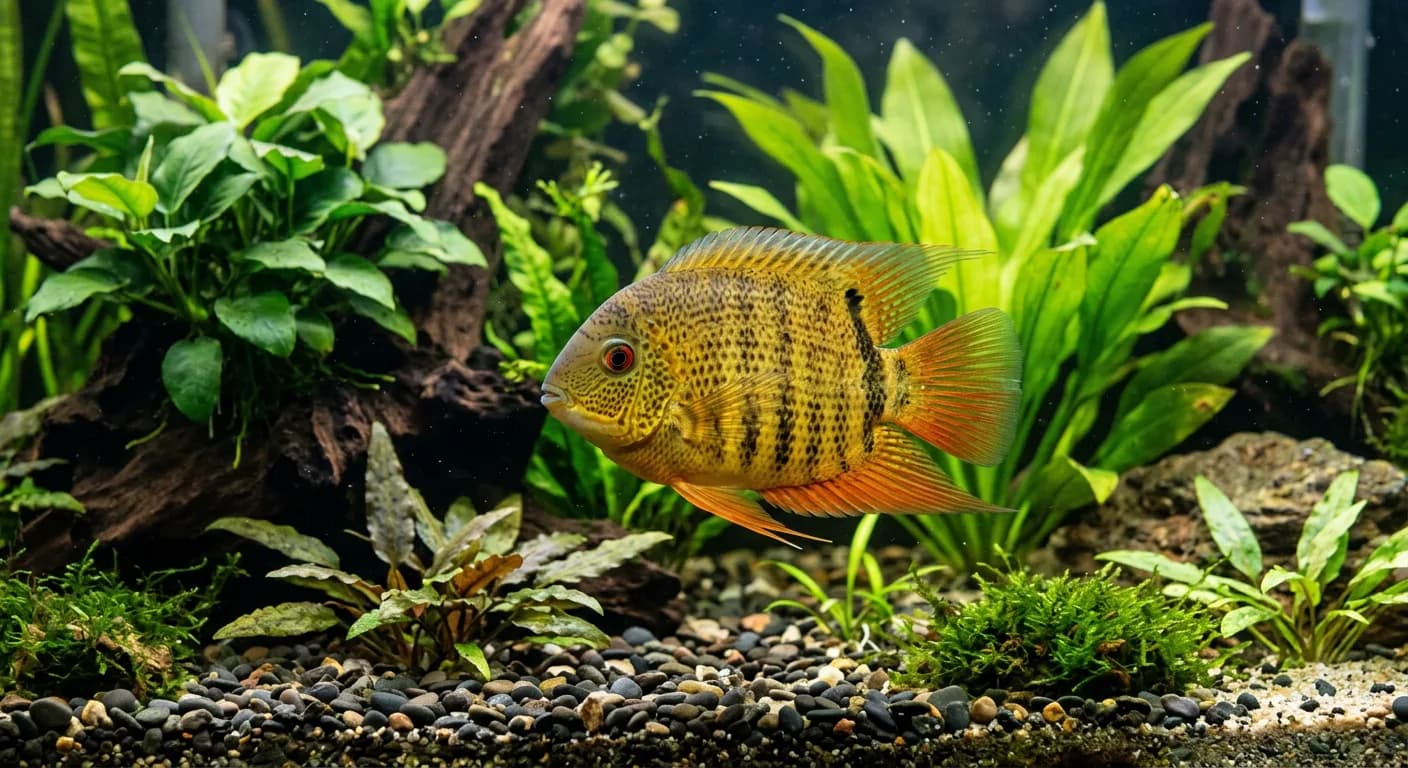
Severum Cichlid
Heros severus
Overview
The severum cichlid is one of those fish that commands attention the moment it enters a room. Also known as the banded cichlid or hero cichlid, this Central American species grows into a substantial 8-12 inch fish with a deep, rounded body and a striking pattern of vertical bars that gives it a classic cichlid look. Unlike many large cichlids that become aggressive or territorial nightmares, severums maintain a certain elegance. They are semi-aggressive, meaning they can hold their own in a community of similarly sized fish but will not tolerate harassment. Their peaceful disposition relative to other large cichlids, combined with their impressive size and beautiful coloration, makes them a favorite among hobbyists who want something bigger than a community fish but less demanding than an oscar. Severums come in several color morphs, including the popular green severum and gold severum, with wild-type specimens showing the classic barred pattern.
Tank Setup
Severums need room to grow and swim. A 55-gallon tank is the bare minimum for a single adult, but 75 gallons is the ideal target, especially if you plan to keep a pair or add tankmates. These fish are messy eaters and produce significant waste, so strong filtration is non-negotiable. A canister filter rated for 1.5-2x your tank volume provides the biological capacity these cichlids need. Provide a substrate of sand or fine gravel. Severums are moderate diggers compared to firemouths or convicts, but they still appreciate being able to rearrange their territory. Hardscape is important: large rocks, driftwood, and cave structures give severums places to claim and explore. Live plants can work if anchored well, but expect some rearranging. Java fern and anubias attached to driftwood are your best bets. Leave plenty of open swimming space in the center of the tank. A tight-fitting lid is essential because larger severums can be jumpers, especially when spooked or during water changes.
Water Parameters
Severums are adaptable when it comes to water chemistry, which helps with keeping them healthy. Temperature between 72-84 degrees Fahrenheit works, with 78 being the sweet spot that matches their natural Central American range. pH of 6.0-7.5 is ideal, though they tolerate a broader range than many South American cichlids. Moderately soft to moderately hard water suits them best. The critical factor is water quality. These are heavy waste producers, so weekly 30-40% water changes are essential to keep nitrates below 20 ppm. Ammonia and nitrite must always be zero. Test your water regularly, especially in the first year while the fish is growing rapidly and your biological filtration is adjusting to the bioload. Poor water conditions quickly lead to health issues and faded colors in severums.
Diet & Feeding
Severums are omnivores with a strong appetite and a bias toward protein. A quality cichlid pellet or stick food should form the staple of their diet. Omega One Cichlid Pellets, Hikari Cichlid Gold, and Fluval Bug Bites Cichlid Formula all work well. Supplement with frozen foods 2-3 times per week: bloodworms, brine shrimp, mysis shrimp, and krill are all greedily accepted. They also enjoy vegetable matter, which helps balance their diet and prevents constipation. Blanched zucchini, shelled peas, and cucumber slices are good options. Feed 2-3 times daily in small amounts that they finish within 2-3 minutes. Growing severums need more food than adults, but watch for signs of overfeeding. A slight concave belly is normal, but a swollen appearance or reluctance to eat signals problems. In a community tank, ensure food reaches all inhabitants since severums are assertive feeders.
Behavior & Temperament
Severums occupy a middle ground in the cichlid aggression spectrum. They are more peaceful than oscars, jack dempseys, or green terrors, but they are not pushovers like kribensis or kuhli loaches. They establish territories and will defend them, especially during breeding, but they rarely pursue this aggression beyond a short chase and display. In a properly sized tank with adequate hiding spots, they coexist with other large, semi-aggressive fish. Severums are intelligent and interactive. They recognize their owners and will often come to the front of the glass when someone approaches, anticipating food. Some keepers describe them as having dog-like personalities. They cruise the middle levels of the tank, occasionally descending to sift through the substrate. Unlike some cichlids that claim one specific cave, severums tend to patrol a broader area. They do best as the centerpiece fish or with other robust cichlids in a species-appropriate setup.
Compatible Tankmates
Choose tankmates that are too large to be eaten and can handle some territorial behavior. Large plecos like common plecos, bristlenose plecos, and rubber-lip plecos work well and help with cleanup. Silver dollars are excellent dither fish that add movement and stay out of the way. Clown loaches in groups provide bottom activity and are too armored to be bullied. Large barbs like tiger barbs can work in a big enough tank. Other semi-aggressive cichlids of similar size can work, but watch for aggression when introducing new fish. Firemouth cichlids and jack dempseys are potential partners in 75+ gallon setups. Avoid small fish that fit in a severum's mouth: no tetras, no danios, no guppies, no shrimp. Oscars, green terrors, and flowerhorns may be too aggressive and compete for the same territory. A single severum does well alone or in a bonded pair.
Common Health Issues
Severums are generally hardy when water quality is maintained, but they are susceptible to common cichlid ailments. Ich is the most frequent issue, usually triggered by stress or temperature fluctuations. Raise the temperature to 84 degrees and treat with ich medication or aquarium salt. Hole-in-the-head disease (HITH) can affect severums, presenting as pits or erosion on the head and lateral line. Prevention through excellent water quality and varied nutrition is key. Bloat is a risk if overfed or given too much protein without vegetable matter. Fast for 2-3 days if you notice swelling or loss of appetite, then offer peas. Bacterial infections from poor water can cause frayed fins or cloudy eyes. Upgrade your filtration and increase water change frequency. Internal parasites occasionally show up in new fish, causing weight loss despite a good appetite. Quarantine new additions for 2-4 weeks before adding them to the main tank.
Breeding
Severums are substrate spawners and form strong pair bonds. Breeding them is achievable in a home aquarium with a well-matched pair. Condition the pair with high-protein foods like bloodworms and brine shrimp for 2-3 weeks. A bonded pair will clean a flat rock, driftwood, or the side of a cave in preparation for spawning. The female deposits 300-1000 eggs, which the male then fertilizes. Both parents guard the clutch aggressively, fanning the eggs to prevent fungus and removing any dead ones. Eggs hatch in 3-5 days depending on temperature. The fry become free-swimming after another 3-5 days and are protected by both parents in a tight school. Feed fry baby brine shrimp and powdered fry food. Growth is relatively fast, and fry reach 2-3 inches within a few months. Getting a true pair is tricky since juveniles are hard to sex. Buying 6-8 juveniles and letting them pair off naturally, then rehoming the extras, is the best approach.
Frequently Asked Questions
Quick Stats
What You Need for Severum Cichlid
Gear that works well for this species, based on what experienced keepers actually use.
Rated for 40-70 gallons, handling the high bioload of large cichlids. Customizable media baskets let you optimize biological filtration for a messy eater like the severum.
Insect-based cichlid pellets with high protein content for growth and color. Appropriate pellet size for severums and formulated to reduce waste.
Reliable submersible heater suitable for 55-75 gallon tanks. Adjustable temperature dial lets you fine-tune within the 72-84F range severums prefer.
Essential for monitoring water quality with heavy cichlid bioloads. Accurate readings for ammonia, nitrite, nitrate, pH, and more help prevent disease in messy eaters.