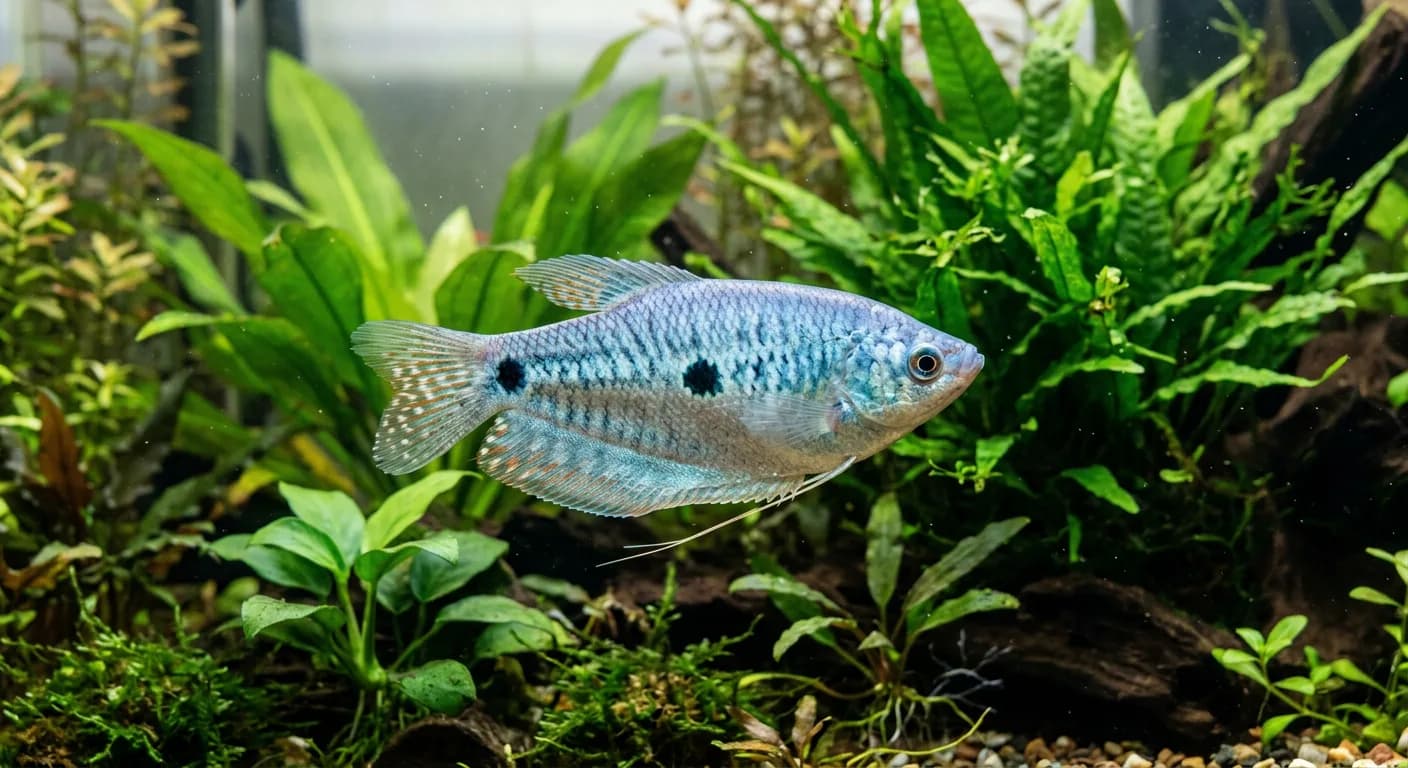
Three Spot Gourami
Trichopodus trichopterus
Overview
Three spot gouramis are one of the most common gouramis in the aquarium trade, often sold simply as "blue gouramis" or "gold gouramis" depending on their color variety. The name comes from two dark spots on their sides plus their eye, which counts as the third spot. They are labyrinth fish, meaning they can breathe atmospheric air using a special organ called the labyrinth. This adaptation allows them to survive in oxygen-poor water and makes them quite hardy compared to many tropical fish. However, they have a reputation for being more aggressive than other gouramis, especially males during breeding periods. Wild-type fish are silver-blue with the characteristic spots, but aquarium strains include gold, opaline (marbled), and other color variations. Males develop longer, pointed dorsal fins while females remain rounder with shorter fins. They are active fish that spend most of their time in the upper portion of the tank, occasionally coming to the surface to breathe air.
Tank Setup
A 20-gallon tank can house one three spot gourami, but 30+ gallons is better for community setups or if keeping multiple specimens. They prefer tanks with some surface vegetation like floating plants, which provide security and mimic their natural habitat. Java moss, hornwort, or water lettuce work well. They also appreciate some taller plants that reach near the surface. Gentle filtration is preferred since strong currents can stress gouramis. Hang-on-back filters work well, but position the output to minimize surface agitation. They need access to the surface for breathing, so avoid completely covering the tank. Subdued lighting is preferred, though they adapt to brighter conditions with adequate plant cover. Substrate can be sand or gravel - they rarely interact with the bottom. Provide some caves or dense plantings where subordinate fish can hide if keeping multiple gouramis. Water temperature should be stable since they are sensitive to sudden changes despite being generally hardy.
Water Parameters
Three spot gouramis are quite adaptable to different water conditions, tolerating pH from 6.0 to 8.5 and various hardness levels. Temperature should be kept between 72-82 degrees, with 77 being ideal. They can handle slight fluctuations better than many tropical fish but prefer stable conditions. Being labyrinth fish, they are less sensitive to dissolved oxygen levels than other species, but good water quality is still important. Maintain ammonia and nitrite at zero, and keep nitrates under 20 ppm. They prefer soft to moderately hard water but adapt to harder conditions. Regular water changes of 25% weekly help maintain good conditions. The key is avoiding sudden parameter swings rather than hitting exact numbers. They are generally tolerant of water quality issues that would stress more sensitive species, making them good choices for newer aquarists learning water management.
Diet & Feeding
Three spot gouramis are omnivores that accept a wide variety of foods. Quality flake food or small pellets can serve as the staple diet, fed twice daily in small amounts. They are surface feeders that prefer floating foods but will also eat foods that sink slowly through the water column. Supplement with frozen foods like bloodworms, brine shrimp, and daphnia 2-3 times per week. Live foods are appreciated and can help bring out breeding colors and behavior. They also graze on algae and biofilm, helping with tank maintenance. Vegetable matter like blanched peas or spirulina-based foods should be offered occasionally. Feed small amounts twice daily rather than one large feeding. They are opportunistic feeders that will eat almost anything offered but can become aggressive at feeding time. In community tanks, ensure all fish get adequate food since gouramis may dominate slower feeders. Avoid overfeeding as it leads to water quality problems and potential health issues.
Behavior & Temperament
Three spot gouramis are generally peaceful but can show aggression, especially males toward other gouramis or similar-shaped fish. They establish loose territories in the upper portion of the tank and may chase away intruders. Males become more aggressive during breeding periods and when establishing dominance hierarchies. They are curious, active fish that explore all levels of the tank though they prefer the upper areas. Their labyrinth organ requires them to surface regularly for air, which is normal behavior. They can be shy initially but become bold once established. Males may build bubble nests at the surface even without females present. They are generally compatible with community fish but should be watched for aggression toward smaller or more timid species. Their semi-aggressive nature means they work better with robust tankmates that can hold their own rather than delicate community fish.
Compatible Tankmates
Three spot gouramis work best with medium-sized, active community fish that can handle some aggression. Livebearers like platies, mollies, and swordtails are excellent choices since they occupy similar water areas and have comparable temperaments. Larger barbs like cherry barbs and rosy barbs can coexist well, though avoid fin-nipping species. Bottom-dwelling corydoras species are generally left alone since they occupy different space. Larger loaches and catfish work well as cleanup crew. Rainbow fish can work in larger tanks with adequate swimming room. Avoid other gourami species unless the tank is very large with multiple territories. Small, delicate fish like neon tetras or dwarf corydoras may be harassed. Aggressive cichlids are too confrontational, while peaceful species like angelfish may be bullied. The key is choosing active, robust tankmates that can defend themselves without being overly aggressive in return.
Common Health Issues
Three spot gouramis are relatively hardy but can develop several common health problems. Ich is the most frequent issue, often triggered by temperature stress or poor water quality. Treat with gradual temperature increase and salt or commercial ich medications. Being labyrinth fish, they can be sensitive to surface films or poor air quality above the tank. Ensure good ventilation and avoid using aerosols or cleaning products near the aquarium. Fin rot can occur with poor water quality, appearing as frayed or deteriorating fins. Improve water conditions and consider antibacterial treatment for severe cases. They can be prone to internal parasites, especially wild-caught specimens, showing as weight loss despite eating. Medicated food with praziquantel treats most internal parasites. Bacterial infections may occur from injuries sustained during aggressive encounters. The best prevention is maintaining good water quality, providing appropriate tank setup, and monitoring for signs of aggression or stress.
Breeding
Three spot gouramis are bubble nest builders that can be bred in home aquariums with proper setup. Set up a breeding tank with shallow water (6-8 inches), gentle filtration, and floating plants. Condition a pair with live and frozen foods for 1-2 weeks. Males build elaborate bubble nests at the surface using saliva and plant matter. Remove the female after spawning as males become protective of the nest and may attack her. Males guard eggs and fry, fanning the nest and retrieving fallen eggs. Eggs hatch in 24-48 hours, and fry become free-swimming within 3-5 days. Once fry are free-swimming, remove the male to prevent him from eating them. Feed fry with infusoria or commercial liquid fry food initially, transitioning to baby brine shrimp after a week. Growth is relatively rapid with proper feeding. Maintain stable water conditions during the breeding process as stress can cause parents to eat eggs or abandon the nest. Multiple spawnings may occur if conditions remain favorable.
Frequently Asked Questions
Quick Stats
What You Need for Three Spot Gourami
Gear that works well for this species, based on what experienced keepers actually use.
Gentle filtration perfect for gouramis that prefer calm water. Adjustable flow rate allows customization for surface-breathing fish without creating excessive current.
Reliable temperature control for the stable conditions gouramis need. Appropriate wattage for 20-30 gallon setups with good temperature stability.
High-quality floating food that gouramis readily accept. Insect-based protein content supports good health and color development in omnivorous gouramis.
Supports live plants that gouramis appreciate for security and natural behavior. Dark color provides good contrast to show off gourami colors and patterns.