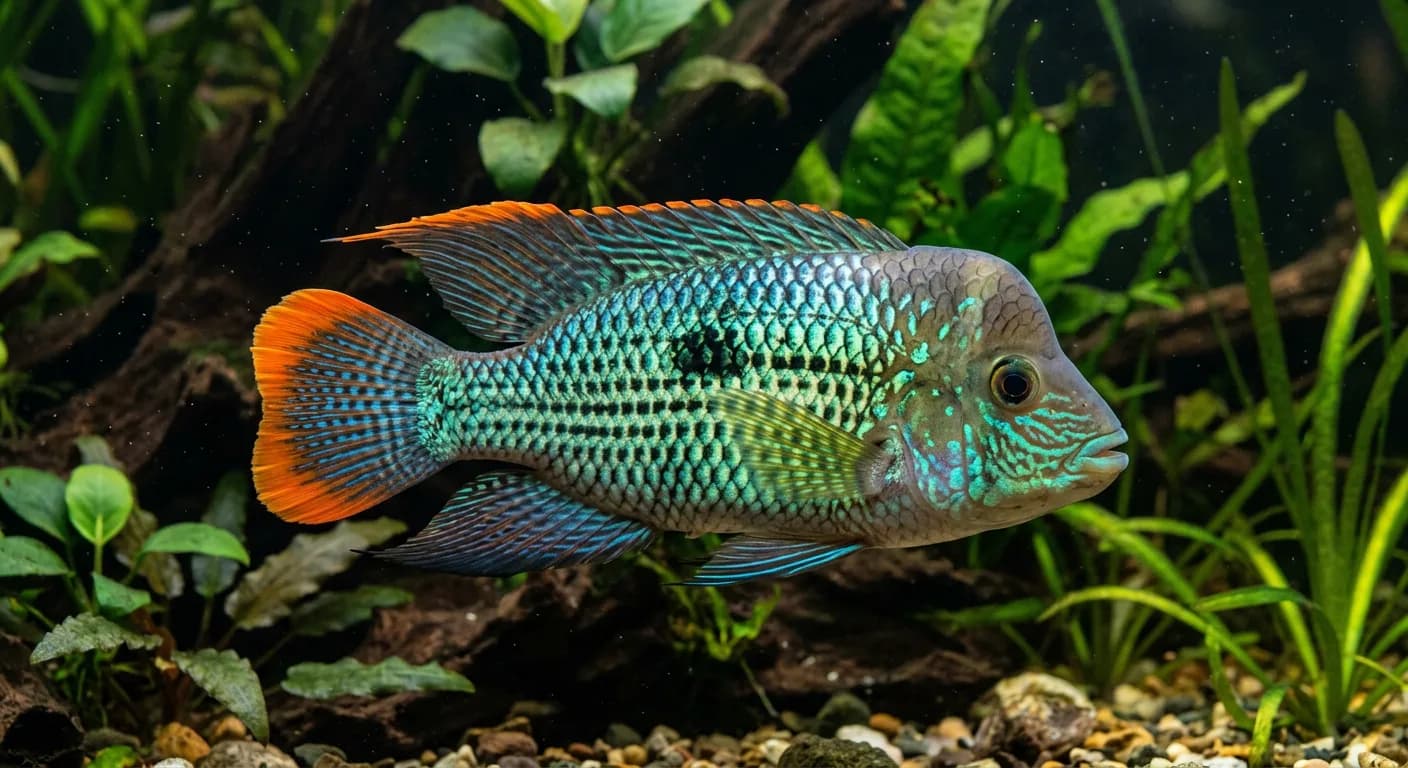
Green Terror
Andinoacara rivulatus
Overview
Green terrors are aptly named for both their stunning coloration and aggressive temperament. Males develop intense metallic green and blue scales with bright orange edges on their fins, creating one of the most striking color combinations in the cichlid world. Despite the common name, they are not always green - the base color can range from blue-gray to turquoise depending on mood, breeding condition, and genetics. Females are generally less colorful but still attractive fish. Green terrors are native to the Pacific slopes of Ecuador and Peru, where they inhabit rivers and streams with rocky substrates. In the aquarium trade, they are popular among cichlid enthusiasts who can provide appropriate housing and tankmates. The challenge with green terrors is their aggressive nature combined with their intelligence and territory establishment. They are not mindlessly violent like some cichlids but establish clear territories and defend them aggressively. Pairs can be kept together with careful introduction, but housing multiple males usually requires very large tanks with plenty of visual barriers.
Tank Setup
A 55-gallon tank is the minimum for a single green terror, with 75+ gallons preferred for a pair or community setup. They need territories with caves, rocks, and hiding spots. Use robust decorations that cannot be easily moved, as green terrors are diggers and rearrangers. Natural rocks, driftwood, and ceramic caves work well. Live plants can be challenging since they may uproot them, but hardy species like java fern and anubias attached to rocks can work. Sand or fine gravel substrate is preferred since they dig frequently. Filtration should be robust - plan for turnover of 6-8 times the tank volume per hour. Canister filters work best for larger setups. Create visual barriers with decorations to break up sight lines and reduce territorial disputes. Water flow should be moderate to strong as they come from river environments. Secure all equipment since they can move heaters and displace filter intakes. Good lighting showcases their colors but is not critical for their health.
Water Parameters
Green terrors are fairly adaptable to different water conditions but do best in neutral to slightly alkaline water with pH between 6.5-8.0. Temperature should be stable between 74-78 degrees. They can handle slightly cooler water but growth and breeding behavior improve with consistent temperatures in their preferred range. Water hardness is not critical - they adapt to both soft and moderately hard water. The key is stability rather than exact parameters. They are sensitive to ammonia and nitrite, requiring established biological filtration. Keep nitrates under 20 ppm with regular water changes. Weekly 25-30% water changes are standard, with larger changes needed if bioload is high. They appreciate well-oxygenated water, so ensure good surface agitation. During breeding, males become even more sensitive to water quality changes, so maintain pristine conditions if attempting to breed them.
Diet & Feeding
Green terrors are omnivores that accept a wide variety of foods. High-quality cichlid pellets should form the basis of their diet, fed twice daily in amounts they can consume within 2-3 minutes. Supplement with frozen foods like bloodworms, brine shrimp, mysis shrimp, and krill. Live foods like earthworms, crickets, and feeder fish can be offered occasionally but should not be the primary diet. They also benefit from vegetable matter - blanched peas, zucchini, and spirulina-based foods provide necessary fiber. Young green terrors need more frequent feeding (3 times daily) with higher protein content to support growth. Adults can be fed twice daily. During breeding periods, increase feeding frequency and offer more live or frozen foods to condition the pair. Avoid overfeeding as it leads to poor water quality and health problems. They are enthusiastic eaters that will quickly consume anything offered, so portion control is important.
Behavior & Temperament
Green terrors live up to their name with aggressive, territorial behavior toward other fish. Males are particularly aggressive during breeding periods and territory establishment. They are intelligent cichlids that recognize their owners and learn routines. Many green terrors will beg for food, follow hands along the glass, and react to activity outside the tank. Their aggression is usually territorial rather than predatory, meaning they chase and harass rather than hunt. However, they will eat any fish small enough to fit in their mouth. Territory establishment involves digging, moving substrate, and claiming specific areas of the tank. They can be kept in pairs if introduced carefully and given adequate space and hiding spots. Multiple territories and visual barriers help reduce conflicts. Green terrors are most active during the day and relatively peaceful at night. Their breeding displays are spectacular, with both fish showing intense colors and synchronized swimming patterns.
Compatible Tankmates
Green terrors require careful tankmate selection due to their aggressive nature. They do best with other medium to large cichlids that can defend themselves but are not overly aggressive. Oscars, jack dempseys, firemouth cichlids, and convict cichlids can work in large enough tanks with proper territory division. Large catfish like common plecos and pictus cats are often tolerated since they occupy different areas and are well-armored. Fast-swimming fish like rainbow sharks may work if the tank is large enough to establish separate territories. Avoid peaceful community fish, small species, or anything slow-moving that cannot escape their aggression. Bottom-dwelling corydoras and small loaches will be harassed constantly. Shrimp and snails will be eaten. Even compatible species need careful introduction and monitoring, as established green terrors may reject new additions. The safest approach is to introduce all fish simultaneously to a new tank or keep them as a mated pair in a species-only setup.
Common Health Issues
Green terrors are generally hardy cichlids but can develop problems related to poor water quality or aggression-related stress. Hole-in-the-head disease occasionally occurs, appearing as pitted lesions on the head and lateral line. This is typically caused by poor water quality, nutritional deficiencies, or stress. Improve water quality and provide varied diet with quality foods. Ich can occur during temperature fluctuations or when introducing new fish. Standard heat treatment combined with salt works well. Injuries from aggressive encounters with tankmates are common - torn fins, missing scales, or bite wounds. Most minor injuries heal quickly with clean water, but severe wounds may require antibiotic treatment. Internal parasites are occasionally seen in wild-caught specimens, showing as weight loss despite normal eating. Medicated food with praziquantel handles most internal parasites. Breeding-related stress can cause temporary loss of appetite and color. The best prevention is maintaining excellent water quality, providing appropriate diet, and ensuring proper tank setup with adequate territories.
Breeding
Green terrors are substrate spawners that can be bred in home aquariums with proper setup and patience. Establish a compatible pair by raising young fish together or carefully introducing adults in a large tank with multiple territories. Breeding tank should be 75+ gallons with flat rocks or ceramic tiles for spawning sites. Condition the pair with frequent feedings of live and frozen foods. Males develop more intense colors and pointed dorsal fins when ready to breed. Females become rounder with breeding tubes visible. Spawning occurs on cleaned flat surfaces with both parents guarding eggs aggressively. Eggs hatch in 3-4 days, and fry become free-swimming within a week. Parents move fry to different locations and continue guarding them. Fry can be fed crushed flake food, baby brine shrimp, and microworms. Growth is rapid with proper feeding. Parents may eat eggs or fry if stressed, so maintain excellent water quality and minimize disturbances. Remove other tankmates during breeding as aggression increases dramatically.
Frequently Asked Questions
Quick Stats
What You Need for Green Terror
Gear that works well for this species, based on what experienced keepers actually use.
Strong biological filtration for messy cichlids. The 350 model provides adequate flow and capacity for 55-75 gallon green terror setups with good waste management.
Reliable temperature control for the stable conditions green terrors need. Durable construction that can handle aggressive fish behavior and tank rearrangement.
High-quality cichlid nutrition with color enhancers to maintain their stunning appearance. Mini size is perfect for green terrors and reduces waste compared to larger pellets.
Dark substrate that shows off green terror colors well. Fine enough for digging behavior but substantial enough to maintain structure when they rearrange territory.